James McNeill Whistler, an artist whose life and work remain a fascinating conduit between 19th-century artistic sensibilities and the burgeoning modernisms of the 20th century, warrants a thorough examination. He was a painter, draughtsman, etcher, and lithographer whose influence permeated the artistic currents of his time, leaving an indelible mark on both its aesthetic philosophies and its practical exhibition methods. For those seeking to understand the trajectory of Western art during a period of profound transformation, Whistler offers a compelling case study.
James McNeill Whistler was born on July 11, 1834, in Lowell, Massachusetts. His father, George Washington Whistler, was a civil engineer who was instrumental in the construction of railways in Russia. This international upbringing, particularly his formative years spent in Russia from 1842 to 1849, exposed young James to a world beyond that of his native America, a cosmopolitan influence that would later blossom in his artistic career. The family’s return to the United States coincided with his father’s death, a significant loss that nonetheless saw James embark on a path shaped by artistic inclinations.
A Reluctant Military Man
Despite an evident artistic flair, Whistler’s initial path was directed towards a more conventional route. He attended the United States Military Academy at West Point in 1849. However, his time there was marked by a degree of insubordination and a distinct lack of aptitude for military discipline, though he distinguished himself in drawing classes. His tenure was short-lived; he was expelled in 1851, a decision that, in hindsight, freed him to pursue his true calling. This period, though seemingly a detour, may have instilled a certain discipline in his observational skills, a foundation upon which his artistic techniques would later be built.
The Lure of Paris and the Artistic Crucible
Following his departure from West Point, Whistler worked briefly for the United States Coast Survey, where he honed his etching skills. This experience provided him with a technical grounding that would prove invaluable. By 1855, he had saved enough money and, with familial support, set sail for Paris, the undisputed epicentre of the art world at the time. This move was a decisive turning point, plunging him into the vibrant, often tumultuous, artistic milieu of the Second French Empire. He enrolled at the École Impériale et Spéciale de Dessin and later studied under Charles Gleyre. It was in Paris that Whistler truly began to forge his artistic identity, absorbing influences and engaging in intellectual sparring with fellow artists.
Early Influences and the Dawn of a Style
In Paris, Whistler encountered the burgeoning ideas of Realism, championed by artists like Gustave Courbet. However, rather than mimicking their direct portrayals of everyday life, Whistler began to infuse his work with a more subjective and atmospheric quality. He was also an avid collector and admirer of Japanese prints, known as ukiyo-e. The flat planes of colour, the bold outlines, and the asymmetrical compositions of these prints resonated deeply with him, providing a stylistic counterpoint to the academic traditions he was simultaneously encountering. This fusion of Western observation with Eastern design principles would become a hallmark of his mature work.
For those interested in exploring the works of influential artists, a related article that delves into the life and contributions of another prominent figure is available. You can read about the renowned painter Nicolas Poussin in this comprehensive piece, which offers insights into his artistic philosophy and techniques. To learn more, visit An In-Depth Guide to the Artist Nicolas Poussin.
The “Art for Art’s Sake” Manifesto and Aestheticism
Whistler was not merely a producer of beautiful objects; he was a fervent theoretician and advocate for a new way of understanding and creating art. His pronouncements and manifestos played a significant role in shaping the intellectual landscape of the late 19th century art world, particularly in Britain.
Rejecting Didacticism: The Birth of a Slogan
Central to Whistler’s philosophy was the concept of “art for art’s sake” (l’art pour l’art). This was a direct challenge to the prevailing notion that art should serve a moral, social, or didactic purpose. Whistler argued that art’s sole justification lay in its own intrinsic beauty and aesthetic qualities. He believed that to burden art with the expectation of conveying a message or teaching a lesson was to diminish its essential nature. This was not a call for art to be frivolous, but rather for it to be appreciated on its own terms, like a piece of music or a beautifully crafted object. By divorcing art from overt narrative or ethical baggage, Whistler sought to elevate the appreciation of form, colour, and composition.
The Aesthetic Movement: A Guiding Light
Whistler became a leading figure in the Aesthetic Movement, an intellectual and artistic current that flourished in Britain during the latter half of the 19th century. This movement embraced the idea that beauty is the supreme value in life and art, and that it should be pursued for its own sake. Aesthetics championed elegance, refinement, and sensory pleasure. Whistler’s theories on colour harmony, tonal relationships, and the importance of decorative elements were deeply aligned with this ethos. His aestheticism was not simply about personal indulgence; it was a deliberate attempt to reorient artistic discourse, challenging the prevailing Victorian emphasis on narrative and moral instruction in art.
The Artist as Interpreter, Not Mirror
Whistler’s approach to representation was not one of slavish imitation of nature. He famously stated that “nature contains the elements of art, just as it contains the ingredients of the pudding.” This meant that the artist’s role was not to reproduce reality faithfully but to interpret it, to select, arrange, and transform its elements according to aesthetic principles. He saw the artist as a selector and arranger, much like a composer chooses notes to create a symphony or a poet selects words to craft a verse. This perspective allowed for a greater degree of artistic freedom and paved the way for more abstract and subjective forms of expression.
Whistler the Painter: From the Thames to the Nocturnes
Whistler’s painting career spans a remarkable evolution, from his early engagement with Impressionist ideas to his later, more abstract and atmospheric works.
Dawn of Impressionism on the River Thames
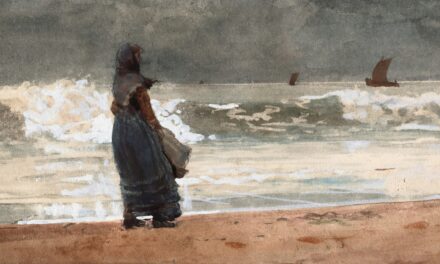
In his late twenties, upon establishing himself in London, Whistler began to experiment with techniques that align with the emerging Impressionist movement. He embraced plein-air painting, venturing outdoors to capture the fleeting effects of light and atmosphere, particularly along the industrialized River Thames. These works, such as his Thames series, presented a departure from the polished academic style. He focused on the subtle shifts in colour and light, the evocative atmosphere of foggy mornings and gaslit evenings along the docks and waterways. The Thames became his muse, a dynamic urban landscape rendered with a new sensitivity to its visual poetry.
The Symphony of Colour and Tone: The “Arrangements” and “Nocturnes”
Whistler’s most celebrated artistic innovation lies in his development of the “Arrangements” and “Nocturnes.” He deliberately used musical terminology to describe his paintings, suggesting that they were primarily concerned with the harmony of colour and tone, much like a musical composition is concerned with the harmony of sound. His Symphony in White, No. 1: The White Girl (1861-1862) is a prime example of this approach, where the emphasis is on the subtle gradations of white and the overall tonality rather than a strict narrative.
The “Nocturnes,” however, represent a further exploration of atmospheric effects and abstraction. These were often painted at dusk or at night, capturing the ephemeral glow of gaslight and moonlight on water. Works like Nocturne in Black and Gold, the Falling Rocket (1875) are significant not only for their beauty but also for their controversial reception. The painting depicted fireworks over a London fairground, and its abstract qualities, with broad strokes and an emphasis on colour relationships, led to a notorious libel trial when critic John Ruskin accused Whistler of throwing a “pot of paint” in the public’s face. The success of Whistler in this trial, though financially ruinous, was a victory for the “art for art’s sake” doctrine. These “Nocturnes” stand as precursors to later abstract art, demonstrating a profound understanding of how colour and form could evoke emotion and atmosphere without literal representation.
The Iconic Portraits: Beyond Likeness
While his atmospheric landscapes and abstract compositions garnered significant attention, Whistler also produced celebrated portraits. Arrangement in Grey and Black No. 1 (1871), universally known as Whistler’s Mother, is perhaps his most famous work. Yet, even here, Whistler subverts conventional portraiture. The painting is a study in tonal harmony and composition, with the figure of his mother rendered with a quiet dignity that transcends mere photographic likeness. The focus is on the interplay of form and colour, establishing a profound sense of quietude and contemplation. His portraits of fellow painter Maud Franklin, for example, are also notable for their sophisticated handling of colour and their exploration of pose and spatial relationships.
Whistler the Pioneer of Printmaking
While his paintings often dominate discussions of his career, Whistler was equally a pioneer and master of printmaking, particularly etching and drypoint. His early works in this medium were crucial to his recognition and demonstrated a sophisticated understanding of line and tone.
Etchings: The Foundation of his Career
Whistler’s artistic journey began with a strong foundation in etching. His earliest works accepted by the Paris Salon and the Royal Academy in London were etchings, not paintings. This indicates the significant status printmaking held in his artistic hierarchy from the outset. He possessed a remarkable ability to translate complex visual information into the precise, incisive lines of etching. His early efforts often depicted Parisian street scenes and figures, but it was his engagement with the London cityscape and, most notably, Venice that cemented his reputation as a master printmaker.
Venice: A Masterclass in Tone and Atmosphere
Whistler’s sojourn in Venice in 1879-1880 proved to be a revelation for his printmaking. He produced a series of etchings and drypoints that captured the city’s unique light, mood, and architectural beauty. These prints were not mere topographical records; they were atmospheric interpretations, imbued with a sense of ephemeral beauty. He masterfully used drypoint, a technique that allows for softer, richer lines, to convey the misty atmosphere of the canals and the delicate reflections of buildings on the water’s surface.
Redefining the Print Market
Whistler’s innovative approach extended to the commercialisation of his prints. He was instrumental in creating a new market for fine art prints. In 1880, he produced signed, limited editions of his Venice etchings. This was a significant departure from the mass production methods often employed in printmaking at the time. By limiting the editions and signing each print, Whistler elevated the status of his etchings, much like paintings, and established a precedent for the limited edition prints that are commonplace today. This entrepreneurial spirit, combined with his artistic vision, transformed the way prints were perceived and valued by collectors and critics alike.
For those interested in exploring the intricate world of art further, a fascinating read is available on the life story of another influential artist, Jacob van Ruisdael. This article delves into the Dutch painter’s contributions to landscape art, offering insights that complement the understanding of artists like James McNeill Whistler. You can find it here: Jacob van Ruisdael.
Exhibition Design and Lasting Legacy
| Category | Details |
|---|---|
| Full Name | James Abbott McNeill Whistler |
| Birth Date | 7 July 1834 |
| Death Date | 17 July 1903 |
| Nationality | American-born, worked mainly in Britain |
| Artistic Style | Realism, Aestheticism, Tonalism |
| Famous Works | “Whistler’s Mother” (Arrangement in Grey and Black No.1), “Nocturne in Black and Gold” |
| Primary Mediums | Oil painting, etching, lithography |
| Notable Techniques | Use of subtle tonal variations, emphasis on mood and atmosphere |
| Influences | Japanese art (Japonisme), Impressionism, Realism |
| Legacy | Influenced modern art movements, championed “art for art’s sake” |
Beyond his artistic output, Whistler’s impact on the presentation and perception of art was profound. His exhibition designs, and his very approach to displaying art, anticipated modern museum practices.
The “White Cube” Avant Garde
In 1883, Whistler organised an exhibition of his Venice etchings at The Fine Art Society in London, provocatively titled Arrangement in White and Yellow. This was not just an exhibition of artworks; it was an integrated aesthetic experience. Whistler meticulously controlled the environment in which his work was displayed. He eschewed the cluttered, ornate Victorian hangings and advocated for a cleaner, more refined presentation. The walls were painted in subtle, harmonious colours, and the furnishings were minimal. This approach, a stark contrast to the prevailing exhibition styles, foreshadowed the modern concept of the “white cube” gallery, a neutral, uncluttered space designed to allow the artwork to speak for itself.
A Harmonious Display
Whistler’s concern for exhibition design extended to the arrangement of the artworks themselves. He believed that paintings and prints should be displayed in a way that created a visual harmony, with careful consideration given to spacing, lighting, and the interplay between individual pieces. His exhibitions were designed as carefully orchestrated visual experiences, where the presentation was as integral to the overall artistic statement as the artworks themselves. The Arrangement in White and Yellow exhibition was a landmark event, influencing display and exhibition design for years to come and setting a new standard for how art could be presented to the public.
A Persistent Influence
James McNeill Whistler’s career was a continuous dialogue between tradition and innovation. He challenged established norms, championed new aesthetic theories, and experimented with artistic techniques that pushed the boundaries of his time. His commitment to “art for art’s sake” and his pioneering work in printmaking and exhibition design continue to resonate in the art world. His ability to fuse Eastern aesthetics with Western artistic sensibilities, and his evolution from representational to increasingly atmospheric and abstract styles, mark him as a pivotal figure in the transition to modern art. The major retrospective planned for 2026 promises to offer a comprehensive re-evaluation of his multifaceted genius, and for anyone with an interest in the richness and evolution of art, it is an event of considerable importance. Whistler’s influence is akin to a fine glaze on a ceramic piece, subtle yet integral to its ultimate beauty and enduring appeal.
FAQs
Who was James McNeill Whistler?
James McNeill Whistler was an American-born artist who spent much of his career in Britain. He is best known for his paintings and etchings, particularly his portrait of his mother, commonly known as “Whistler’s Mother.”
What style of art is James McNeill Whistler known for?
Whistler is primarily associated with the Aesthetic Movement and is known for his emphasis on colour and composition over narrative content. His work often features a subtle, tonal palette and a focus on mood and atmosphere.
What are some of James McNeill Whistler’s most famous works?
Some of Whistler’s most famous works include “Arrangement in Grey and Black No.1” (commonly called “Whistler’s Mother”), “Nocturne in Black and Gold: The Falling Rocket,” and various portraits and landscapes.
How did James McNeill Whistler influence the art world?
Whistler influenced the art world by promoting the idea of “art for art’s sake,” emphasising aesthetic beauty rather than moral or narrative content. His innovative use of colour and composition impacted both British and American art.
Where can I see James McNeill Whistler’s artwork today?
Whistler’s artwork can be seen in major museums around the world, including the Tate Britain in London, the Freer Gallery of Art in Washington D.C., and the Musée d’Orsay in Paris. Many galleries also hold exhibitions of his work periodically.