Paul Gauguin was born on June 7, 1848, in Paris, France, to a French father and a mother of half-Peruvian descent. His early life was marked by a series of upheavals that would shape his character and artistic vision. When Gauguin was just a child, his family moved to Peru following the death of his father. This relocation exposed him to a rich tapestry of cultural influences, which would later inform his artistic sensibilities. The vibrant colours and intricate patterns of Peruvian art left an indelible mark on his psyche, fostering a deep appreciation for the exotic and the primitive.
Returning to France at the age of seven, Gauguin faced the challenges of adapting to a new environment. His childhood was further complicated by the loss of his mother, who passed away when he was only 17. This tumultuous period instilled in him a sense of restlessness and a yearning for adventure. The young Gauguin was not particularly academically inclined; instead, he found solace in drawing and painting, activities that allowed him to escape the harsh realities of life. These formative experiences would later manifest in his art, as he sought to capture the essence of human emotion and the beauty of the world around him.
In exploring the life story of the artist Paul Gauguin, one can gain a deeper understanding of the evolution of artistic styles and techniques during his time. For those interested in enhancing their own artistic skills, a related article on urban sketching can provide valuable insights. This article, which focuses on mastering perspective, speed, and style, is an excellent resource for aspiring artists looking to refine their craft. You can read more about it in the article found here: Urban Sketching Masterclass: Perspective, Speed, and Style.
Early Career and Family Life
Before fully committing to his artistic pursuits, Gauguin embarked on a career in the financial sector, working as a stockbroker. This profession provided him with a comfortable lifestyle, allowing him to marry Mette-Sophie Gad in 1873 and start a family. However, the demands of his job and the responsibilities of family life weighed heavily on him. Despite his initial success in finance, Gauguin felt increasingly unfulfilled and restless, yearning for a life dedicated to art. His marriage, while initially stable, began to fray under the strain of his artistic ambitions and financial instability.
In 1885, after years of grappling with his dual identity as both a family man and an aspiring artist, Gauguin made the bold decision to abandon his career in finance. He moved to Pont-Aven in Brittany, where he immersed himself in the local art scene. This transition marked a significant turning point in his life; he began to forge connections with other artists and explore new techniques and styles. The idyllic landscapes of Brittany provided a rich source of inspiration, allowing him to experiment with colour and form while developing his unique artistic voice.
Transition to Artistic Career
Gauguin’s transition from a conventional career to that of an artist was not without its challenges. He faced financial difficulties and social ostracism as he pursued his passion for painting. However, this period of struggle also served as a catalyst for his creative development. In Pont-Aven, he encountered the Symbolist movement, which encouraged artists to express their inner emotions rather than merely depict the external world. This philosophy resonated deeply with Gauguin, prompting him to explore themes of spirituality and human experience in his work.
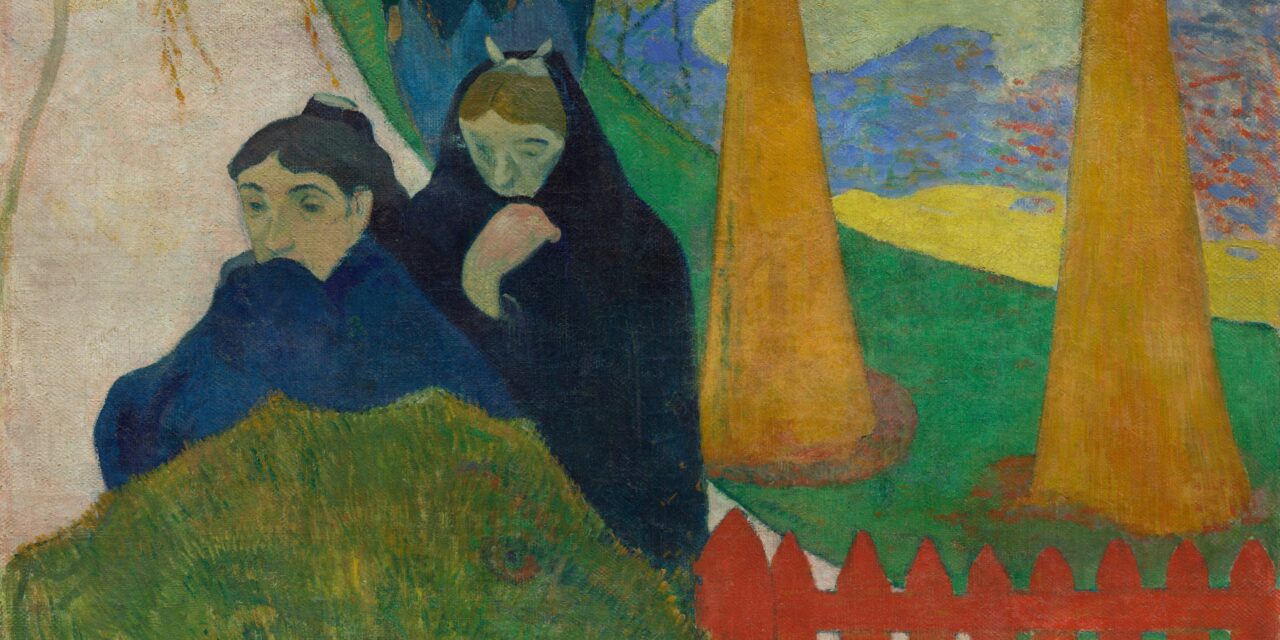
During this time, Gauguin’s style began to evolve significantly. He moved away from the naturalistic approach that characterised much of Impressionism and embraced bold colours and simplified forms. His paintings became increasingly symbolic, reflecting his desire to convey deeper meanings rather than mere representations of reality. This shift marked the beginning of his quest for an artistic identity that would ultimately set him apart from his contemporaries.
Influences and Inspirations
Gauguin’s artistic journey was profoundly influenced by various sources, both personal and cultural. His early exposure to Peruvian culture instilled in him a fascination with indigenous art forms and spiritual beliefs. Additionally, he was inspired by the works of other artists, including Vincent van Gogh and Edgar Degas, whose innovative techniques encouraged him to push the boundaries of traditional painting. The camaraderie he shared with fellow artists in Brittany further enriched his creative process, as they exchanged ideas and challenged one another’s perspectives.
Moreover, Gauguin’s travels played a crucial role in shaping his artistic vision. His time spent in Brittany exposed him to the lives of rural communities, which he depicted with empathy and sensitivity. He sought to capture the essence of their existence through vibrant colours and emotive compositions. This exploration of local culture would later extend to his time in Tahiti, where he immersed himself in the lives of indigenous people, seeking inspiration from their customs and beliefs.
Paul Gauguin’s life story is a fascinating journey through the realms of art and culture, marked by his quest for inspiration beyond the confines of European society. His time in Tahiti, where he sought to capture the essence of a simpler, more primitive existence, significantly influenced his work and legacy. For those interested in exploring the broader context of art movements and their impact on artists like Gauguin, a related article provides insights into the Museo de Arte de São Paulo and its role in showcasing diverse artistic expressions. You can read more about it in this introduction to the museum.
The Tahiti Years
In 1891, seeking an escape from European society and its constraints, Gauguin embarked on a journey to Tahiti. This decision marked a pivotal moment in his life and career, as he sought to immerse himself in what he perceived as a more authentic way of living. The lush landscapes and vibrant colours of Tahiti captivated him, providing an ideal backdrop for his artistic exploration. Here, he found not only inspiration but also a sense of freedom that had eluded him in France.
During his time in Tahiti, Gauguin produced some of his most iconic works, characterised by bold colours and simplified forms that conveyed a sense of spirituality and connection to nature. He painted scenes depicting local life, often infusing them with symbolic meaning that reflected his fascination with the spiritual beliefs of the Tahitian people. However, this idyllic paradise was not without its challenges; Gauguin faced cultural misunderstandings and personal struggles that would ultimately shape his experiences on the island.
Paul Gauguin’s life story is a fascinating journey that reflects his quest for artistic freedom and personal identity. His experiences in Tahiti, where he sought to escape the constraints of European society, greatly influenced his distinctive style and subject matter. For those interested in exploring the broader context of Gauguin’s work and the impact of his artistic choices, a related article can provide valuable insights into the evolution of modern art. You can read more about this in the article on artistry at Think of Art.
Exploration of Symbolism and Primitivism
Gauguin’s time in Tahiti marked a significant exploration of symbolism and primitivism in his work. He sought to transcend the limitations of Western art by embracing what he perceived as the raw authenticity of indigenous cultures. This desire led him to create works that were not merely representations of reality but rather expressions of deeper truths about humanity and existence. His use of colour became increasingly bold and emotive, reflecting his inner thoughts and feelings rather than adhering to realistic depictions.
The concept of primitivism played a crucial role in Gauguin’s artistic philosophy. He believed that modern society had become overly complex and disconnected from its roots, leading him to romanticise the simplicity and purity he associated with indigenous cultures. This perspective informed many of his Tahitian works, where he depicted local people engaged in everyday activities against vibrant landscapes filled with symbolic elements. However, this idealisation has also sparked debates about cultural appropriation and the ethics surrounding his portrayal of Tahitian life.
Gauguin’s Legacy and Influence on Modern Art
Gauguin’s impact on modern art cannot be overstated; he is often regarded as one of the pioneers of Post-Impressionism. His innovative use of colour, form, and symbolism paved the way for future generations of artists who sought to break free from traditional constraints. His emphasis on emotional expression over realistic representation resonated with movements such as Fauvism and Expressionism, influencing artists like Henri Matisse and Wassily Kandinsky.
Moreover, Gauguin’s exploration of non-Western cultures opened up new avenues for artistic expression. His fascination with primitivism inspired many artists to look beyond European traditions for inspiration, leading to a broader appreciation for diverse cultural perspectives within the art world. While some critics have raised concerns about his romanticised portrayals of indigenous life, there is no denying that Gauguin’s work has left an enduring legacy that continues to shape contemporary art practices.
Personal Struggles and Controversies
Despite his artistic achievements, Gauguin’s life was fraught with personal struggles and controversies that often overshadowed his work. His relationships were tumultuous; he abandoned his wife and children in pursuit of his artistic ambitions, leading to feelings of guilt and regret that haunted him throughout his life. Additionally, his time in Tahiti was marked by complex interactions with local communities, raising questions about cultural appropriation and exploitation.
Gauguin’s controversial views on race and culture have also sparked debate among scholars and art historians. While he sought to elevate indigenous cultures through his art, some critics argue that his romanticised depictions perpetuated stereotypes and failed to acknowledge the complexities of Tahitian society. These tensions between admiration for indigenous cultures and problematic portrayals continue to be examined within contemporary discussions about art and ethics.
Return to France and Later Works
After several years in Tahiti, Gauguin returned to France in 1893, where he faced both excitement and disillusionment upon re-entering European society. His experiences abroad had profoundly changed him; he struggled to reconcile his newfound artistic vision with the expectations of the Parisian art scene. Despite these challenges, he continued to produce significant works that reflected his evolving style and themes.
During this period, Gauguin experimented with various techniques, including wood carving and ceramics, further expanding his artistic repertoire. His later works often featured bold colours and abstract forms that conveyed emotional depth while exploring themes of spirituality and existentialism. Although he faced criticism from some quarters for abandoning traditional techniques, Gauguin remained steadfast in his commitment to expressing profound truths through art.
Gauguin’s Impact on Post-Impressionism
Gauguin’s contributions to Post-Impressionism were instrumental in shaping the movement’s trajectory. His emphasis on colour theory and emotional expression influenced many artists who sought to move beyond Impressionism’s focus on light and atmosphere. By prioritising symbolism over realism, Gauguin opened up new possibilities for artistic interpretation that resonated with subsequent generations.
His innovative approach also laid the groundwork for movements such as Fauvism and Expressionism, which embraced bold colours and emotional intensity as central tenets of their practice. Artists like Matisse drew inspiration from Gauguin’s fearless use of colour while exploring their own emotional landscapes through abstraction. As such, Gauguin’s legacy continues to reverberate throughout modern art history.
Recognition and Posthumous Fame
Although Gauguin struggled for recognition during his lifetime—often facing criticism from contemporaries—his posthumous fame has grown exponentially since his death in 1903. Today, he is celebrated as one of the most influential figures in modern art history; exhibitions dedicated to his work attract significant attention worldwide. Major museums house collections featuring his iconic pieces, showcasing both their aesthetic beauty and their complex cultural narratives.
The reevaluation of Gauguin’s contributions has sparked renewed interest in understanding the complexities surrounding his life and work. Scholars continue to explore themes such as cultural appropriation while acknowledging the profound impact he had on shaping modern artistic practices. As we reflect on Gauguin’s legacy today—both its triumphs and its controversies—we are reminded that art serves not only as a reflection of individual vision but also as a lens through which we can examine broader societal issues across time.
FAQs
1. Who was Paul Gauguin?
Paul Gauguin was a French post-impressionist artist known for his bold use of color and his influential work in the Symbolist movement. He was born in Paris in 1848 and spent much of his life in France, but also lived and worked in various other countries, including Peru and Tahiti.
2. What are some of Paul Gauguin’s most famous works?
Some of Paul Gauguin’s most famous works include “The Yellow Christ,” “Tahitian Women on the Beach,” “Where Do We Come From? What Are We? Where Are We Going?” and “The Vision After the Sermon.”
3. What was Paul Gauguin’s artistic style?
Gauguin’s artistic style was characterized by his use of bold colors, simplified forms, and a rejection of naturalistic representation. He was known for his use of flat, two-dimensional compositions and his exploration of the spiritual and symbolic in his work.
4. What was Gauguin’s personal life like?
Gauguin led a tumultuous personal life, marked by financial struggles, family conflicts, and a restless search for artistic inspiration. He spent time living among the indigenous people of Tahiti, where he sought to escape the constraints of European society and find a more authentic way of life.
5. What is Paul Gauguin’s legacy in the art world?
Paul Gauguin is remembered as a pioneering figure in the development of modern art. His bold use of color and innovative approach to composition had a profound influence on subsequent generations of artists, and his work continues to be celebrated for its unique vision and emotional power.