Vincent van Gogh: A Journey Through Colour, Emotion, and Enduring Genius
Vincent van Gogh. The name itself conjures vibrant swirls of colour, the anguished intensity of a sunflower against a cobalt sky, and the poignant image of a lone ear. Yet, to reduce this colossal figure of post-impressionist art to mere iconic imagery would be a disservice to the profound depth, the raw emotion, and the revolutionary spirit that defined his tragically short but incandescently brilliant career. This is not just a biographical sketch; it is an exploration, a deep dive into the world of an artist whose work continues to resonate, to challenge, and to inspire nearly a century and a half after his passing. As an artist and writer myself, I find myself drawn back to Van Gogh time and again, mesmerised by his bold brushwork, his daring use of colour, and the palpable humanity that throbs within every canvas.
Vincent Willem van Gogh’s life began on March 30, 1853, in Groot Zundert, North Brabant, in the Netherlands. He was the eldest of six children born to a prosperous pastor, Theodorus van Gogh, and Anna Cornelia Carbentus. His childhood was, by most accounts, unremarkable, marked by a quiet, introspective nature. However, even in these early years, hints of the intensity that would later define his art can be traced. He was known to be a sensitive and somewhat solitary child, prone to deep contemplation.
Family Ties and Early Career Attempts
Van Gogh’s family was deeply embedded in the art trade, with his uncle and brother serving as art dealers. This connection would, ironically, provide the initial gateway and eventual source of frustration for Vincent’s artistic ambitions. He began his professional life working for Goupil & Cie, an art dealership, in The Hague, London, and Paris. While he developed a keen eye for art, his temperament proved ill-suited to the commercial world. His passion was not in selling, but in creating.
The Seed of Artistic Calling: Belgium and Early Drawings
Following his departure from the art dealership and a brief period teaching in England, Van Gogh felt a growing pull towards a more spiritual and meaningful existence. He attempted to follow in his father’s footsteps, studying theology and then volunteering as a lay preacher among the impoverished coal miners of the Borinage region in Belgium. This period, from 1878 to 1880, was formative, if bleak. He witnessed immense suffering and poverty, which profoundly affected him. It was here, amidst the harsh realities of manual labour and destitution, that his artistic inclination, dormant until then, began to fully blossom. He started drawing the miners, their worn faces, their stooped postures, capturing their dignity in the face of overwhelming hardship. These early drawings, though crude by later standards, possess an undeniable raw power and empathy.
For those interested in exploring the profound impact of artistic genius, a related article that delves into another iconic masterpiece is “An Introduction to the Painting The Virgin and Child with Saint Anne c. 1510 by Leonardo da Vinci.” This piece provides a fascinating insight into the techniques and themes employed by one of the Renaissance’s most celebrated artists, paralleling the emotional depth found in Vincent van Gogh’s works. You can read more about it by following this link: An Introduction to the Painting The Virgin and Child with Saint Anne.
The Dutch Period: Mastering Form and Early Impressionism
Van Gogh’s decision to dedicate himself fully to art marked the beginning of his formal artistic education, albeit largely self-taught. The period between 1880 and 1886, known as his Dutch period, was crucial for developing his foundational skills and exploring the nascent influences that would shape his unique style.
Learning the Craft: Drawing, Anatomy, and Masters
He received some formal instruction, including a stint at the Royal Academy of Arts in Antwerp, but found the rigid structure stifling. Instead, he relied heavily on books, anatomical studies, and the works of artists like Jean-François Millet, whose depictions of peasant life held immense appeal for Van Gogh. Millet’s profound respect for the labourer and his ability to imbue everyday subjects with gravitas were a powerful inspiration. Van Gogh meticulously studied perspective, anatomy, and composition, filling sketchbooks with studies of hands, faces, and figures. His early palette was dominated by dark, earthy tones, reflecting the somber realities of the lives he depicted.
The Hague School and the Power of Observation
The influence of the Hague School, a group of Dutch painters who focused on everyday Dutch life with realism, can be seen in Van Gogh’s early works. He captured the stoic resilience of peasants, farmers, and weavers, their faces etched with the hardships of their toil. Works like “The Potato Eaters” (1885), while often criticised for its crude execution, is a powerful and heartbreaking testament to his empathy. He famously defended its dark palette, stating that he wanted to convey the “roughness” of their lives, that the food they ate was “what they earned with their hands.” It was a departure from the academic ideal, a raw glimpse into the lives of those often overlooked. This painting, with its earthy colours and distorted figures, foreshadows the emotional intensity that would become his hallmark.
The Parisian Revolution: Embracing Colour and Light
Van Gogh’s move to Paris in 1886, to live with his brother Theo, was a pivotal moment in his artistic evolution. The vibrant, cosmopolitan atmosphere of the French capital, and more importantly, the exposure to the latest artistic movements, like Impressionism and Neo-Impressionism, completely transformed his approach to colour and light.
Encounters with Impressionists and Neo-Impressionists
Paris was a crucible of artistic innovation. Van Gogh encountered artists like Claude Monet, Edgar Degas, Camille Pissarro, and Paul Gauguin. He was particularly fascinated by the Impressionists’ focus on capturing fleeting moments of light and colour, their broken brushwork, and their plein-air studies. However, it was the experiments of Georges Seurat and Paul Signac with Pointillism, a technique of applying small dots of pure colour, that truly ignited his imagination. While he never fully adopted Pointillism, the principles of colour theory and the vibrant effects achieved through juxtaposed pure colours profoundly impacted him.
The Liberation of Colour: From Dark Tones to Vibrant Hues
The dreary, earth-toned palette of his Dutch period began to yield to a burst of light and colour. Van Gogh started experimenting with brighter pigments, discovering the expressive potential of complementary colours – blues and oranges, reds and greens, yellows and violets. His brushwork, previously more controlled, became looser, more energetic, and increasingly visible. He began to imbue his canvases with an emotional resonance that transcended mere representation. Paintings from this period, such as his self-portraits and still lifes of flowers, reveal a newfound joy and a bold exploration of colour as a vehicle for emotion. He was no longer just depicting subjects; he was transmuting his internal landscape onto the canvas.
Arles: The Zenith of Artistic Expression and the Birth of a Visionary Style
Seeking an escape from the city’s clamour and inspired by the radiant light of the South of France, Van Gogh moved to Arles in February 1888. This period, though marked by increasing mental turmoil, proved to be the most fertile and prolific of his artistic career, yielding some of his most iconic and influential works.
The Yellow House and the Dream of an Artists’ Colony
Van Gogh rented the iconic “Yellow House” with the dream of establishing an artists’ colony, a refuge where artists could live and work harmoniously, inspired by the Provençal light and landscapes. He envisioned a utopia of creative collaboration, a stark contrast to the competitive Parisian art scene. It was in Arles that he met Paul Gauguin for a brief, intense period. Their artistic differences and volatile personalities, however, led to constant friction.
Sunflowers, Wheatfields, and the Intensity of Nature
The Arles period is synonymous with sunflowers. Van Gogh painted his famous series of sunflower still lifes, their vibrant yellow blooms radiating an almost superhuman energy against the azure skies and fields. These are not merely floral studies; they are icons of life, of hope, and of the raw power of nature. He also produced a breathtaking series of wheatfield paintings, capturing the golden expanse under the relentless sun, the wind rustling through the stalks, and the vast, boundless sky. The impasto technique, where paint is applied thickly, giving the surface a textured, almost sculptural quality, became increasingly pronounced, conveying the visceral energy of his subjects.
Starry Nights and Emotional Landscapes
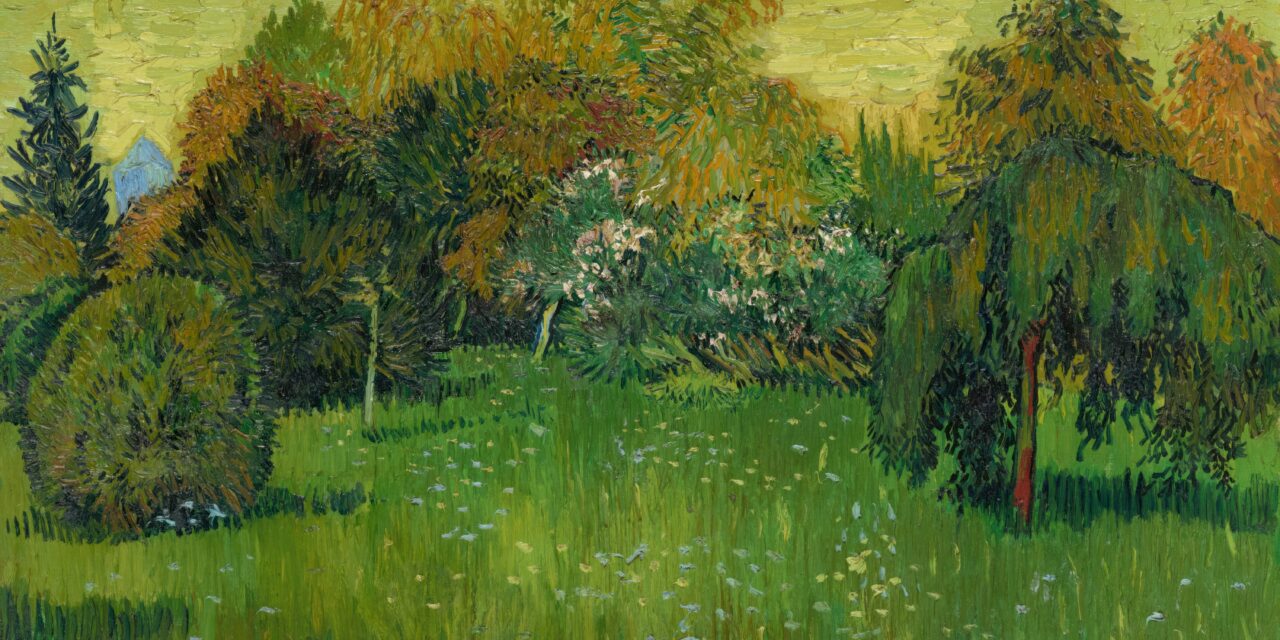
The paintings from Arles are characterised by their intense colour, bold brushwork, and a profound emotional sincerity. The canvases pulse with life and energy, from the swirling, electric skies of “The Starry Night over the Rhône” to the vibrant intensity of the “Bedroom in Arles.” Van Gogh was not just painting what he saw; he was painting what he felt. The landscape became an extension of his inner state, a mirror to his joys, his anxieties, and his spiritual yearning.
For those interested in exploring the techniques that influenced Vincent van Gogh’s vibrant style, a fascinating article on pointillism can provide valuable insights. This technique, characterised by the use of small dots of colour, shares a connection with van Gogh’s approach to colour and brushwork. To learn more about this artistic method, you can read the article here. Understanding pointillism can enhance your appreciation of van Gogh’s masterpieces and the broader context of art movements during his time.
Saint-Rémy and Auvers-sur-Oise: The Final, Agonising Masterpieces
The mounting psychological pressures and recurring bouts of mental illness led Van Gogh to voluntarily admit himself to the asylum at Saint-Rémy-de-Provence in May 1889. Despite the confines of his situation, his artistic output remained extraordinary, producing some of his most haunting and powerful works, culminating in his final months in Auvers-sur-Oise.
The Asylum and the Irresistible Call of the Canvas
Life in the asylum, while offering a degree of stability, was far from idyllic. Yet, Van Gogh found solace and expression in his art. He was granted a studio and allowed to paint the asylum grounds and the surrounding Provençal countryside. The landscapes from this period are often distinguished by their swirling, agitated brushstrokes, a visual manifestation of his inner turmoil. Works like “The Starry Night,” painted from his window at the asylum, are not merely depictions of the night sky; they are cosmic visions, imbued with a sense of overwhelming spiritual energy and profound loneliness. The cypress trees, often depicted as dark, flame-like forms reaching towards the heavens, became a recurring motif, symbolic of death and the eternal.
Wheatfields with Crows and the Enduring Power of Art
His final months were spent in Auvers-sur-Oise, under the care of Dr. Paul Gachet, a physician and art lover. This period, from May to July 1890, was incredibly prolific, though marked by increasing despair. Van Gogh painted with a feverish intensity, producing over seventy paintings in just seventy days. The landscapes of Auvers, particularly the wheatfields, are imbued with a sense of foreboding. “Wheatfield with Crows,” one of his last paintings, with its turbulent sky, black crows, and a path leading to an uncertain future, is often interpreted as an omen of his impending death. Despite the prevailing darkness, his ability to imbue nature with such raw emotion and vibrant colour never wavered.
Legacy and Enduring Influence
Vincent van Gogh tragically died on July 29, 1890, at the age of 37, from a self-inflicted gunshot wound. His life was a testament to a relentless pursuit of artistic truth and an unyielding dedication to his craft, often in the face of immense personal suffering and societal indifference. He sold only one painting during his lifetime. Yet, within a few decades of his death, his work began to gain widespread recognition, and today, he is rightly regarded as one of the most influential figures in the history of Western art. His bold use of colour, his expressive brushwork, and his profound emotional honesty paved the way for Fauvism and Expressionism, and his work continues to captivate and inspire artists and art lovers alike. Van Gogh’s legacy is not just in the masterpieces he left behind, but in the enduring testament to the power of art to express the deepest human emotions, to find beauty and meaning even in the darkest of times, and to connect us, across time, to the raw, beating heart of human experience.
FAQs
1. Who was Vincent van Gogh?
Vincent van Gogh was a Dutch post-impressionist painter who is among the most famous and influential figures in the history of Western art. He is known for his bold and expressive use of colour and his emotionally charged paintings.
2. What are some of Vincent van Gogh’s most famous works?
Some of Vincent van Gogh’s most famous works include “Starry Night”, “Sunflowers”, “The Bedroom”, “Irises”, and “The Potato Eaters”. These paintings are celebrated for their vibrant colours and expressive brushwork.
3. What influenced Vincent van Gogh’s art style?
Vincent van Gogh’s art style was influenced by various factors, including the Japanese ukiyo-e prints, the French impressionist movement, and his own emotional and mental struggles. His use of bold colours and expressive brushwork set him apart from his contemporaries.
4. What is Vincent van Gogh’s legacy in the art world?
Vincent van Gogh’s legacy in the art world is significant, as his work has had a profound impact on modern art. His emotionally charged paintings and unique artistic style continue to inspire and influence artists and art enthusiasts around the world.
5. What is Vincent van Gogh’s tragic story?
Vincent van Gogh struggled with mental illness throughout his life and tragically died by suicide at the age of 37. Despite facing numerous personal challenges and setbacks, he continued to create art that has left a lasting impression on the world.