Claude Monet was born on 14 November 1840 in Paris, France, but his formative years were spent in the coastal town of Le Havre. His early life was marked by a blend of artistic inclination and a somewhat tumultuous family environment. Monet’s father, Claude Adolphe Monet, was a successful grocer, while his mother, Louise, was a singer. The family moved to Le Havre when he was five, and it was here that young Claude began to develop an interest in art. He was encouraged by his mother, who introduced him to the world of painting and drawing. Monet’s early exposure to the vibrant colours of the Normandy landscape would later play a significant role in shaping his artistic vision.
At the age of 11, Monet began attending secondary school, where he quickly became known for his talent in drawing caricatures of his teachers and classmates. This early foray into art led him to take lessons from local artists, including the landscape painter Eugène Boudin, who introduced him to plein air painting. Boudin’s influence was profound; he taught Monet the importance of capturing natural light and atmosphere directly from nature. This mentorship laid the groundwork for Monet’s future explorations in colour and light, which would become hallmarks of his work.
For those interested in exploring the techniques that influenced Claude Monet’s work, a fascinating read is available in the article on encaustic hot wax painting. This ancient art form, which involves using heated beeswax mixed with coloured pigments, offers insights into the innovative approaches to texture and colour that can be seen in Monet’s masterpieces. To learn more about this unique painting technique, you can visit the article here: An Introduction to the Art Technique of Encaustic Hot Wax Painting.
Impressionist Movement and Style
Monet is often regarded as the father of Impressionism, a movement that emerged in the late 19th century as a reaction against the rigid conventions of academic painting. The term “Impressionism” itself is derived from Monet’s painting “Impression, Sunrise,” which was exhibited in 1874 and sparked both intrigue and controversy. The Impressionists sought to capture fleeting moments and the effects of light on the landscape, often working en plein air to achieve a sense of immediacy and spontaneity in their work. Monet’s style was characterised by loose brushwork, vibrant colours, and an emphasis on the interplay between light and shadow.
The Impressionist movement was revolutionary in its approach to subject matter as well. Rather than focusing solely on historical or mythological themes, Monet and his contemporaries turned their attention to everyday scenes—gardens, rivers, and urban life. This shift allowed for a more personal expression of experience and perception. Monet’s ability to convey the essence of a moment through colour and form set him apart from his peers and established him as a leading figure within the movement. His innovative techniques not only challenged traditional artistic norms but also paved the way for future generations of artists.
Famous Works and Series
Monet’s oeuvre is vast and varied, with several iconic works that exemplify his mastery of light and colour. One of his most celebrated series is that of the water lilies, painted in his garden at Giverny. These works, created between 1896 and 1926, depict the tranquil beauty of the pond with its floating lilies and reflections of the sky. The series showcases Monet’s evolving style as he experimented with abstraction and colour theory, ultimately leading to some of his most profound explorations of perception.
Another notable series is that of the haystacks, painted in 1890-1891. These canvases capture the same subject at different times of day and in varying weather conditions, illustrating how light transforms the landscape. The haystacks become almost abstract forms as Monet focuses on the interplay of colour rather than precise details. Similarly, his series on the Rouen Cathedral demonstrates his fascination with light and shadow; he painted over thirty views of the cathedral at different times of day, revealing how atmospheric conditions can alter one’s perception of a single subject.
Influence on Modern Art
Monet’s impact on modern art cannot be overstated. His innovative approach to colour and light laid the groundwork for subsequent movements such as Post-Impressionism, Fauvism, and even Abstract Expressionism. Artists like Vincent van Gogh and Paul Cézanne were inspired by Monet’s ability to convey emotion through colour and brushwork. The emphasis on personal expression over realistic representation resonated with many artists seeking to break free from traditional constraints.
Moreover, Monet’s exploration of perception influenced the development of modern art theory. His focus on capturing fleeting moments prompted artists to consider how subjective experience shapes our understanding of reality. This shift towards abstraction and individual interpretation can be seen in the works of later artists such as Wassily Kandinsky and Jackson Pollock, who further pushed the boundaries of artistic expression. Monet’s legacy continues to inspire contemporary artists who seek to explore the relationship between light, colour, and emotion in their work.
For those interested in exploring the broader context of art movements that influenced Claude Monet, a fascinating article can be found on the New Museum in New York City. This introduction delves into contemporary art and its relationship with historical figures like Monet, providing insight into how his innovative techniques continue to resonate within modern artistic practices.
Personal Life and Relationships
Monet’s personal life was marked by both triumphs and tragedies that shaped his artistic journey. In 1870, he married Camille Doncieux, who became not only his muse but also a significant influence on his work. Their relationship was passionate yet tumultuous; Camille posed for many of Monet’s early masterpieces, including “Woman with a Parasol” and “The Woman in the Green Dress.” Tragically, Camille died in 1879 from tuberculosis, leaving Monet devastated. Her passing profoundly affected him both personally and artistically; he struggled with grief but continued to paint, often reflecting his emotional state in his work.
In later years, Monet found companionship with Alice Hoschedé, the wife of a fellow artist. After her husband’s death, Alice became Monet’s partner and helped raise his children alongside her own. Their relationship provided him with stability during a tumultuous period in his life marked by financial struggles and health issues. Alice’s support allowed Monet to focus on his art, leading to some of his most productive years as he created iconic works that would solidify his place in art history.
For those interested in exploring the broader context of Claude Monet’s work, a fascinating article on the Post-Impressionist movement can provide valuable insights into the artistic developments that followed his time. This movement, which included influential figures such as Vincent van Gogh and Paul Cézanne, played a crucial role in shaping modern art. To delve deeper into this topic, you can read more about it in this introduction to Post-Impressionism. Understanding these connections can enhance your appreciation of Monet’s contributions to the art world.
Travels and Inspirations
Monet’s travels played a crucial role in shaping his artistic vision. Throughout his life, he sought out new landscapes that inspired him to experiment with colour and form. His trips to London during the 1890s exposed him to different atmospheric conditions and urban scenes that invigorated his work. The foggy Thames River provided a new palette for Monet; he painted numerous views of Westminster Bridge and the Houses of Parliament, capturing the ethereal quality of light in this bustling city.
Additionally, Monet’s travels to Italy further enriched his artistic repertoire. The vibrant colours of Venice captivated him during his visit in 1908; he produced a series of paintings that showcased the city’s unique architecture reflected in its canals. These experiences broadened his understanding of light and colour while allowing him to explore new subjects beyond the familiar landscapes of France. Each journey contributed to Monet’s evolving style, reinforcing his belief that nature was an endless source of inspiration.
Monet’s Garden and Home in Giverny
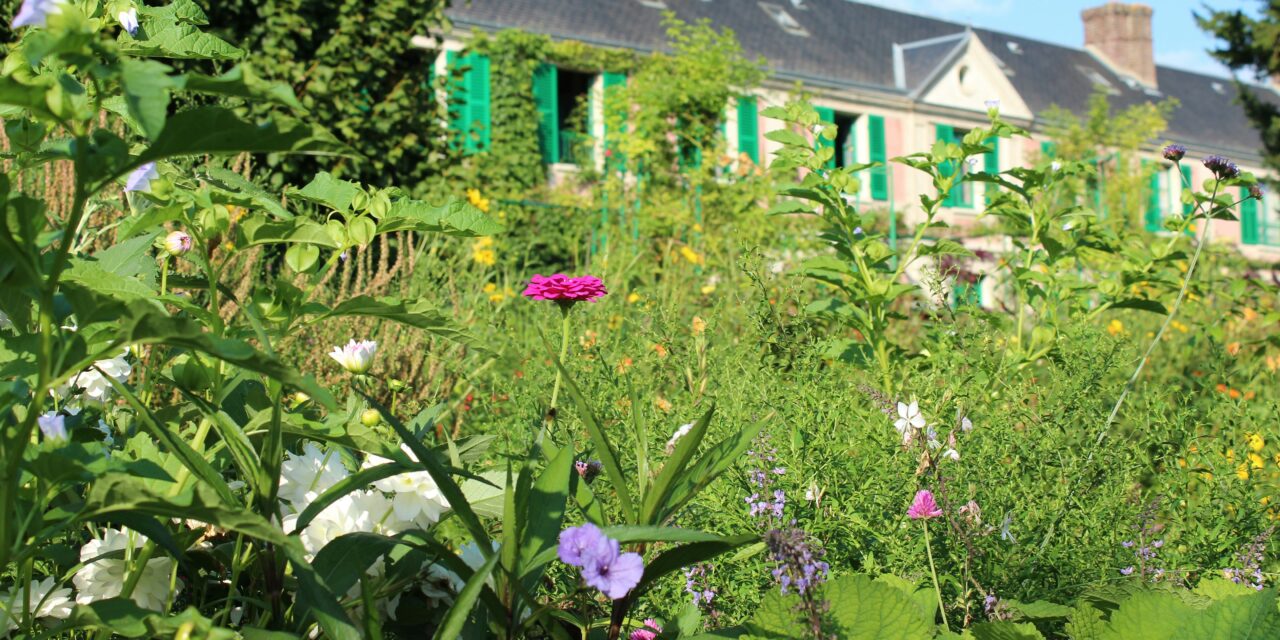
Monet’s garden at Giverny is perhaps one of the most iconic aspects of his life and work. In 1883, he moved to Giverny, where he created an elaborate garden that would become a central subject in many of his paintings. The garden was meticulously designed by Monet himself; it featured a variety of flowers, trees, and a Japanese bridge that became emblematic of his later works. This idyllic setting provided him with an ever-changing canvas that reflected the seasons’ beauty.
The water lily pond became particularly significant for Monet as he sought to capture its tranquillity through paint. He often worked on large canvases while surrounded by nature, immersing himself in the sights and sounds that inspired him. The garden not only served as a source of inspiration but also as a sanctuary where he could escape from the pressures of life. Today, Giverny remains a pilgrimage site for art lovers worldwide who wish to experience the beauty that inspired one of history’s greatest artists.
Later Years and Legacy
In his later years, Monet faced numerous challenges, including declining health and vision problems that affected his ability to paint. Despite these obstacles, he continued to create remarkable works that pushed the boundaries of abstraction. His final series on water lilies reflects this evolution; they are characterised by bold brushstrokes and an almost complete departure from representational forms. These late works are often seen as precursors to modern abstract art.
Monet passed away on 5 December 1926 at Giverny, leaving behind an extraordinary legacy that would influence generations of artists. His commitment to exploring light and colour transformed not only landscape painting but also our understanding of perception itself. Today, Monet is celebrated as one of the most important figures in art history; exhibitions dedicated to his work continue to draw large audiences worldwide.
Techniques and Materials
Monet’s techniques were revolutionary for their time; he often employed loose brushwork that allowed for spontaneity in capturing light effects. He used short strokes of pure colour rather than blending pigments on a palette—a method that created vibrancy in his paintings as colours interacted optically when viewed from a distance. This technique is particularly evident in works like “Impression, Sunrise,” where dabs of paint evoke movement and atmosphere.
In terms of materials, Monet primarily used oil paints on canvas but also experimented with other mediums such as pastels for studies outdoors. He often painted on large canvases to accommodate sweeping landscapes or expansive scenes filled with detail. His choice of colours was equally innovative; he embraced new pigments available during his time that allowed for greater luminosity in his work. This dedication to technique and material contributed significantly to the distinctiveness of Monet’s style.
Critical Reception and Controversies
Monet’s work was met with mixed reactions during his lifetime; while he garnered admiration from fellow artists within the Impressionist movement, critics were often less favourable. The term “Impressionism” itself was initially used derogatorily by critics who dismissed it as unfinished or lacking depth compared to traditional academic painting. However, as time passed, perceptions shifted dramatically; many began to recognise the brilliance behind Monet’s innovative approach.
Controversies also arose regarding Monet’s methods; some critics accused him of being too focused on capturing fleeting moments rather than creating more substantial narratives within his work. Yet this very focus on light and atmosphere became one of Impressionism’s defining characteristics—an exploration into how perception shapes our understanding of reality itself. Over time, Monet’s contributions were acknowledged as pivotal within art history; today he is celebrated not only for his technical prowess but also for challenging conventional notions about what art could be.
Monet’s Impact on Art History
Claude Monet’s impact on art history is profound and far-reaching; he is often credited with paving the way for modern art movements that followed Impressionism. His emphasis on capturing light effects transformed landscape painting into an exploration of perception rather than mere representation—a shift that resonated deeply with subsequent generations of artists seeking new ways to express their experiences.
Moreover, Monet’s legacy extends beyond technique; he challenged societal norms surrounding art by embracing everyday subjects rather than adhering strictly to historical or mythological themes prevalent in academic circles at the time. This democratization of subject matter opened doors for future artists who sought authenticity in their work—an ethos that continues to inspire contemporary creators today.
In conclusion, Claude Monet’s life journey—from a young boy captivated by nature’s beauty to becoming one of history’s most celebrated artists—reflects not only personal triumphs but also broader cultural shifts within art itself. His dedication to exploring light through innovative techniques has left an indelible mark on art history while inspiring countless individuals across generations to appreciate beauty found within fleeting moments captured through paint.
FAQs
Who was Claude Monet?
Claude Monet was a French painter and a leading figure in the Impressionist art movement. He is best known for his landscapes and outdoor scenes, particularly those featuring water lilies and gardens.
What are some of Claude Monet’s most famous works?
Some of Claude Monet’s most famous works include “Impression, Sunrise,” “Water Lilies,” “Rouen Cathedral Series,” “Haystacks,” and “Woman with a Parasol.”
What is Impressionism and how did Claude Monet contribute to it?
Impressionism was an art movement that originated in France in the 19th century. It is characterized by small, thin brushstrokes, an emphasis on light and its changing qualities, and an emphasis on capturing the momentary effect of a scene. Claude Monet was a key figure in the Impressionist movement and his work exemplified these characteristics.
Where can I see Claude Monet’s work?
Claude Monet’s work can be found in major art museums and galleries around the world, including the Musée d’Orsay in Paris, the Metropolitan Museum of Art in New York, and the National Gallery in London.
What is Claude Monet’s legacy in the art world?
Claude Monet’s legacy in the art world is significant. He is considered one of the greatest painters of the 19th and 20th centuries and his work had a profound impact on the development of modern art. His innovative use of color, light, and brushwork continues to inspire artists and art lovers today.