Antoine Vollon, a name that, to the modern eye, might not immediately ignite the same recognition as a Monet or a Renoir, yet to those with an discerning appreciation for painterly virtuosity, he is a figure of immense significance. Often categorised as a Realist, a Naturalist, or even a precursor to Impressionism, Vollon was, above all, a master of “materia” – the sheer physical presence and texture of paint. His canvases throb with tactile energy, breathing life into everyday objects and imbuing them with an unexpected grandeur. This guide aims to delve deeply into the world of Antoine Vollon, exploring his life, artistic development, thematic concerns, and enduring legacy.
Early Life and Artistic Formation
Antoine Vollon’s journey into the hallowed halls of French art began not amidst the privileged academies of Paris, but in the more humble surroundings of Lyon in 1833. Born into a working-class family, his father was a decorative painter, a trade that undoubtedly instilled in young Antoine an early familiarity with pigments, brushes, and the practicalities of art-making. This early exposure to the craftsman’s approach to art would prove formative, shaping his meticulous attention to detail and his profound understanding of materials.
From Engraving to Painting
Vollon’s initial artistic training was not in painting but in engraving. He apprenticed as a metal engraver, a discipline that demands absolute precision, a keen eye for form, and an understanding of how light and shadow define contours. This exacting training in a graphic art undoubtedly honed his observational skills and his ability to render three-dimensional objects with remarkable accuracy. However, the call of colour and the expressive potential of paint proved irresistible. By the early 1850s, he had transitioned from the engraver’s plate to the painter’s easel, moving to Paris with aspirations of becoming a professional artist.
The Influence of Ribot and Courbet
Upon arriving in Paris, Vollon quickly fell under the influence of several key figures who were challenging the academic conventions of the time. One such artist was Théodule Ribot, known for his dark tonalities and dramatic chiaroscuro, often depicting kitchen scenes and still lifes with a stark realism reminiscent of the Dutch Old Masters. Ribot’s influence is palpable in Vollon’s early works, particularly in his choice of subject matter and his preference for rich, earthy palettes.
Even more significant was the monumental presence of Gustave Courbet, the defiant leader of the Realist movement. Courbet’s unwavering commitment to depicting the world as it truly was, without idealisation or embellishment, resonated deeply with Vollon. While Vollon never adopted Courbet’s social commentary or his revolutionary zeal, he embraced Courbet’s emphasis on direct observation and the celebration of the ordinary. This shared ethos fostered a sense of camaraderie between the two artists, and Vollon often referred to himself as a “student of Courbet,” though their relationship was more one of mutual respect and artistic dialogue.
For those interested in exploring the intricate techniques behind sculptural art, a related article that delves into the fundamentals of armature building and the structuring of clay and mixed media sculptures can be found here: Armature Building: Structuring Clay and Mixed Media Sculptures. This resource complements the insights provided in “An In-Depth Guide to the Artist Antoine Vollon” by offering practical guidance that can enhance one’s understanding of three-dimensional art forms.
Artistic Style and Thematic Concerns
Antoine Vollon’s artistic style is characterised by its robust brushwork, rich impasto, and an almost palpable celebration of texture. He was a painter who revelled in the physical properties of objects, translating their surfaces—be it the gleaming skin of a fish, the rough weave of a basket, or the intricate folds of a velvet cloth—into vibrant passages of paint. His canvases are not merely representations; they are invitations to touch, to feel, to experience.
The Still Life: A Symphony of Materia
While Vollon painted landscapes and portraits, it is his still lifes that truly cemented his reputation and where his unique talents shone brightest. Unlike the highly symbolic or allegorical still lifes of earlier centuries, Vollon’s compositions were often direct, unfussy arrangements of everyday objects. But within this apparent simplicity lay a profound artistic intention: to elevate the mundane to the magnificent through the sheer power of paint.
He was captivated by the interplay of light and shadow on various surfaces. A copper pot gleamed with a warm, reflected light; a knife blade shimmered with cool blues and silvers; a crushed cabbage leaf offered a symphony of greens, crinkles, and dew drops. Vollon understood that every object, no matter how humble, possessed its own inherent beauty, its own story waiting to be told through the artist’s masterful touch. His still lifes are not just about depicting objects; they are about seeing them, truly seeing them, with an almost scientific yet deeply emotional intensity.
Beyond the Still Life: Landscapes and Figures
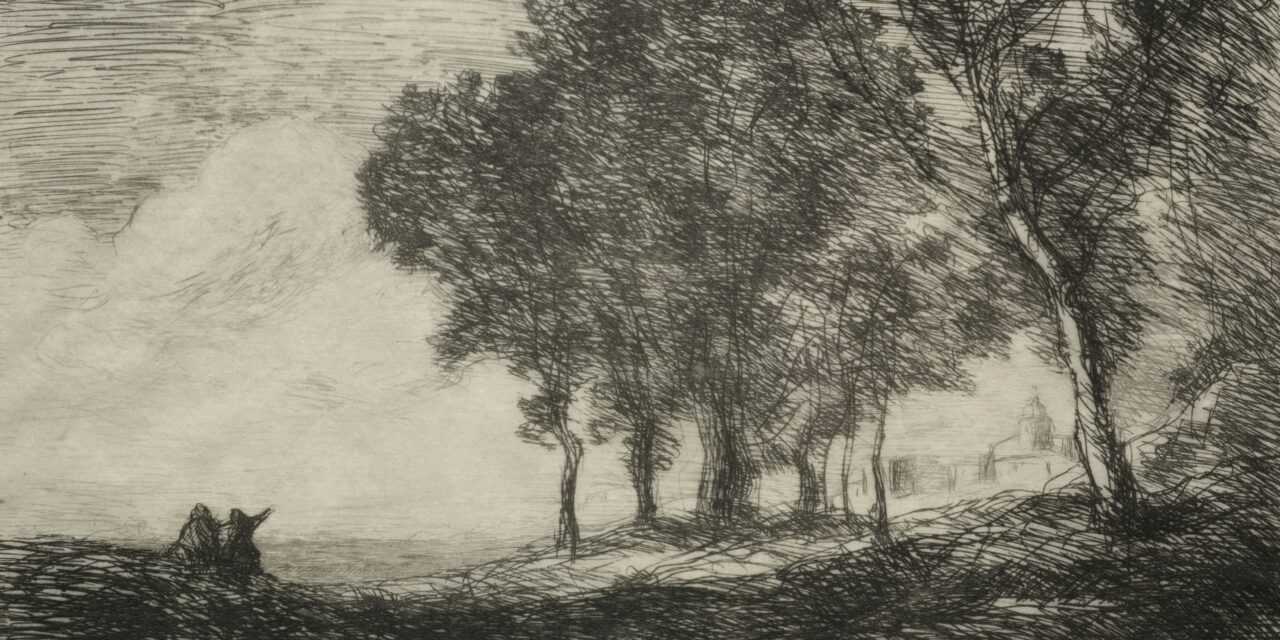
While the still life was his primary domain, Vollon’s artistic exploration extended to landscapes and figural compositions, albeit with a less prolific output. His landscapes often depict rural scenes, imbued with the same honest and tactile quality found in his still lifes. They are largely free of dramatic narratives, focusing instead on the texture of the earth, the solidity of stone walls, and the changing moods of the sky.
His figural works are less common, but when he did paint them, they often took the form of single figures, unidealised and presented with a directness that echoed his realist principles. His portraits, whether of acquaintances or anonymous models, share the same psychological depth and material understanding as his still lifes. The texture of skin, the fabric of clothing, and the play of light on human form were rendered with his characteristic vigour and sensitivity.
Techniques and Influences
Vollon’s artistic prowess stemmed from a combination of innate talent, rigorous training, and a deep understanding of art history. He consciously drew upon the traditions of the Old Masters while infusing his work with a distinctly modern sensibility.
For those interested in exploring the techniques that shaped the works of Antoine Vollon, a fascinating article on freehand brushwork can provide valuable insights into the artistic methods of the time. Understanding these techniques not only enhances appreciation for Vollon’s masterpieces but also offers a broader context for the evolution of painting during his era. You can read more about this technique in the article here.
The Dutch and Spanish Masters
No exploration of Vollon’s technique would be complete without acknowledging his profound reverence for the Dutch and Spanish Golden Age painters. Artists like Chardin, Rembrandt, and Velázquez were clear precedents for Vollon’s approach to light, texture, and the elevation of seemingly ordinary subjects. From the Dutch masters, he absorbed the exquisite rendering of textures and the meticulous attention to detail in still life compositions. From the Spanish, particularly Velázquez, he learned the power of bold brushwork and the evocative use of chiaroscuro to create dramatic depth and atmosphere. He wasn’t simply imitating; he was engaging in a profound artistic dialogue, absorbing their lessons and reinterpreting them through his own unique vision.
Impasto and Brushwork
Vollon’s signature technique was his masterful use of impasto – the application of thick, textured paint. He didn’t shy away from revealing the materiality of his medium. Rather, he celebrated it. His brushstrokes are often visible, dynamic, and purposeful, contributing directly to the illusion of form and texture. A particularly expressive passage of paint on a piece of fruit or a metallic surface could simultaneously suggest its weight, its coolness, or its velvety softness. This vigorous handling of paint stood in stark contrast to the smooth, academic finish favoured by many of his contemporaries.
Colour and Tonal Harmony
Vollon’s palette was often subdued, favouring earthy tones, deep reds, and rich browns, punctuated by vibrant accents. He was a master of tonal harmony, able to create a sense of depth and three-dimensionality through subtle shifts in value rather than relying on bright, contrasting colours. However, within this restrained palette, he was capable of considerable brilliance. The glint of light on a silver platter, the iridescent sheen of a fish, or the deep crimson of a ripe cherry would burst forth with unexpected vibrancy, demonstrating his exceptional understanding of how colour interacts with light and shadow.
Critical Reception and Legacy
Antoine Vollon achieved considerable recognition and success during his lifetime. He exhibited regularly at the prestigious Paris Salons, where his work was consistently praised by critics and collectors alike. He received numerous awards, including several medals at the Salon, and was even made an Officer of the Légion d’honneur, a testament to his esteemed position within the French art world.
Acknowledged Virtuosity
Critics of his era marvelled at his technical virtuosity, his ability to imbue the most commonplace objects with an almost hypnotic presence. He was hailed as a “painter’s painter,” an artist whose profound understanding of his medium was evident in every stroke. His still lifes, in particular, were seen as exemplary demonstrations of painterly skill and a celebration of tangible reality. The famed art critic Théophile Gautier, known for his discerning eye, wrote of Vollon’s ability to conjure “the very flesh of things,” encapsulating the tactile quality that so defined his art.
Bridging Traditions
Vollon’s unique position at the intersection of various artistic movements further solidified his legacy. He was firmly rooted in the Realist tradition, but his bold brushwork and his focus on the sensory experience of objects foreshadowed elements of Impressionism. While he might not have shared the Impressionists’ commitment to fleeting moments of light and colour, his emphasis on direct observation and the expressive potential of paint certainly paved the way for their innovations. He was a bridge between the meticulous detail of the past and the expressive freedom of the future.
Enduring Appeal
Today, Antoine Vollon’s work continues to captivate. His paintings can be found in prestigious museums worldwide, including the Musée d’Orsay in Paris, the Metropolitan Museum of Art in New York, and the National Gallery of Art in Washington D.C. His enduring appeal lies in his ability to uplift the ordinary, to find beauty in the everyday, and to celebrate the sheer sensuality of the painted surface. In a world increasingly dominated by fleeting digital images, Vollon’s art serves as a powerful reminder of the enduring power of tangibility and the exquisite beauty that can be found in the carefully observed details of life. He remains a testament to the fact that true mastery lies not just in what an artist depicts, but in how they choose to depict it, transforming pigment into poetry, object into sensation.
FAQs
1. Who is Antoine Vollon?
Antoine Vollon was a French realist artist known for his still life and landscape paintings. He was born in Lyon, France in 1833 and died in 1900.
2. What are some notable works by Antoine Vollon?
Some of Vollon’s notable works include “Mound of Butter” (1875), “Mackerel, Bread, and a Beer Glass” (c. 1866), and “The Bather” (c. 1868).
3. What artistic style is Antoine Vollon associated with?
Antoine Vollon is associated with the realist artistic movement, which sought to depict everyday life and objects with a high level of detail and accuracy.
4. What influenced Antoine Vollon’s artistic style?
Vollon was influenced by the Dutch still life painters of the 17th century, as well as the French Barbizon school of landscape painters. He also drew inspiration from the natural world and everyday objects.
5. What is Antoine Vollon’s legacy in the art world?
Antoine Vollon’s work has been highly regarded for its technical skill and attention to detail. He is considered a significant figure in the realist movement and has had a lasting impact on still life and landscape painting.