Edgar Degas was born on July 19, 1834, in Paris, France, into a well-to-do family of mixed French and Italian heritage. His father, a banker, and his mother, a seamstress, provided him with a comfortable upbringing that allowed for a rich exposure to the arts from an early age. Degas was the eldest of five children, and his family’s cultural background played a significant role in shaping his artistic sensibilities. He was introduced to the world of art through visits to galleries and museums, where he developed a keen appreciation for classical works. This early exposure would later inform his own artistic style, as he sought to blend traditional techniques with modern themes.
Degas began his formal education at the Lycée Louis-le-Grand, where he excelled academically. However, it was his passion for art that ultimately guided his path. At the age of 18, he enrolled at the École des Beaux-Arts in Paris, where he studied under prominent artists such as Louis Lamothe. His education was steeped in the classical tradition, focusing on drawing and painting techniques that would serve as the foundation for his future work. During this period, Degas also travelled to Italy, where he immersed himself in the study of Renaissance masters like Raphael and Michelangelo. This journey not only enriched his artistic vocabulary but also instilled in him a lifelong admiration for the human form and its representation.
For those interested in exploring the works of influential artists, an insightful article on Lorenzo Lotto’s painting “The Sleeping Child Jesus with the Madonna, Saint Joseph, and Saint Catherine of Alexandria” offers a fascinating perspective on Renaissance art. This piece complements the in-depth guide to the artist Edgar Degas by highlighting the evolution of artistic styles and techniques across different periods. You can read more about it in the article available here.
Influences and Inspirations
Degas’s artistic journey was profoundly influenced by a myriad of sources that shaped his unique vision. One of the most significant influences was the work of the Old Masters, particularly the techniques of chiaroscuro and composition that he encountered during his studies in Italy. The dramatic use of light and shadow found in the works of Caravaggio and the fluidity of movement captured by Raphael resonated deeply with Degas. He sought to incorporate these elements into his own work, striving to create a sense of depth and dynamism that would set him apart from his contemporaries.
In addition to classical influences, Degas was also inspired by the burgeoning modernity of Paris in the late 19th century. The rapid changes in society, including the rise of urban life and the emergence of new leisure activities, provided him with a wealth of subject matter. The ballet, horse racing, and café culture became central themes in his oeuvre, reflecting both the vibrancy and complexity of contemporary life. Furthermore, Degas was influenced by fellow artists within the Impressionist movement, such as Claude Monet and Pierre-Auguste Renoir. While he shared their interest in capturing fleeting moments, Degas maintained a distinct approach that emphasised structure and form over pure colour and light.
The Impressionist Movement
Although often associated with the Impressionist movement, Degas’s relationship with this group was complex and somewhat ambivalent. He was one of the founding members of the Société Anonyme des Artistes Peintres, Sculpteurs et Graveurs, which organised the first Impressionist exhibition in 1874. However, unlike many of his peers who focused on plein air painting and the effects of natural light, Degas preferred to work in his studio, where he could meticulously control every aspect of his compositions. This divergence from traditional Impressionist practices led some to label him as a “realist” rather than an Impressionist.
Degas’s contributions to the movement were nonetheless significant. He introduced innovative techniques such as unusual viewpoints and cropped compositions that challenged conventional perspectives. His works often featured dynamic angles and asymmetrical arrangements that created a sense of movement and spontaneity. This approach not only distinguished him from other Impressionists but also paved the way for future movements such as Modernism. His ability to capture the essence of modern life through innovative techniques solidified his place within the broader narrative of art history.
Degas’ Unique Style and Techniques
Degas’s artistic style is characterised by a remarkable blend of traditional techniques and modern sensibilities. He was a master draughtsman, known for his exceptional ability to depict the human figure with precision and grace. His training in classical art provided him with a strong foundation in anatomy and perspective, which he employed to create dynamic compositions that conveyed movement and emotion. Degas often used pastels alongside oil paints, allowing him to achieve a unique texture and vibrancy in his works that set them apart from those of his contemporaries.
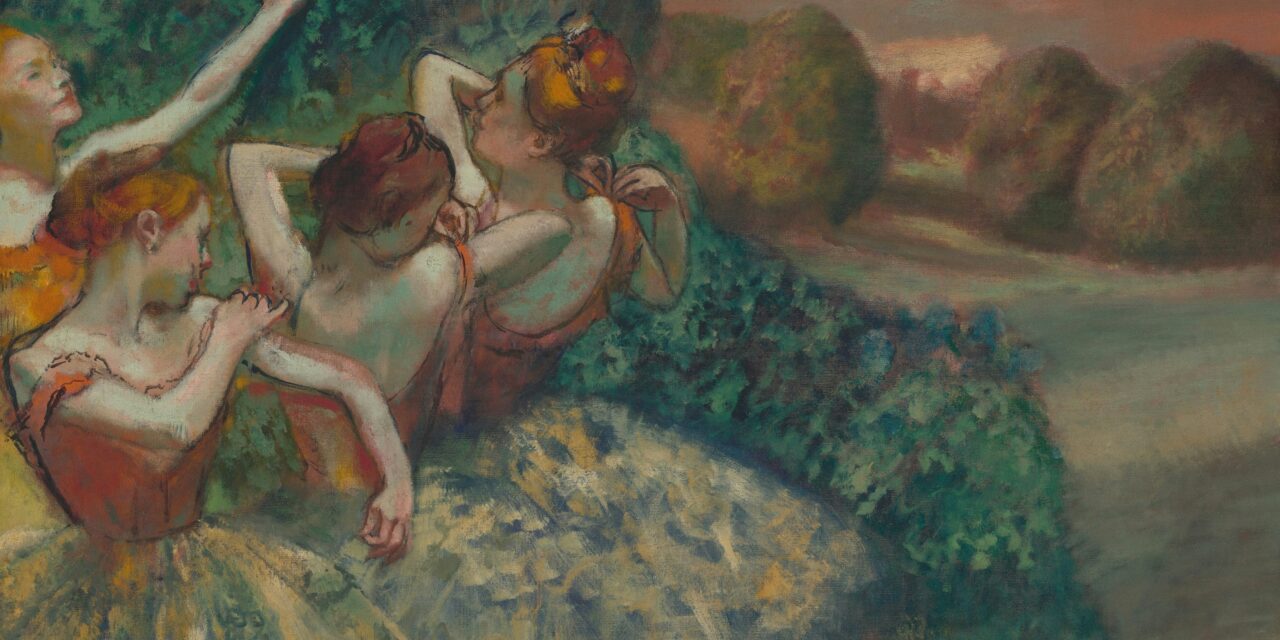
One of Degas’s most distinctive techniques was his use of unusual viewpoints and cropping. He frequently depicted subjects from unexpected angles, creating a sense of intimacy and immediacy that drew viewers into the scene. This approach was particularly evident in his ballet paintings, where he captured dancers in mid-movement or rehearsing behind the scenes. By focusing on candid moments rather than staged performances, Degas offered a fresh perspective on the world of dance that resonated with audiences. His innovative use of composition not only showcased his technical prowess but also reflected his desire to explore the complexities of human experience.
For those interested in exploring the works of influential artists, an insightful article on Gustav Klimt can provide a fascinating contrast to Edgar Degas’s style and themes. While Degas is renowned for his captivating depictions of ballet dancers and everyday life, Klimt’s work is characterised by its ornate patterns and sensual subjects. To delve deeper into Klimt’s artistic journey and understand how his approach differs from that of Degas, you can read more in this introduction to the artist Gustav Klimt.
Degas’ Portrayal of Ballet and Dance
Degas’s fascination with ballet is perhaps one of the most defining aspects of his artistic legacy. He became captivated by the world of dance during his frequent visits to the Paris Opera House, where he observed dancers both on stage and in rehearsal settings. This immersion allowed him to capture the grace and athleticism of ballet dancers with unparalleled sensitivity. His works often depict dancers in various stages of performance—stretching, rehearsing, or resting—offering a glimpse into their lives beyond the spotlight.
In his ballet paintings, Degas employed a range of techniques to convey movement and emotion. He often used soft pastels to create ethereal effects that mirrored the delicate nature of dance. The interplay between light and shadow in these works added depth and dimension, enhancing the sense of realism. Moreover, Degas’s choice of composition frequently emphasised the physicality of dance; he captured not only the beauty but also the rigour involved in ballet training. Through these portrayals, he elevated dance to an art form worthy of serious consideration, challenging societal perceptions and celebrating its complexity.
Degas’ Portraits and Figures
While Degas is best known for his depictions of dancers, his body of work also includes an impressive array of portraits and figure studies that reveal his mastery of human expression. His portraits often feature friends, family members, and fellow artists, showcasing not only their likenesses but also their personalities. Degas had an uncanny ability to capture subtle nuances in expression and posture, allowing viewers to connect with his subjects on a deeper level.
In addition to traditional portraiture, Degas explored themes of intimacy and vulnerability through figure studies. His depictions of women engaged in everyday activities—bathing, dressing, or simply resting—offer a glimpse into their private lives. These works are marked by a sense of immediacy; they feel candid and unguarded, inviting viewers into moments that are both personal and universal. Through these portrayals, Degas challenged conventional notions of femininity while celebrating the complexity of women’s experiences in society.
Degas’ Relationship with Photography
Degas’s relationship with photography played a pivotal role in shaping his artistic vision. He was one of the first artists to embrace photography as both an artistic medium and a tool for study. The advent of photography in the 19th century provided new possibilities for capturing movement and light—elements that fascinated Degas throughout his career. He often used photographs as references for his paintings and pastels, allowing him to analyse poses and compositions with greater precision.
The influence of photography is particularly evident in Degas’s use of cropping and unconventional framing techniques. Much like a photographer capturing candid moments, Degas often depicted subjects from unexpected angles or cut off parts of figures at the edges of his canvases. This approach created a sense of spontaneity that mirrored photographic snapshots while maintaining an artistic quality unique to painting. By integrating photography into his practice, Degas not only expanded his artistic repertoire but also contributed to a broader dialogue about the relationship between art and technology during this transformative period.
Degas’ Later Years and Declining Eyesight
As Degas entered his later years, he faced significant challenges that impacted both his personal life and artistic output. In 1891, he began to experience deteriorating eyesight due to a condition known as retinal detachment—a gradual decline that would ultimately lead to near blindness by 1912. This loss profoundly affected him; however, rather than succumbing to despair, Degas adapted his techniques to accommodate his changing vision.
In response to his declining eyesight, Degas turned increasingly towards sculpture as a means of expression. He began working with wax figures and later cast them in bronze—a medium that allowed him to explore form without relying solely on visual perception. This shift marked a new chapter in his artistic journey; it demonstrated not only resilience but also an unwavering commitment to creativity despite physical limitations. Even as he grappled with loss, Degas continued to produce remarkable works that reflected both his enduring passion for art and his innovative spirit.
Legacy and Impact on Art
Edgar Degas’s legacy is one marked by innovation and influence that extends far beyond his lifetime. His unique approach to composition, movement, and subject matter has left an indelible mark on subsequent generations of artists. As one of the leading figures within the Impressionist movement—despite his ambivalence towards it—Degas helped redefine how art could capture modern life through dynamic forms and unconventional perspectives.
His exploration of themes such as dance, everyday life, and human emotion has inspired countless artists across various disciplines. The way he portrayed movement has been particularly influential; many modern artists have drawn upon Degas’s techniques when depicting motion in their own work. Furthermore, his integration of photography into artistic practice foreshadowed later developments in visual culture—highlighting how technology can enhance creative expression rather than diminish it.
Notable Works and Collections
Degas’s oeuvre encompasses a vast array of notable works that continue to captivate audiences today. Among these is “The Ballet Class,” painted around 1874-1876, which captures a moment during a ballet lesson with remarkable attention to detail and composition. The painting exemplifies Degas’s ability to convey movement while also highlighting the relationships between dancers and their instructor.
Another iconic work is “The Absinthe Drinker,” created in 1876-1877, which portrays a woman seated alone at a café table—a poignant commentary on isolation amidst urban life. This piece showcases Degas’s skillful use of colour and light while exploring themes of alienation that resonate with contemporary viewers.
Many of Degas’s works are housed in prestigious collections worldwide, including The Musée d’Orsay in Paris—the home to numerous masterpieces—and The Metropolitan Museum of Art in New York City. These institutions play a vital role in preserving his legacy while providing opportunities for audiences to engage with his art firsthand.
Controversies and Criticisms
Despite being celebrated as one of the great masters of modern art, Degas’s career was not without controversy or criticism. Some contemporaries viewed him as overly critical or dismissive towards fellow artists within the Impressionist movement—particularly regarding their emphasis on colour over form. His insistence on structure sometimes led others to label him as elitist or out-of touch with emerging trends.
Additionally, Degas’s portrayal of women has sparked debate among art historians and critics alike. While some argue that he captured their strength and individuality through intimate depictions, others contend that certain works reflect problematic views on femininity or objectification—particularly in relation to ballet dancers who were often depicted as fragile or vulnerable figures.
These controversies highlight the complexities inherent within Degas’s legacy; they invite ongoing discussions about interpretation within art history while underscoring how perspectives can shift over time based on cultural contexts.
In conclusion, Edgar Degas remains an enduring figure whose contributions continue to resonate within contemporary art discourse today—his innovative techniques combined with profound explorations into human experience ensure that he will be remembered as one of history’s most significant artists for generations to come.
FAQs
1. Who was Edgar Degas?
Edgar Degas was a French artist famous for his paintings, sculptures, prints, and drawings. He is best known for his depictions of dancers and racehorses.
2. What was Edgar Degas’ artistic style?
Degas was associated with the Impressionist movement, although he preferred to be called a realist or independent. His style often involved capturing movement and light, and he frequently depicted scenes of modern urban life.
3. What were some of Edgar Degas’ most famous works?
Some of Degas’ most famous works include “The Dance Class,” “L’Absinthe,” “The Bellelli Family,” and his series of paintings and sculptures of ballet dancers.
4. What influenced Edgar Degas’ work?
Degas was influenced by the works of the old masters, as well as by Japanese prints and photography. He was also inspired by the ballet and the opera, which he frequently depicted in his art.
5. What is Edgar Degas’ legacy in the art world?
Degas is considered one of the founders of Impressionism and is known for his innovative compositions and use of color. His work continues to be influential and is highly regarded in the art world.