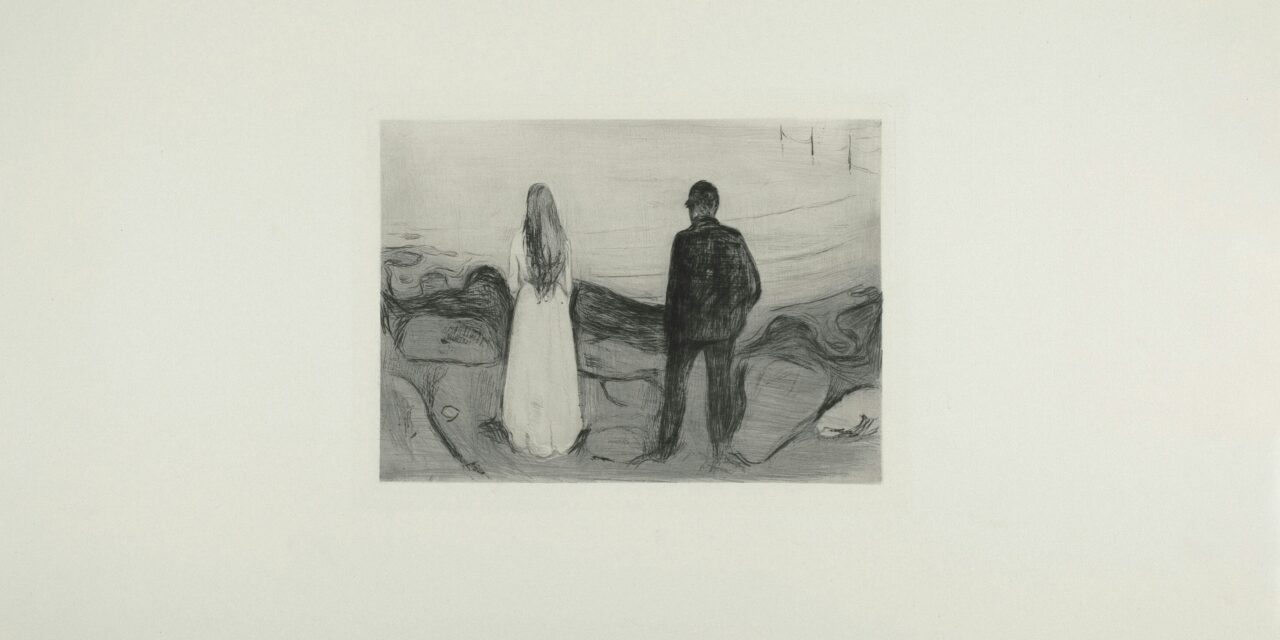
Edvard Munch was born on 12th December 1863 in Loten, Norway, into a family marked by both artistic inclination and profound tragedy. His father, a physician, was a strict man who instilled in Munch a sense of discipline and a deep understanding of the human condition, which would later permeate his work. However, the family was also beset by illness and loss; Munch’s mother died of tuberculosis when he was just five years old, leaving a lasting imprint on his psyche. This early experience of grief and abandonment would echo throughout his life and art, shaping his themes of love, anxiety, and mortality.
Munch’s upbringing was further complicated by the death of his father when he was fourteen, which plunged the family into deeper despair. Raised alongside his siblings, Munch often found solace in the world of imagination and creativity. His childhood was marked by frequent illness, which kept him isolated and introspective. This solitude allowed him to develop a rich inner life, one that would later manifest in his evocative paintings. The combination of familial loss and personal suffering laid the groundwork for Munch’s exploration of existential themes, making his early life a crucible for the emotional intensity that would characterise his work.
Edvard Munch, renowned for his iconic painting “The Scream,” explored the depths of human emotion through his art, often utilising colour to convey mood and atmosphere. His innovative use of colour can be further understood in the context of the psychological effects of warm and cool tones, as discussed in a related article that examines how these colours impact our feelings and perceptions. For a deeper insight into this fascinating topic, you can read the article here: Cool vs Warm Colours: Impact on Mood and Atmosphere.
Education and Early Artistic Influences
Munch’s formal education in art began in Oslo, where he enrolled at the Royal School of Art and Design in 1881. Here, he was exposed to a variety of artistic styles and philosophies that would shape his burgeoning talent. Influenced by the naturalism of the time, Munch initially sought to depict reality with fidelity. However, he soon found himself drawn to the Symbolist movement, which emphasised emotional experience over mere representation. This shift marked a pivotal moment in his artistic development, as he began to explore the depths of human emotion through his work.
During this period, Munch was also inspired by the works of other artists such as Vincent van Gogh and Henri Toulouse-Lautrec. Their bold use of colour and innovative techniques resonated with him, encouraging him to experiment with his own style. The vibrant brushwork and emotive subject matter of these artists ignited a passion within Munch to convey psychological depth through visual means. His early works began to reflect a growing interest in themes of love, anxiety, and existential dread—elements that would become hallmarks of his later masterpieces.
The Influence of Illness and Personal Tragedy on Munch’s Art
Munch’s life was profoundly affected by illness, both personally and within his family. The spectre of tuberculosis loomed large over his childhood, as it had claimed the lives of several family members. This pervasive sense of mortality became a central theme in his art, as he grappled with the fragility of life and the inevitability of death. His experiences with illness not only shaped his worldview but also informed his artistic vision, leading him to explore the darker aspects of human existence.
Personal tragedy continued to haunt Munch throughout his life. The loss of loved ones and his own struggles with mental health contributed to a pervasive sense of despair that permeated his work. In paintings such as “The Sick Child,” Munch confronted the pain of illness head-on, capturing the raw emotions associated with suffering and loss. This unflinching portrayal of vulnerability resonated deeply with viewers, establishing Munch as an artist unafraid to delve into the complexities of human emotion. His ability to translate personal tragedy into universal themes allowed audiences to connect with his work on a profound level.
The Development of Munch’s Distinctive Style
As Munch’s career progressed, he developed a distinctive style characterised by bold colours, expressive brushwork, and an emphasis on psychological depth. He moved away from traditional representation towards a more symbolic approach that sought to convey emotional truths rather than mere visual accuracy. This evolution was marked by a growing interest in the interplay between colour and emotion; Munch believed that colour could evoke feelings as powerfully as form.
His experimentation with composition also played a crucial role in defining his style. Munch often employed unconventional perspectives and cropping techniques to create a sense of intimacy and immediacy in his work. This approach allowed him to draw viewers into the emotional landscape he was depicting, inviting them to experience the intensity of human feelings alongside him. The culmination of these stylistic developments can be seen in iconic works such as “The Dance of Life,” where swirling forms and vibrant hues encapsulate the tumultuous nature of love and desire.
Edvard Munch, renowned for his profound emotional depth and innovative use of colour, has captivated audiences for generations. His iconic work, “The Scream,” serves as a poignant reflection of human anxiety and existential dread. To explore the broader context of Munch’s influence on modern art, you might find it interesting to read a related article that delves into the conversations between artists throughout history. This insightful piece can be found here, offering a fascinating perspective on how Munch’s legacy continues to resonate within the artistic community today.
The Impact of Munch’s Most Famous Work: “The Scream”
“The Scream,” painted in 1893, stands as one of Munch’s most iconic works and a defining image in the history of art. The painting captures an agonised figure against a tumultuous sky, embodying existential dread and anxiety. Its universal themes resonate across cultures and generations, making it an enduring symbol of human angst. The visceral emotion conveyed through the figure’s expression has led many to interpret it as a reflection of Munch’s own struggles with mental health and existential despair.
The impact of “The Scream” extends beyond its immediate visual appeal; it has become a cultural touchstone that transcends the art world. The image has been reproduced in countless forms, from posters to parodies, cementing its place in popular culture. Its ability to articulate feelings of anxiety and alienation has made it relevant in contemporary discussions about mental health, further solidifying Munch’s legacy as an artist who captured the complexities of human emotion with unparalleled clarity.
Munch’s Relationships and Personal Life
Munch’s personal life was marked by tumultuous relationships that often mirrored the emotional turmoil present in his art. He had numerous romantic entanglements throughout his life, many of which were fraught with intensity and heartbreak. These experiences informed much of his work; love and desire became recurring themes that he explored with both passion and pain. His relationships were often characterised by a sense of longing and loss, reflecting the complexities of human connection.
Despite his many romantic pursuits, Munch struggled with intimacy and commitment. His fear of abandonment—rooted in his early experiences with loss—often led him to sabotage relationships before they could deepen. This pattern is evident in works such as “The Madonna,” where themes of love are intertwined with notions of desire and mortality. Munch’s exploration of these themes not only provided insight into his personal struggles but also resonated with audiences who grappled with similar feelings.
Munch’s Mental Health and its Influence on his Art
Munch’s mental health has been a subject of considerable interest among art historians and psychologists alike. Throughout his life, he experienced bouts of depression and anxiety that profoundly influenced his artistic output. He often described his mental state as akin to being haunted by demons—an experience that found expression in the haunting imagery present in many of his works. This connection between mental health and creativity is particularly evident in pieces like “The Scream,” where feelings of despair are rendered palpable through vivid colour and form.
Munch’s struggles with mental health were not merely personal battles; they were integral to his artistic identity. He believed that suffering could lead to profound insights into the human condition, allowing him to create art that resonated deeply with others. His willingness to confront his own psychological turmoil head-on set him apart from many contemporaries who shied away from such raw emotional expression. In doing so, Munch carved out a space for artists to explore their inner lives openly, paving the way for future generations to address mental health through their work.
Munch’s Travels and International Recognition
Munch’s artistic journey took him beyond Norway as he sought inspiration from various cultures and artistic movements across Europe. His travels allowed him to engage with different artistic communities, broadening his perspective and enriching his work. In Paris, he encountered the avant-garde movements that were reshaping the art world at the time; this exposure encouraged him to push boundaries further in his own practice.
As Munch gained recognition for his unique style and emotional depth, he began exhibiting internationally, earning accolades for his contributions to modern art. His participation in exhibitions across Europe helped solidify his reputation as a leading figure within the Symbolist movement. The acclaim he received not only validated his artistic vision but also provided him with opportunities to connect with other influential artists and thinkers who would shape the trajectory of modern art.
Munch’s Legacy and Influence on Modern Art
Edvard Munch’s legacy is profound; he is often regarded as a precursor to Expressionism—a movement that sought to convey emotional experience over realistic representation. His innovative use of colour, form, and symbolism paved the way for artists such as Wassily Kandinsky and Egon Schiele, who would further explore the depths of human emotion through their work. Munch’s ability to articulate complex feelings has left an indelible mark on modern art, influencing countless artists across various mediums.
Moreover, Munch’s exploration of psychological themes has resonated deeply within contemporary discussions surrounding mental health and emotional well-being. His willingness to confront personal suffering has inspired artists to embrace vulnerability in their work, fostering an environment where emotional honesty is celebrated rather than shunned. As society continues to grapple with issues related to mental health, Munch’s art remains relevant—a testament to the enduring power of creativity as a means of understanding the human experience.
The Later Years of Munch’s Life and Career
In the later years of his life, Edvard Munch continued to produce significant works while grappling with declining health. He moved to Norway’s coastal town of Ekely in 1916, where he found solace in nature—a source of inspiration that would inform many pieces during this period. Despite facing challenges related to both physical ailments and mental health struggles, Munch remained dedicated to his craft until the end of his life.
His later works reflect a shift towards introspection; themes of solitude and reflection become increasingly prominent as he navigated the complexities of aging and mortality. Paintings such as “The Sun” showcase a more optimistic perspective while still retaining elements of existential contemplation. This evolution highlights Munch’s ability to adapt creatively while remaining true to the emotional core that defined much of his earlier work.
Munch’s Enduring Impact on the Art World
Edvard Munch’s impact on the art world is undeniable; he remains one of the most influential figures in modern art history. His exploration of psychological themes paved the way for future movements such as Surrealism and Abstract Expressionism—both of which sought to delve into the complexities of human emotion through innovative means. Moreover, Munch’s ability to articulate feelings associated with love, loss, anxiety, and despair continues to resonate with audiences today.
As contemporary artists grapple with similar themes within their own practices, they often draw inspiration from Munch’s fearless exploration of vulnerability. His legacy serves as a reminder that art can be a powerful vehicle for understanding our shared humanity—a notion that remains ever-relevant in today’s world. Through both his life experiences and artistic contributions, Edvard Munch has left an indelible mark on the landscape of modern art, ensuring that his voice will continue to echo through generations to come.
FAQs
1. Who was Edvard Munch?
Edvard Munch was a Norwegian painter and printmaker, born on December 12, 1863, in Loten, Norway. He is best known for his iconic painting “The Scream” and is considered a pioneer of the Expressionist movement.
2. What are some of Edvard Munch’s most famous works?
In addition to “The Scream,” some of Munch’s most famous works include “The Madonna,” “The Dance of Life,” “The Sick Child,” and “The Vampire.”
3. What influenced Edvard Munch’s art style?
Munch’s art was heavily influenced by his own experiences with illness, death, and grief, as well as the social and political climate of his time. He was also influenced by the Symbolist and Post-Impressionist movements.
4. What was Edvard Munch’s personal life like?
Munch’s personal life was marked by tragedy, including the early deaths of his mother and sister, as well as his own struggles with mental illness. He never married and had a tumultuous relationship with his family.
5. What is Edvard Munch’s legacy in the art world?
Munch’s work had a profound impact on the development of modern art, particularly in the realms of Expressionism and Symbolism. His exploration of psychological themes and use of bold, emotive brushstrokes continue to influence artists to this day.