Albert Marquet, a name that may not immediately resonate with the same thunder as his Fauvist comrades Matisse and Derain, nevertheless holds a significant and captivating place in the annals of early 20th-century art. A painter of profound subtlety and an unwavering devotion to capturing the essence of a landscape, Marquet forged a distinctive path, shunning the more flamboyant expressions of his peers to cultivate a unique vision of light, water, and urban life. This guide delves into the intricate world of Marquet, exploring his artistic journey, his stylistic nuances, and his enduring legacy.
The Formative Years and the Crucible of Fauvism
Born in Bordeaux in 1875, Albert Marquet’s artistic sensibilities were shaped early on by his proximity to the Garonne River and the vibrant maritime activity of his hometown. This early exposure to the interplay of water, light, and industry would become a lifelong preoccupation.
Early Education and the Influence of Gustave Moreau
Marquet’s formal art education began in Paris in 1890, first at the École Nationale Supérieure des Arts Décoratifs and later, crucially, at the École Nationale Supérieure des Beaux-Arts. It was here, in the studio of the Symbolist painter Gustave Moreau, that Marquet met a cohort of artists who would profoundly influence his career. Henri Matisse, André Derain, Maurice de Vlaminck, and Henri Manguin were among his fellow students, and Moreau, despite his own mystical leanings, encouraged a freedom of expression and a deep understanding of colour theory in his pupils. Moreau’s teaching, while not directly leading to Fauvism, instilled in these young artists a readiness to experiment and challenge academic conventions. Marquet, though less overtly revolutionary in his application of colour than some of his peers, absorbed Moreau’s emphasis on individual interpretation and a sincere engagement with the subject.
The Emergence of Fauvism and Marquet’s Distinctive Role
The turn of the century saw the burgeoning of avant-garde movements in Paris, and Marquet was an integral part of the vibrant artistic scene. He participated in the notorious Salon d’Automne of 1905, where the art critic Louis Vauxcelles famously dubbed the exhibiting artists “Fauves” (wild beasts) due to their audacious and non-naturalistic use of colour. While Marquet exhibited alongside Matisse and Derain, his approach to Fauvism was markedly different.
Unlike the explosive, unmodulated hues often seen in Matisse’s early work, Marquet’s colour palette, even during his Fauvist phase, remained more restrained and harmonious. He employed strong, pure colours not to shock, but to convey a heightened sense of atmosphere and light. His contribution to Fauvism was less about pure chromatic invention and more about using bold colour to articulate the structure and mood of his urban and maritime landscapes. He demonstrated that Fauvism wasn’t solely about aggressive dissonance but could also embrace a more contemplative, lyrical expression. His early works from this period often depict Parisian street scenes or views of the Seine, characterised by simplified forms and a direct, unpretentious engagement with his surroundings.
For those interested in exploring the vibrant world of urban art, a related article titled “Chalk Bombing and Flash Mob Art: Spontaneous Urban Creation” offers a fascinating look at how artists engage with public spaces in innovative ways. This piece complements the in-depth guide to the artist Albert Marquet by highlighting the dynamic nature of artistic expression beyond traditional canvases. You can read the article here: Chalk Bombing and Flash Mob Art.
The Master of Light and Water: A Signature Style
Marquet’s artistic identity solidified in the years following his Fauvist period, evolving into a distinctive style characterised by a profound understanding of light and a masterful rendering of water.
The Allure of the Seine and Urban Landscapes
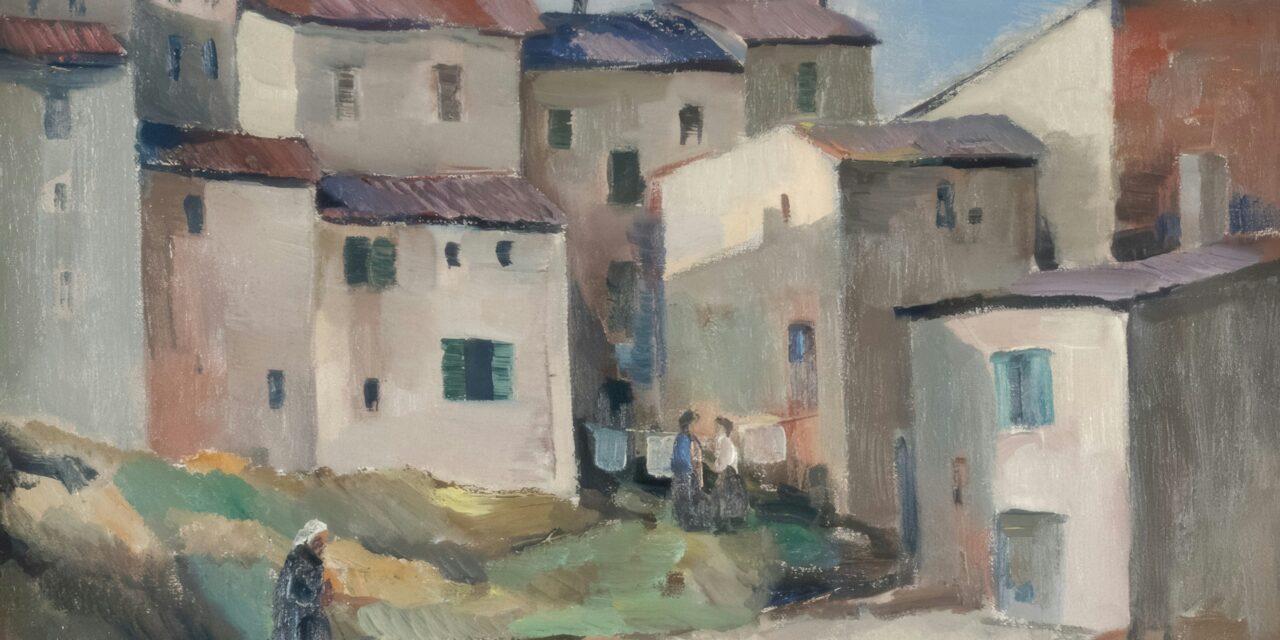
The Seine River was a perpetual muse for Marquet. He painted it incessantly, from countless vantage points, in all seasons and at every hour of the day. His canvases capture the ever-changing moods of the river – its shimmering reflections, the movement of boats, the bustling life along its banks, and the architectural grandeur of the Parisian cityscape. Marquet’s urban landscapes are notable for their economy of detail and their atmospheric quality. He eschewed anecdotal narratives, focusing instead on conveying the essential character of a place. His brushwork, while seemingly spontaneous, is deceptively precise, capturing the nuances of light filtering through the city air or reflecting off wet pavements. He had an innate ability to distil a complex scene into its fundamental elements, creating a sense of both immediacy and timelessness. The often-muted palette, dominated by greys, blues, and subtle greens, served to enhance the ethereal quality of his light.
Maritime Scenes and the Poetics of the Port
Beyond Paris, Marquet was an inveterate traveller, drawn to port cities and coastlines across Europe and North Africa. From Le Havre and Honfleur to Naples, Venice, and Algiers, he tirelessly documented the maritime world. These port scenes are among his most celebrated works. He depicted ships, docks, and the ceaseless activity of the harbour with a keen observational eye and a deep appreciation for the geometry of the vessels and the vastness of the sea.
His understanding of water, whether calm or choppy, reflecting light or merging with the sky, is unparalleled. He employed nuanced gradations of blues and greens, often punctuated by the vivid colours of flags or the dark silhouettes of boats, to evoke the depth and movement of the water. The horizon line, often high or low, played a crucial role in composing his maritime scenes, emphasising either the expansive sky or the bustling harbour below. His boats, though simplified, possess a tangible weight and presence, reflecting his intimate knowledge of maritime life.
Techniques and Artistic Philosophy
Marquet’s artistic approach was characterised by a quiet devotion to observation and a desire to capture the authentic impression of a scene without unnecessary embellishment.
For those interested in exploring the works of influential artists, a fascinating article on Max Beckmann’s painting “Actors Triptych” offers a compelling look at another significant figure in the art world. This piece delves into the themes and techniques employed by Beckmann, providing context that complements the insights found in the in-depth guide to Albert Marquet. You can read more about it in this article, which highlights the connections between various artistic movements and the emotional depth of their works.
Economy of Line and Colour
One of Marquet’s defining stylistic traits is his remarkable economy of means. He often employed a simplified drawing style, reducing forms to their essential outlines. This directness in drawing allowed him to concentrate on the play of light and shadow, and the subtle interactions of colour. His palette, while rooted in natural observation, was carefully curated. He favoured a limited range of colours, often mixed on the canvas, to create nuanced tonal variations. He rarely used vibrant, unmixed colours for their own sake, but rather as accents to enliven a predominantly subdued scheme. This restraint in colour allowed the subtleties of light and atmosphere to take centre stage. His brushstrokes, while visible, were not flamboyant; they served to build form and texture, contributing to the overall sense of understated elegance.
The Influence of Japanese Prints and Photography
Like many artists of his generation, Marquet was influenced by Japanese ukiyo-e prints, particularly in their use of unconventional compositions, elevated viewpoints, and simplified forms. This influence can be seen in his often-bold cropping of scenes, his emphasis on strong diagonals, and his masterful treatment of negative space. He also embraced photography, not as a replacement for painting, but as a tool for observation and as a means of capturing fleeting moments that he could later develop into paintings in his studio. This engagement with photography further honed his ability to see and compose with a modern sensibility, fostering an almost reportage-like quality in some of his works.
A Commitment to Truth and Sincerity
Marquet’s artistic philosophy was rooted in a profound commitment to truth and sincerity. He sought to paint what he saw, unburdened by academic strictures or the clamour of contemporary artistic trends. He was not interested in grand narratives or emotional dramatics, but in the quiet beauty of everyday life and the subtle shifts of light and atmosphere. This unwavering dedication to objective observation, filtered through his unique sensibility, lends his work an enduring sense of calm and authenticity. He believed in the power of a single, well-observed detail to convey the essence of a place or a moment.
Legacy and Enduring Appeal
Despite his relatively understated approach compared to some of his more flamboyant contemporaries, Albert Marquet’s work has consistently garnered admiration and continues to resonate with audiences today.
The Understated Master and His Influence
Marquet’s art may not have provoked the same initial shock as Fauvism or Cubism, but its quiet strength and profound beauty have ensured its lasting appeal. He demonstrated that modernism could exist without overt aggression or radical abstraction, finding beauty in the familiar and rendering it with a fresh, direct vision. His influence can be seen in subsequent generations of landscape painters who valued atmospheric realism and a nuanced understanding of light. He stands as a testament to the power of consistent, dedicated observation and the refinement of a personal vision.
A Timeless Depiction of Place
What makes Marquet’s art so enduring is his ability to capture the timeless essence of a place. Whether it’s the bustling quays of Paris, the sun-drenched ports of the Mediterranean, or the serene canals of Venice, his paintings transport the viewer directly into the scene. He offers a window into a world that feels both specific to its time and universally resonant. His work speaks to the enduring human fascination with the rhythm of life, the changing light, and the ever-present beauty of the natural and urban environment. In an increasingly complex world, Marquet’s understated elegance and profound sincerity offer a welcome respite, inviting contemplation and a deeper appreciation for the subtle wonders around us. His meticulous rendering of light, in particular, continues to be a source of wonder and inspiration, affirming his status as a true master of atmosphere.
FAQs
Who is Albert Marquet?
Albert Marquet was a French painter, known for his association with the Fauvist movement and his depictions of urban landscapes and seascapes.
What is the Fauvist movement?
The Fauvist movement was a group of early 20th-century artists who emphasized strong color and bold brushwork over realistic representation. Fauvist artists sought to express emotion and sensation through their use of color.
What are some notable works by Albert Marquet?
Some of Albert Marquet’s notable works include “The Port of Algiers,” “The Bay of Naples,” and “The Seine at Charenton.”
Where can I see Albert Marquet’s artwork?
Albert Marquet’s artwork can be found in various museums and galleries around the world, including the Musée d’Orsay in Paris, the Museum of Modern Art in New York, and the Hermitage Museum in St. Petersburg.
What is Albert Marquet’s artistic style known for?
Albert Marquet’s artistic style is known for its use of bold color, simplified forms, and a focus on capturing the atmosphere and light of the scenes he painted. He often depicted urban and maritime landscapes with a sense of tranquility and harmony.