The world of art is often a tapestry woven with threads of individual genius, and among its particularly vibrant strands is the story of Othon Friesz. A French painter, born in the late 19th century, Friesz navigated a period of profound artistic upheaval, emerging as a significant figure in the development of Fauvism and later forging his own distinctive path. His life, much like his canvases, was a compelling blend of intense colour, bold experimentation, and a deep connection to the landscapes that inspired him. To truly appreciate Friesz’s contribution, we must delve into the formative years that shaped his vision, the explosive emergence of his Fauvist period, his subsequent stylistic evolution, his enduring artistic legacy, and the quiet contemplation of his later years.
Othon Friesz, a prominent figure in the early 20th-century art scene, is celebrated for his unique contributions to Fauvism and his innovative use of colour and form. To delve deeper into the artistic movements that influenced Friesz and his contemporaries, one might find the article on curated creations particularly enlightening. This piece explores various artists and their works, providing context to the vibrant art world that shaped Friesz’s career. For more information, you can read the article here: Curated Creations.
The Budding Artist: Early Life and Influences
Emile-Othon Friesz was born on February 6, 1879, in La Seyne-sur-Mer, a bustling port town in the Var department of southern France. His father, Auguste Friesz, was a shipbuilder, a profession that instilled in young Othon a keen eye for structure, line, and the interplay of light on form. This early exposure to the robust engineering of ships and the dynamic marine environment undoubtedly left an indelible mark on his artistic sensibilities. The scent of salt spray, the cries of gulls, and the ceaseless ebb and flow of the tides would later find echoes in the raw energy and vibrant palette of his work.
A Maritime Upbringing and Artistic Awakening
Life in a port town offered a rich visual vocabulary. The weathered hulls of ships, the intricate rigging, the bustling markets, and the rugged coastline all provided fertile ground for a young mind beginning to perceive the world through an artistic lens. While his father’s trade was practical and industrial, it likely fostered an appreciation for the inherent beauty of functional design and the raw power of nature. It was here, amidst the sensory richness of his childhood, that the seeds of his artistic calling were sown.
Education and the Parisian Sojourn
Friesz’s formal artistic education began in Marseille at the École des Beaux-Arts. It was here that he encountered the academic traditions of painting, learning the fundamentals of draughtsmanship and composition. However, the rigid confines of classical training likely felt somewhat constricting to his burgeoning, more instinctual approach to art.
The pivotal moment in his early artistic journey, as with so many ambitious young artists of his generation, was his move to Paris in 1897. The city was a crucible of artistic innovation, a vibrant hub where established masters mingled with radical newcomers. Friesz enrolled at the Académie Julian, a more progressive art school than the official Beaux-Arts, where he studied under figures like William-Adolphe Bouguereau. However, it was his exposure to the burgeoning avant-garde that truly ignited his artistic spirit. He began to frequent the studios and salons where artists were challenging the conventions of Impressionism and Symbolism, pushing the boundaries of colour, form, and subject matter.
Early Encounters with Key Figures
During his time in Paris, Friesz made crucial connections that would shape his career. He befriended Albert Marquet and Henri Matisse, two artists who would become central figures in the Fauvist movement. These friendships were not merely social; they were intellectual and artistic dialogues, a shared exploration of new artistic territories. Discussions about colour theory, the expressive potential of pigment, and the rejection of academic naturalism formed the bedrock of their evolving artistic philosophies. This period of shared exploration and mutual encouragement was vital in fostering the confidence needed to break away from traditional artistic norms.
The Roaring Colours: The Fauvist Years
The early 20th century witnessed an artistic explosion in Paris, and Othon Friesz was at its very heart. The Fauvist movement, named for its “wild beasts” (fauves), was characterized by its audacious use of pure, unmixed colour, applied with vigorous brushstrokes, and a deliberate distortion of form to enhance emotional expression. Friesz, alongside Matisse, André Derain, and Maurice de Vlaminck, became one of the movement’s most prominent exponents.
The Salon d’Automne and the Birth of Fauvism
The 1905 Salon d’Automne in Paris served as the official unveiling of Fauvism to a wider public. Friesz exhibited several works, including “La Baie de Sainte-Adresse” and “Casernes d’Antibes.” These paintings, with their incandescent blues, radiant yellows, and fiery reds, shocked and scandalized the art establishment. Critics, bewildered by the intensity of the colours and the seemingly unrestrained application of paint, derisively labelled the artists “fauves.” Friesz’s canvases, however, radiated a joyous energy and a profound love for the subjects they depicted, whether they were sun-drenched landscapes or bustling urban scenes.
The Expressive Power of Colour
For Friesz, colour was not merely descriptive; it was an intrinsic element of emotion and sensation. He employed vibrant hues not to accurately represent the natural world, but to convey the subjective experience of it. The azure of the sea could be intensified to express its depth and power, while the ochre of the earth could be heightened to evoke its warmth and solidity. This radical approach to colour liberated him from the constraints of naturalistic representation, allowing him to imbue his paintings with a palpable vitality.
Subjects of the South and Urban Life
While Friesz drew inspiration from the landscapes of his native Provence, including the picturesque harbours and sun-drenched coastlines, he also embraced the dynamism of urban life. His paintings captured the bustling streets, the lively cafés, and the general energy of Parisian existence. These subjects, rendered with the bold Fauvist palette, offered a fresh and invigorating perspective on the modern world. His ability to translate the sensory experience of both nature and city into such vibrant visual terms was a hallmark of his Fauvist period.
Evolving Visions: Beyond Fauvism
While the Fauvist period marked a watershed moment in Friesz’s career, his artistic journey was far from over. As the movement itself began to dissipate, Friesz, like many of his contemporaries, explored new avenues of artistic expression, seeking to refine and expand his visual language. This period saw a move towards a more structured and monumental approach to composition, while retaining the expressive power of his colour.
The Influence of Cézanne and Cubism
Friesz was deeply influenced by the work of Paul Cézanne, whose emphasis on geometric structure and the underlying architecture of form resonated with his desire for a more solid and grounded representation. While he never fully embraced Cubism in its most fragmented forms, he absorbed its lessons regarding the breakdown of form into planes and its exploration of multiple viewpoints. This led to a more analytical approach to his compositions, where solid shapes and defined outlines began to reassert themselves.
A New Monumentality and Restrained Colour
In his post-Fauvist works, Friesz’s palette, while still vibrant, often became more restrained and harmonious. The explosive, often jarring, juxtapositions of pure colour gave way to more nuanced harmonies and a greater emphasis on tonal relationships. His figures and landscapes gained a sense of monumentality, with a renewed focus on volume and spatial relationships. This period saw him move towards a more classical sensibility, albeit one filtered through his unique chromatic understanding. He sought to create works that possessed both emotional resonance and a robust structural integrity.
The Return to the Figure and Landscape
Friesz’s interest in the human figure remained a constant throughout his career. In his later works, he returned to depicting nudes and portraits with a new gravitas and psychological depth. Similarly, his landscapes evolved from the immediate, sensory impressions of his Fauvist period to more considered and composed representations of the French countryside, the coastlines, and the urban environment. He achieved a balance between capturing the essence of a place and imbuing it with a sense of timeless permanence.
Othon Friesz, a prominent figure in the early 20th-century art scene, is often discussed in relation to the broader movements of modernism and abstraction. His unique approach to colour and form can be further understood by exploring the evolution of abstract expressionism, which is well documented in an insightful article that delves into the works of artists like Pollock, de Kooning, and Rothko. For those interested in the connections between Friesz and these influential figures, the article provides a comprehensive overview of the period’s artistic developments. You can read more about it here.
Teaching and Artistic Dissemination: A Legacy of Influence
Friesz was not only a prolific painter but also a dedicated educator. He understood the importance of sharing his knowledge and experience, and his teaching career played a significant role in shaping the next generation of French artists. His approach was practical and hands-on, encouraging his students to explore and develop their own individual styles.
Teaching at the Académie Ranson and the École des Beaux-Arts
From 1912 onwards, Friesz taught at the Académie Ranson in Paris, where he influenced many young artists. Later, he held a professorship at the École des Beaux-Arts, the very institution where he had begun his formal training. Here, he guided students through the complexities of colour theory, composition, and the understanding of form. His pedagogical approach was characterized by a respect for individual expression, encouraging his students to experiment and find their own artistic voices.
The Importance of Drawing and Observation
Friesz placed a great emphasis on the fundamental importance of drawing and keen observation. He believed that a strong understanding of line and form was essential for any artist, regardless of their chosen style. His own meticulous drawings and studies served as a testament to this belief. He encouraged his students to look deeply at the world around them, to understand its structure and its essence, and then to translate that understanding onto the canvas with sincerity and skill.
The Mentorship of a Generation
The impact of Friesz’s teaching extended far beyond the technical skills he imparted. He provided a nurturing environment where young artists could explore their ideas and develop their confidence. Many of his students went on to achieve considerable success in their own right, and their work often carried echoes of Friesz’s influence – a certain boldness in colour, a strong sense of composition, or a dedication to truthful representation. He was a mentor who championed individuality while instilling a deep respect for the craft of painting.
Othon Friesz, a prominent figure in the Fauvist movement, has often been compared to other influential artists of his time. His unique approach to colour and form invites a deeper exploration of the artistic landscape of the early 20th century. For those interested in understanding the broader context of modern art, a related article on the life and work of Mark Rothko provides valuable insights into another revolutionary artist’s journey. You can read more about it here. Friesz’s contributions, alongside those of his contemporaries, continue to inspire and provoke thought in the world of art today.
The Later Years: A Quiet Masterpiece
As Friesz entered the later stages of his life, his artistic output continued, marked by a mature introspection and a deepening engagement with his chosen subjects. While he may have stepped back from the avant-garde vanguard, his artistic voice remained potent and distinctive.
A Master of Landscape and Still Life
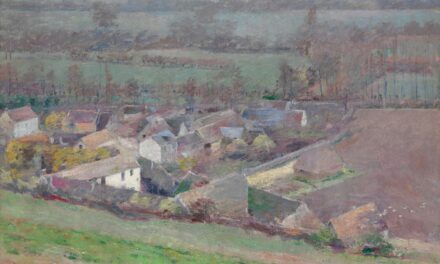
In his later years, Friesz found profound inspiration in the landscapes of Normandy and the French countryside. These works often possess a tranquil beauty, a sense of enduring peace, and a masterful handling of light and atmosphere. His still life paintings also reached a new level of refinement, with a keen attention to the textures and forms of everyday objects, rendered with his characteristic sensitivity to colour and composition.
A Continued Exploration of Form and Colour
Even in his later works, Friesz continued to subtly refine his artistic language. The bold, almost aggressive, colour of his Fauvist period matured into a more sophisticated and harmonious palette, capable of expressing a wide range of subtle emotions. His compositions remained strong and well-structured, demonstrating a lifelong commitment to the underlying architecture of his subjects.
Retrospectives and Recognition
Throughout his life, Friesz received increasing recognition for his significant contributions to modern art. Retrospective exhibitions of his work were held, celebrating his journey from the revolutionary fervour of Fauvism to the considered mastery of his later years. These exhibitions served to solidify his place in art history, acknowledging his pivotal role in the development of early 20th-century painting.
A Quiet Dedication to Art
Othon Friesz passed away on January 11, 1949, in Paris, leaving behind a rich and diverse body of work. His life was a testament to the power of artistic dedication, a constant exploration of form and colour, and a profound connection to the world around him. From the sun-drenched shores of his youth to the bustling streets of Paris and the serene landscapes of his later years, Friesz painted his life with a passion and intensity that continues to resonate with art lovers today. His legacy is not just in the canvases he created, but in the spirit of innovation and the enduring beauty he brought to the world of art.
FAQs
1. Who was Othon Friesz?
Othon Friesz was a French artist known for his contributions to the Fauvist movement in the early 20th century. He was born in Le Havre, France in 1879 and studied at the École des Beaux-Arts in Le Havre before moving to Paris to further his artistic career.
2. What is the Fauvist movement?
The Fauvist movement was a short-lived but influential art movement that emerged in France in the early 20th century. Fauvist artists, including Othon Friesz, used bold, vibrant colors and simplified forms to create emotionally expressive works of art. The movement is often associated with artists such as Henri Matisse and André Derain.
3. What are some of Othon Friesz’s notable works?
Some of Othon Friesz’s notable works include “The Quay at Le Havre,” “Landscape with Figures,” and “The Port of Anvers.” These paintings showcase his use of bold colors and expressive brushwork, characteristic of the Fauvist style.
4. How did Othon Friesz’s artistic style evolve over time?
While Othon Friesz initially embraced the Fauvist style, his work later evolved to incorporate elements of Cubism and a more structured approach to composition. This shift in style reflected the broader artistic developments taking place in the early 20th century.
5. What is Othon Friesz’s legacy in the art world?
Othon Friesz’s legacy in the art world is primarily tied to his role as a key figure in the Fauvist movement. His bold use of color and expressive style continue to influence artists today, and his work is celebrated for its contribution to the development of modern art.