The Early Years and a Formative Struggle
Philip Guston’s journey, from his birth as Philip Goldstein in Montreal, Canada, in 1913, to his eventual transformation into a towering figure of American art, was deeply rooted in the tumultuous experiences of his early life. The shadow of his parents’ escape from Odessa, Ukraine, to avoid persecution, imbued his childhood with a palpable sense of displacement and trauma. This historical backdrop, coupled with the profound personal tragedy that struck the family, would indelibly mark Guston’s artistic and psychological landscape. In 1919, the family relocated to Los Angeles, a move that, while offering the promise of a new beginning, ultimately exposed Guston to a different kind of hardship.
The pivotal, and indeed traumatic, event of his youth occurred in 1923 when his father, a blacksmith, tragically committed suicide by hanging. Guston, a mere ten years old, discovered his father’s body, an experience that would haunt him throughout his life and manifest in recurring themes of vulnerability, anxiety, and the darker aspects of human existence within his later work. This profound loss, coupled with the family’s ongoing financial struggles, forced Guston to mature rapidly. Art became not merely a pastime but a refuge, a means of processing the unbearable weight of his reality. He found solace in drawing, immersing himself in comics and caricatures, a practice that, ironically, would later inform the bold, cartoon-like figures of his controversial late period.
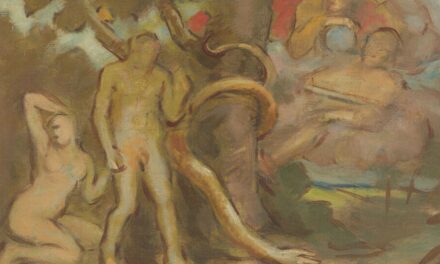
His formal artistic education was fragmented and often self-directed. While attending manual arts high school in Los Angeles, he developed a friendship with Jackson Pollock, a peer who would also go on to redefine American art. Their shared passion for art led them to drop out of high school and pursue their artistic inclinations with a fierce, independent spirit. This period was marked by an intense exploration of art history, particularly the works of the Italian Renaissance masters like Piero della Francesca and Masaccio. Guston’s early fascination with these artists, whose monumental figures and dramatic compositions spoke of both human suffering and spiritual transcendence, laid the groundwork for his lifelong engagement with figuration and narrative. He was particularly drawn to their frescoes, a medium that allowed for a grand scale and public engagement, qualities he would later grapple with in his own large-scale abstract works.
His political consciousness also began to awaken during these formative years. The Great Depression cast a long shadow over America, and Guston, witnessing widespread poverty and social injustice, became increasingly politicised. He was drawn to radical politics, aligning himself with communist ideals and participating in mural projects that aimed to bring art to the masses and address social issues. This commitment to social realism, a style prevalent in the 1930s, saw him depict scenes of working-class life, protest, and the struggles of the disenfranchised. This early engagement with social commentary, though later abandoned in favour of abstraction, reveals a deep-seated desire to confront reality and use art as a vehicle for truth-telling, a characteristic that would re-emerge in stark and unsettling ways in his later work.
Philip Guston, a pivotal figure in the evolution of modern art, is renowned for his unique blend of abstraction and figuration, which reflects his complex life experiences and artistic journey. His work often grapples with themes of identity, politics, and the human condition, making it a rich subject for exploration. For those interested in understanding the broader context of artistic expression during his time, a related article on the painting “Franz von Lenbach with Wife and Daughters” by Franz von Lenbach provides insight into the familial and societal themes prevalent in art history. You can read more about it here.
From Social Realism to Abstract Expressionism
Guston’s artistic trajectory through the 1930s and 40s was a fascinating journey that saw him move from the didacticism of social realism to the burgeoning dynamism of Abstract Expressionism. This transition was not a sudden volte-face but rather a gradual evolution, driven by a growing dissatisfaction with the limitations of purely representational art and an increasing desire to explore the inner psychological landscape.
The Influence of the Mexican Muralists and Public Art
His early immersion in public art projects, particularly under the Works Progress Administration (WPA) Federal Art Project, was crucial in shaping his artistic sensibilities. He worked on several murals, including the “Collaboration” mural at the City of Hope National Medical Center in Duarte, California, and the “Pittsburgh Airport Mural” at the Greater Pittsburgh International Airport. These projects, often executed in collaboration with other artists, allowed him to hone his skills in large-scale composition and storytelling. More significantly, he was profoundly influenced by the Mexican muralists, particularly David Alfaro Siqueiros and José Clemente Orozco. He admired their monumental scale, their powerful political messages, and their ability to imbue their figures with an almost mythic quality. The dramatic use of light and shadow, the intense emotionality, and the overtly political content of their work resonated deeply with Guston’s own burgeoning social conscience.
However, as the political climate shifted and the fervor for social realism waned, Guston began to feel constrained by the narrative demands of the style. He found that the explicit depiction of social issues, while noble in intent, often sacrificed the deeper emotional and psychological nuances he sought to express. He yearned for a more personal and introspective mode of expression, one that could convey the complexities of human experience without relying on overt political messaging.
The Shift Towards Abstraction and the New York School
The move to New York in the late 1940s proved to be a pivotal moment. Here, Guston found himself at the epicenter of a radical artistic movement – Abstract Expressionism. He reconnected with Jackson Pollock and formed friendships with other key figures of the New York School, including Willem de Kooning, Franz Kline, and Mark Rothko. The prevailing ethos of this movement, with its emphasis on spontaneous gesture, emotional intensity, and the exploration of the subconscious, offered Guston a liberating alternative to his previous artistic concerns.
His initial abstract works, often characterised by dense, intricate masses of brushstrokes, were a far cry from the bold, gestural canvases of Pollock or de Kooning. Guston’s abstractions were more nuanced, almost poetic, featuring delicate clusters of paint that seemed to coalesce and dissolve on the canvas. These works, often referred to as “abstract impressionism,” were highly atmospheric and evoked a sense of inner light and introspection. He experimented with a limited palette, often favouring muted tones of pinks, greys, and blacks, creating a sense of ethereal beauty and profound emotional depth. This period marked his critical and commercial peak within the Abstract Expressionist movement, establishing him as a significant voice and earning him widespread acclaim. Critics lauded his ability to infuse abstraction with a palpable human presence, even in the absence of explicit figuration.
However, beneath the surface of his successful abstract period, a subtle unease began to brew. While he embraced the freedom of abstraction, he also felt a growing sense of detachment from the tangible world. The very success of Abstract Expressionism, with its emphasis on pure form and emotional spontaneity, began to feel like a trap. Guston, ever the restless seeker, found himself increasingly questioning the ultimate purpose and meaning of art that seemed to exist purely for its own sake. He yearned for a return to something more grounded, more directly confrontational with the human condition, even if it meant risking his hard-won reputation.
The Return to Figuration and the Ku Klux Klan Series
The late 1960s witnessed a seismic shift in Guston’s artistic direction, a radical departure that sent shockwaves through the art world and irrevocably altered his legacy. After years of critical acclaim as an Abstract Expressionist, Guston made the audacious decision to return to figuration, but not in the way anyone expected. His new paintings were raw, confrontational, and deeply unsettling, populated by grotesque, cartoon-like figures that seemed to emerge from a disturbed dream.
The Seeds of Discontent
The seeds of this return to figuration were sown during his abstract period. Despite the critical success, Guston felt a growing sense of disillusionment with the perceived purity and intellectual detachment of Abstract Expressionism. He often spoke of feeling like he was “painting in a vacuum,” and yearned for art that could directly engage with the turbulent social and political realities of his time. The Vietnam War, the Civil Rights Movement, and the pervasive violence and unrest of the 1960s weighed heavily on him. He felt an ethical imperative to create art that reflected these realities, rather than retreating into an aestheticised inner world.
He began to experiment with small, intimate drawings, often late at night, in secret. These early sketches, almost a personal confession, featured crude, hooded figures, disembodied eyes, and everyday objects rendered with a new, almost childlike simplicity. This clandestine practice allowed him to explore a nascent visual language, free from the expectations and pressures of the established art world.
The Unveiling of the Klan Figures
In 1969, Guston unveiled his new body of work at the Marlborough Gallery in New York, a show that would prove to be one of the most controversial in modern art history. The exhibition featured large-scale paintings depicting hooded figures, strongly reminiscent of the Ku Klux Klan, engaged in mundane, often absurd, activities. They drove cars, smoked cigarettes, painted, and even played golf. These figures, rendered in a distinctive palette of pinks, reds, and blacks, were both menacing and pathetic, embodying a chilling banality of evil.
The critical reaction was immediate and overwhelmingly negative. Many of his former admirers and critics felt betrayed, accusing him of abandoning abstraction for a crude, illustrative style. They saw the work as a regression, a betrayal of his earlier artistic achievements. Hilton Kramer, a prominent art critic, famously derided the exhibition as a “public suicide.” The art world, steeped in the formalist doctrines of the time, was ill-equipped to comprehend the profound psychological and ethical complexities of Guston’s new vision.
Interpreting the Hooded Figures
Guston’s intention with these Klan figures was not to glorify or sensationalise bigotry, but rather to confront the insidious nature of evil, both external and internal. He often stated that these hooded figures were not merely representations of the Klan, but rather universal symbols of complicity and the “ordinary” person capable of extraordinary cruelty. He saw the hooded figures as an extension of himself, acknowledging the potential for darkness within all humanity. “I was getting sick and tired of all that purity,” he famously declared. “I wanted to tell stories.”
The personal resonance of this imagery cannot be overstated. His childhood memories of his father’s suicide, the lingering trauma of his family’s flight from persecution, and his enduring fascination with the dark undercurrents of human nature all found expression in these disturbing figures. The banality of their actions in the paintings amplified their menace, suggesting that evil often lurks not in grand, dramatic gestures, but in the everyday, the mundane, the unchallenged assumptions of a society. The “hood” became a powerful metaphor for hidden identity, collective guilt, and the cloaking of conscience. This period marked a profound existential crisis and a courageous artistic rebirth, positioning Guston as a maverick who dared to challenge the prevailing orthodoxies of the art world.
The Later Years: Heads, Limbs, and the Accumulation of Objects
Following the initial outcry surrounding his return to figuration, Guston retreated from the immediate glare of the New York art scene, settling in Woodstock, New York. This period, from the early 1970s until his death in 1980, saw him further refine and expand upon his distinctive late style. His paintings became increasingly personal, introspective, and almost diaristic, populated by a recurring cast of fragmented figures, disembodied heads, severed limbs, and a poignant accumulation of everyday objects.
The Isolated Head and the Eye
A dominant motif in these later works was the isolated, often bald or slightly hairy, head. These heads, with their bulging eyes and pained expressions, seem to float precariously in vast, unsettling spaces, or are sometimes depicted on pillows or beds, suggesting vulnerability and a weary resignation. The eyes, in particular, became a powerful symbol. They are often wide open, staring out directly at the viewer, yet seem to carry the weight of internal struggle and existential dread. This emphasis on the eye can be seen as a continuation of his earlier concern with perception, witnessing, and the burden of seeing the world in all its harshness.
These heads are rarely portraits in the traditional sense; rather, they are archetypes of human suffering, anxiety, and introspection. They embody a sense of weariness, a profound weariness of the soul, grappling with the complexities of existence. Guston himself often felt a profound sense of isolation and melancholic introspection during these years, and these heads serve as a powerful visual manifestation of his inner landscape.
The Accumulation of Mundane Objects
Alongside these figures, Guston filled his canvases with a strange and compelling inventory of mundane objects: shoes, bottles, clocks, lamps, bricks, and even piles of rubbish. These objects, rendered with a thick, almost sculptural application of paint, take on an almost totemic significance. They are not merely props but active participants in the visual narrative, imbued with symbolic weight and emotional resonance. The shoes, often depicted in piles or as solitary worn objects, evoke a sense of journey, abandonment, and the passage of time. The bricks, frequently seen as walls or scattered fragments, speak of construction, destruction, and the precariousness of human dwellings.
This accumulation of objects can be seen as a visual metaphor for the debris of human experience, the remnants of lives lived, and the chaotic accumulation of the everyday. There’s a poignant sense of materiality, a recognition of the physical world that surrounds us, even in its most discarded forms. The way these objects are piled, scattered, or arranged often creates a sense of imminent collapse or disarray, reflecting the artist’s own anxieties about the fragility of life and meaning.
Themes of Time, Memory, and Mortality
The overarching themes of Guston’s late period are undoubtedly time, memory, and mortality. The clocks, often depicted with broken hands or distorted faces, serve as stark reminders of the relentless march of time and the inevitability of death. The fragmented bodies and disembodied limbs evoke a sense of dissolution and the fragility of the human form. There’s a powerful sense of decay and renewal, of things breaking down and reforming, reflecting the cyclical nature of life and death.
Despite the often bleak subject matter, there is also a profound humanity and a dark humour that pervades these works. Guston’s distinctive palette, still dominated by the pinks, reds, and blacks, alongside a more expanded range of earthy tones, lends a visceral quality to his paintings. The thick, expressive brushstrokes, remnants of his Abstract Expressionist past, give the figures and objects a tangible, almost sculpted presence. These late works, initially met with resistance, are now widely recognised as some of his most powerful and enduring contributions to art history, solidifying his reputation as an artist who fearlessly confronted the complexities of the human condition, even at the risk of his own artistic standing.
Philip Guston, an influential figure in the world of modern art, is often celebrated for his unique approach to abstraction and figuration. His life story is intricately woven with the evolution of contemporary art, reflecting the tumultuous socio-political landscape of his time. For those interested in exploring the broader context of modern art, a related article discusses the significance of institutions like the Museum of Modern Art in New York City, which has played a pivotal role in showcasing artists like Guston. You can read more about it in this insightful piece on the Museum of Modern Art.
Enduring Legacy and Reappraisal
Philip Guston’s final decade, marked by a period of intense artistic productivity and profound personal reflection, solidified his place as one of the most influential and enigmatic artists of the 20th century. His death in 1980 left a void, but also a remarkably rich and complex body of work that continues to provoke, challenge, and inspire. The initial vitriol that greeted his return to figuration gradually gave way to a critical reevaluation, leading to a widespread understanding and appreciation of his late style.
The Shift in Critical Perception
The art world’s initial resistance to Guston’s late works was deeply rooted in the prevailing formalist aesthetic of the 1960s and 70s, which prioritised abstract purity and intellectual detachment. His move towards grotesque, narrative figuration was seen as a transgression, a betrayal of the modernist project. However, as the 1980s unfolded, new artistic movements, particularly Neo-Expressionism, began to emerge, validating a return to figuration, narrative, and emotional intensity. Artists like Jean-Michel Basquiat and Julian Schnabel, among others, found inspiration in Guston’s raw honesty and his willingness to grapple with uncomfortable truths.
This shift in the broader artistic landscape allowed for a more nuanced and receptive understanding of Guston’s work. Critics and scholars began to recognise the profound psychological depth, the ethical urgency, and the intellectual rigour underpinning his seemingly crude imagery. His personal struggles, his fascination with the dark side of humanity, and his relentless pursuit of artistic truth, even at great personal cost, resonated deeply with a new generation of artists and thinkers.
Influence on Contemporary Art
Guston’s legacy is undeniable and far-reaching. He fundamentally challenged the perceived divide between figuration and abstraction, demonstrating that an artist could navigate and even fuse these seemingly disparate modes of expression. His work offered a powerful counter-narrative to the prevailing aesthetic trends of his time, proving that sincerity, vulnerability, and a willingness to confront difficult subject matter were not impediments to artistic greatness.
Many contemporary artists continue to draw inspiration from Guston’s willingness to embrace a seemingly clumsy or “bad” style to achieve a deeper emotional impact. His use of a limited yet highly expressive palette, his thick, almost sculptural application of paint, and his ability to imbue mundane objects with profound symbolic meaning have all influenced subsequent generations. His unflinching examination of guilt, complicity, and the darker aspects of the human psyche remains particularly relevant in a world grappling with ongoing social and political turmoil.
The Enduring Power of a Visionary
Ultimately, Philip Guston’s life and art serve as a testament to the power of artistic conviction and the courage to follow one’s own truth, even when it means challenging established norms and risking public approbation. His journey from the trauma of his youth, through the heights of abstract expressionist fame, to the controversial and profound return to figuration, is a narrative of relentless artistic evolution and unflinching self-examination. He was an artist who never stopped questioning, never stopped pushing boundaries, and never shied away from the messy, complex, and often uncomfortable realities of human existence.
His paintings, with their iconic hooded figures, their weary heads, and their poignant collections of objects, are not merely aesthetic statements; they are profound meditations on the human condition, on memory, on mortality, and on the enduring presence of both good and evil in the world. Guston’s work forces us to confront uncomfortable truths, to look closely at ourselves and the society we inhabit, and to consider the ethical responsibilities of both the artist and the viewer. His is a legacy that continues to resonate, reminding us that true art often lies in the willingness to be vulnerable, to be honest, and to stare unflinchingly into the abyss of human experience.
FAQs
Who was Philip Guston?
Philip Guston was a Canadian-American painter born on June 27, 1913, in Montreal, Quebec. He is known for his contributions to the Abstract Expressionism movement and later for his distinctive figurative style that emerged in the late 1960s, characterised by cartoonish imagery and social commentary.
What are some notable works by Philip Guston?
Some of Philip Guston’s notable works include “The Studio” (1969), “City Limits” (1969), and “The Tower” (1976). His later works often featured motifs such as hoods, shoes, and clocks, reflecting his personal experiences and broader societal issues.
What influenced Philip Guston’s artistic style?
Guston’s artistic style was influenced by various factors, including his early exposure to the Mexican muralists, his experiences as a Jewish artist in America, and his reflections on personal and political themes. His shift from Abstract Expressionism to a more figurative approach was also influenced by his desire to address contemporary issues and his own identity.
When did Philip Guston pass away?
Philip Guston passed away on June 7, 1980, in Woodstock, New York. His death marked the end of a significant career that had a lasting impact on the art world, particularly in the realms of modern and contemporary art.
How has Philip Guston’s work been received posthumously?
Posthumously, Philip Guston’s work has gained increased recognition and appreciation, particularly for its bold commentary on race, identity, and politics. His paintings have been the subject of numerous exhibitions and retrospectives, and he is now regarded as a pivotal figure in 20th-century art.