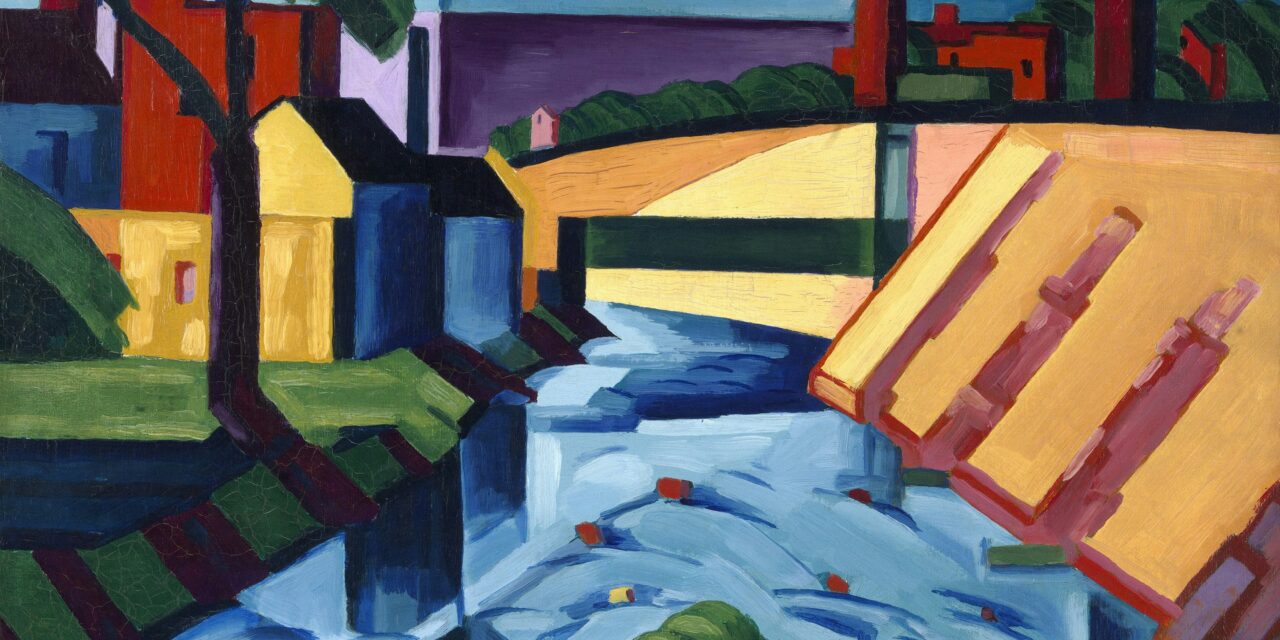
An Introduction to Charles Demuth: A Multifaceted Modernist
Charles Demuth, often celebrated as a pivotal figure in American modernism, remains a subject of enduring fascination for art historians and enthusiasts alike. Born in Lancaster, Pennsylvania, in 1883, Demuth’s life, though tragically cut short at the age of 43, was one of intense artistic exploration, profound personal struggles, and remarkable creative output. His work, characterised by its precision, elegance, and often evocative symbolism, traversed the boundaries of various artistic movements, leaving an indelible mark on the landscape of 20th-century American art. From his early ventures into Symbolism and Expressionism to his later groundbreaking contributions to Precisionism, Demuth’s oeuvre offers a rich tapestry of stylistic innovation and thematic depth. This guide delves into the intricate facets of his life and art, illuminating the complexities of his genius and his enduring legacy.
Demuth’s early life was marked by both privilege and physical adversity. Afflicted with a childhood injury that left him with a lifelong limp, and later battling diabetes, his physical limitations often forced him into periods of introspection and intense artistic focus. He received a rigorous artistic education, initially at the Franklin and Marshall Academy and later at the Pennsylvania Academy of the Fine Arts, where he studied under renowned American Realist painters like William Merritt Chase and Thomas Pollock Anshutz. These formative years provided him with a strong foundation in academic drawing and painting, skills he would later masterfully adapt and transform to serve his modernist vision. It was during this period that Demuth also cultivated a close circle of intellectual and artistic peers, including the poet William Carlos Williams and the artists Marsden Hartley and Georgia O’Keeffe, whose influence and camaraderie played a significant role in his artistic development.
Early Influences and Stylistic Evolution
Demuth’s artistic journey was profoundly shaped by his travels to Europe, particularly Paris, between 1907 and 1913. These trips exposed him to the avant-garde movements that were revolutionising European art, including Cubism, Fauvism, and Symbolism. He immersed himself in the vibrant artistic milieu of the city, frequenting galleries, attending salons, and absorbing the groundbreaking ideas of artists like Henri Matisse, Pablo Picasso, and Marcel Duchamp. This exposure proved to be a catalyst for his stylistic evolution, pushing him beyond the academic constraints of his earlier training and encouraging him to experiment with new forms, colours, and compositional approaches.
Parisian Encounters and the Rise of Symbolism
In Paris, Demuth was particularly drawn to the Symbolist movement, which resonated with his innate poetic sensibility and his interest in exploring subjective experience and hidden meanings. Artists like Odilon Redon and Gustave Moreau, with their emphasis on suggestion, metaphor, and emotional expression, provided a powerful counterpoint to the more objective realism he had been taught. Demuth’s early watercolours from this period often display a dreamlike quality, with delicate washes of colour and ethereal figures, reflecting the Symbolist preoccupation with interior worlds and mystical themes. These works, often featuring theatrical figures, dancers, and sensuous nudes, explore themes of performance, desire, and the ambiguity of human experience. His use of watercolour, a medium he mastered with extraordinary skill, allowed him to achieve a remarkable subtlety and luminosity, perfectly suited to the elusive nature of Symbolist expression.
Cubist Explorations and Formal Innovation
While Symbolism provided a significant thematic and atmospheric framework for his early work, Demuth also engaged deeply with the formal innovations of Cubism. He was fascinated by the Cubist deconstruction of form, its fragmentation of objects into geometric planes, and its exploration of multiple viewpoints. While he never fully embraced the radical abstraction of analytical Cubism, he ingeniously integrated certain Cubist principles into his own distinctive style. This is evident in his later Precisionist works, where he used simplified geometric forms and sharp lines to depict industrial landscapes and architectural structures, creating a sense of dynamic tension and formal clarity. His early charcoal drawings and oil studies reveal a keen understanding of Cubist spatial arrangements and a meticulous attention to the interplay of positive and negative space. This period of intense experimentation laid the groundwork for his mature style, blending the lyrical qualities of Symbolism with the structural rigour of Cubism.
In addition to the comprehensive exploration of Charles Demuth’s artistic contributions, readers may find it intriguing to delve into the article on the use of iridescent and metallic paints, which highlights the reflective effects that can enhance various artistic styles. This article provides valuable insights into the materials that artists can employ to create striking visual impacts, much like Demuth did in his own work. For more information, you can read the article here: Exploring Iridescent and Metallic Paints: Reflective Effects.
Precisionism: Demuth’s Distinctive American Modernism
It is in the realm of Precisionism that Charles Demuth made his most profound and lasting contribution to American art. Precisionism, an art movement that emerged in the United States in the aftermath of World War I, sought to capture the essence of the modern industrial landscape with a meticulous and often idealised realism. Demuth, along with artists like Charles Sheeler and Georgia O’Keeffe, became a leading exponent of this style, which celebrated the clean lines, geometric forms, and technological advancements of the new American age. His Precisionist works, primarily executed in oil, are characterised by their sharp focus, smooth surfaces, and a sense of detached elegance, often imbuing industrial structures with a surprising beauty and monumentality.
Architectural Portraits and Industrial Landscapes
Demuth’s Precisionist paintings are perhaps best known for their depictions of industrial buildings, grain elevators, factories, and urban landscapes. Rather than merely documenting these structures, Demuth elevated them to the status of iconic symbols, transforming ordinary architectural forms into powerful statements about modernity and the American experience. He meticulously rendered every detail, from the sharp edges of steel girders to the intricate patterns of brickwork, creating compositions that are both technically precise and aesthetically compelling. His choice of subjects often reflected his fascination with his native Pennsylvania, particularly the industrial architecture of Lancaster and its surrounding areas. These works convey a sense of awe at human ingenuity and technological progress, yet they also possess a subtle detachment, a cool, almost objective gaze that avoids overt sentimentality.
“My Egypt” and the Poetics of Industry
One of Demuth’s most iconic Precisionist works is “My Egypt” (1927), a powerful oil painting depicting a monumental grain elevator. The title itself is a testament to Demuth’s ability to imbue industrial structures with profound symbolic meaning. By likening the grain elevator to an ancient Egyptian monument, he elevates it to a symbol of enduring power, human endeavour, and the cyclical nature of civilisation. The painting is a masterpiece of formal organisation, with its crisp lines, geometric clarity, and subtle interplay of light and shadow. The building dominates the canvas, its imposing form rendered with such precision that it almost gleams with an internal light. The composition is simplified, removing extraneous details to focus on the essential forms, creating a sense of timelessness and monumentality. “My Egypt” exemplifies Demuth’s ability to find beauty and significance in the mundane, transforming a utilitarian structure into a powerful artistic statement.
Fragmentation and Dynamic Composition
Beyond simply rendering architectural forms, Demuth often employed elements of fragmentation and dynamic composition derived from Cubism to enhance the visual impact of his Precisionist works. He would sometimes break down buildings into interlocking planes and use intersecting lines and diagonal axes to create a sense of movement and energy within the static forms. This approach allowed him to explore the interplay of light and shadow in a more complex way, creating illusions of depth and spatial ambiguity. The resulting compositions are not merely photographic representations but rather carefully constructed visual interpretations that highlight the abstract qualities inherent in modern architecture. This fusion of meticulous detail with abstract principles gave his Precisionist paintings a unique edge and distinguished them from straightforward architectural rendering.
Watercolour Mastery and Floral Still Lifes
While Demuth is rightly celebrated for his groundbreaking Precisionist oil paintings, his virtuosity with watercolour is equally remarkable and forms a substantial and significant part of his oeuvre. He elevated watercolour from a traditionally secondary medium to a primary mode of artistic expression, demonstrating an unparalleled skill in handling its fluidity, transparency, and delicate luminosity. His watercolour output is extensive and diverse, encompassing a wide range of subjects from nudes and theatrical scenes to landscapes and, most notably, exquisite floral still lifes.
The Delicacy and Precision of Watercolour
Demuth’s command of watercolour was nothing short of masterful. He exploited the medium’s inherent qualities – its ability to create translucent washes, sharp lines, and vibrant glazes – to achieve effects that are both delicate and precise. Unlike many of his contemporaries who used watercolour primarily for sketches or preparatory studies, Demuth treated it with the same seriousness and intensity as oil painting, creating finished works of art that stand on their own merit. His technique involved a meticulous layering of washes, building up colour and form with extraordinary control, yet always retaining the inherent freshness and spontaneity of the medium. The precision evident in his oil paintings finds an equally compelling expression in his watercolours, demonstrating a consistent artistic vision across different materials.
Botanical Studies and Symbolic Flora
Among his most beloved watercolour subjects are his floral still lifes. These works, often depicting everyday flowers like zinnias, gladioli, and fruit, are far from mere botanical illustrations. Instead, Demuth infused them with a subtle symbolism and a refined aesthetic sensibility. He approached his subjects with a keen observational eye, capturing the intricate details of petals, leaves, and stems with remarkable accuracy. However, his rendering goes beyond mere representation; there is an underlying sense of structure and formal arrangement that echoes his Precisionist tendencies. The flowers are often meticulously arranged, creating balanced and harmonious compositions, while the interplay of light and shadow is handled with exquisite finesse, giving the subjects a vibrant, almost living presence.
The Lyrical Power of Fruit and Vegetables
Demuth’s still lifes also frequently feature fruit and vegetables, rendered with the same delicate precision and evocative power as his flowers. Apples, pears, and other produce are depicted with a quiet dignity, their forms simplified and their surfaces imbued with a luminous quality. These works often possess a sense of quiet intimacy, inviting the viewer to contemplate the beauty of everyday objects. The colours are rich yet restrained, with subtle gradations and vibrant accents that capture the ephemeral beauty of nature. Through these seemingly simple subjects, Demuth explored themes of growth, decay, and the passage of time, imbuing his still lifes with a poetic resonance that transcends their immediate visual appeal. His watercolour still lifes demonstrate a profound appreciation for the natural world and a remarkable ability to translate its delicate intricacies into compelling artistic statements.
Literary Allusions and Poster Portraits
Beyond his formal innovations and masterful technique, Charles Demuth was also a deeply intellectual artist, profoundly influenced by literature and a close friend to many prominent writers of his era. This intellectual curiosity manifested in a unique series of works known as his “poster portraits” or “pictorial poems,” which fuse visual art with literary allusion, creating a dialogue between image and text that is both sophisticated and playful. These works stand as a testament to his interdisciplinary approach to art-making and his personal relationships with the literary avant-garde.
The “Poster Portraits”: A Unique Homage
Demuth’s poster portraits are a fascinating and highly original contribution to American modernism. Created between 1924 and 1929, this series consists of eleven works dedicated to his literary friends and acquaintances, including William Carlos Williams, Georgia O’Keeffe (though primarily known as a painter, she moved in literary circles), Eugene O’Neill, Gertrude Stein, and Wallace Stevens. These are not traditional portraits in the representational sense; instead, they are abstract or semi-abstract compositions that use symbolic objects, architectural elements, and strategically placed words to evoke the character, work, or personality of the sitter. Each poster portrait is a visual riddle, a sophisticated game of association that rewards the viewer’s knowledge of both the artist and the subject.
Visual Metaphors for Literary Figures
For example, his “I Saw the Figure 5 in Gold” (1928), dedicated to William Carlos Williams, is a striking visual interpretation of Williams’s poem “The Great Figure.” The painting features a dynamic arrangement of red and gold numbers, architectural fragments, and text, capturing the frenetic energy and specific imagery of the poem. Similarly, his portrait for Gertrude Stein, “Incantation” (1927), uses a combination of architectural forms and cryptic phrases to allude to her experimental writing style and her intellectual salon in Paris. These works are not meant to be read literally but rather to be experienced as visual poems, where each element contributes to a larger metaphorical meaning. They demonstrate Demuth’s deep understanding of his friends’ creative processes and his ability to translate literary concepts into compelling visual forms.
The Interplay of Text and Image
The inclusion of text within these poster portraits is crucial to their meaning and impact. Demuth integrated words, numbers, and phrases directly into the compositions, often treating them as graphic elements rather than purely linguistic ones. This fusion of text and image challenges traditional notions of portraiture and highlights Demuth’s modernist inclination to break down conventional artistic boundaries. The words chosen are not arbitrary; they are carefully selected to resonate with the subject’s literary output, personal quirks, or key themes in their work. This innovative approach transformed the act of portraiture into a complex intellectual exercise, inviting viewers to engage with the art on multiple levels—visual, literary, and symbolic. The poster portraits are a testament to Demuth’s wit, his intellectual curiosity, and his profound connection to the literary world, solidifying his reputation not just as a painter, but as a visual poet in his own right.
For those interested in exploring the techniques that underpin Charles Demuth’s captivating works, a related article on the wet-on-wet painting technique offers valuable insights. This method, which allows for a unique blending of colours and textures, can be seen in various artists’ practices, including Demuth’s. To delve deeper into this technique, you can read more in the article An Introduction to the Art Technique Wet-on-Wet. Understanding such techniques can enhance one’s appreciation of Demuth’s artistry and the innovative approaches he employed throughout his career.
Demuth’s Legacy and Enduring Impact
Despite his relatively short career, Charles Demuth left an indelible mark on American art, and his legacy continues to resonate with artists and scholars today. His pioneering contributions to Precisionism, his unparalleled mastery of watercolour, and his innovative literary “poster portraits” cemented his place as one of the most significant figures in early 20th-century American modernism. His work bridged the gap between European avant-garde movements and a distinctly American aesthetic, helping to define a new visual language for a rapidly changing nation.
Championing American Modernism
Demuth was instrumental in developing a distinctly American form of modernism. While he absorbed influences from Cubism, Fauvism, and Symbolism during his European travels, he synthesised these elements into a style that reflected the unique character of the American landscape and its nascent industrial age. His Precisionist paintings, in particular, offered a powerful and original vision of modern America, celebrating its technological progress and urbanisation with a clarity and formal rigour that was groundbreaking at the time. He, along with other Precisionists, moved away from European academic traditions and towards an art that was uniquely suited to the American experience, inspiring subsequent generations of artists to explore their own national identity through art.
Influence on Later Generations
Demuth’s influence extended to numerous artists who followed in his footsteps. His precise draftsmanship, clean lines, and sophisticated compositions set a high bar for technical excellence and formal innovation. Artists working in various genres, from architectural rendering to graphic design, have drawn inspiration from his work. The clarity and precision of his forms, particularly in his oil paintings, provided a blueprint for depicting the built environment with both accuracy and aesthetic power. His watercolours, with their delicate balance of control and fluidity, continue to serve as a model for artists seeking to master this challenging medium, demonstrating its potential for creating profound and nuanced works of art.
The Enduring Appeal of His Art
The enduring appeal of Charles Demuth’s art lies in its combination of intellectual rigor, formal beauty, and emotional depth. Whether depicting a towering grain elevator or a delicate flower, his work possesses a timeless quality, inviting viewers to contemplate themes of modernity, nature, and human experience. His ability to find beauty in industrial structures, to infuse everyday objects with symbolic meaning, and to bridge the gap between literature and visual art speaks to a profound and multifaceted artistic intelligence. His personal struggles with illness and his quiet, introspective nature are often reflected in the subtle melancholy and reflective quality of his art, adding another layer of depth and resonance. Demuth’s oeuvre remains a rich field for exploration, offering continuous insights into the development of modern art and the unique vision of an artist who pushed the boundaries of his craft with remarkable skill and originality. He is rightly celebrated as a master whose contributions continue to enrich and inspire the art world.
FAQs
Who was Charles Demuth?
Charles Demuth was an American painter born on November 8, 1883, in Lancaster, Pennsylvania. He is best known for his contributions to the Precisionism movement, which focused on the depiction of modern American life and industrial landscapes through a clear, precise style.
What are some notable works by Charles Demuth?
Some of Demuth’s most notable works include “My Egypt” (1927), which showcases his interest in industrial architecture, and “The Figure 5 in Gold” (1928), a tribute to his friend, the poet William Carlos Williams. These works exemplify his unique blend of abstraction and representation.
What artistic styles did Charles Demuth employ?
Demuth primarily employed Precisionism, characterised by its focus on clean lines, geometric forms, and a clear representation of industrial subjects. He also incorporated elements of Cubism and Post-Impressionism into his work, reflecting a diverse artistic influence.
What was the significance of Demuth’s work in American art?
Demuth’s work is significant in American art as it captures the essence of early 20th-century industrialisation and urbanisation. His paintings reflect the changing landscape of America and are considered pivotal in the development of modern American art, influencing future generations of artists.
When did Charles Demuth pass away?
Charles Demuth passed away on October 23, 1935, in Lancaster, Pennsylvania. His legacy continues to be celebrated, and his works are featured in major art collections and exhibitions across the United States and beyond.