Unveiling the Enigma: The Life and Legacy of Morris Louis
Morris Louis, born Morris Louis Bernstein in 1912, remains one of the most enigmatic and profoundly influential figures in the trajectory of American Abstract Expressionism and, more specifically, Colour Field painting. His short but intensely productive career, tragically cut short by lung cancer in 1962, saw him develop a singular artistic language that redefined the relationship between paint, canvas, and the viewer. Unlike some of his contemporaries who embraced the gestural and often emotionally charged brushwork of Abstract Expressionism, Louis pursued a path of almost meditative restraint, allowing the sheer chromatic power of his thinned acrylic paints to speak for themselves. His work, characterised by its luminous washes and monumental scale, is a testament to the idea that profundity can be found in simplicity, and that the physical act of painting can transcend mere representation to become an object of pure aesthetic experience.
For those interested in exploring the artistic techniques that influenced Morris Louis, a related article that delves into the intricate world of traditional Japanese printmaking is highly recommended. This piece, titled “An Introduction to the Art Technique of Woodblock Printing (Moku Hanga),” provides valuable insights into the methods and philosophies behind this ancient art form, which may have parallels in Louis’s approach to colour and composition. To read more about this fascinating technique, visit here.
The Genesis of an Artist: Early Life and Influences
Morris Louis’s early life offered little indication of the revolutionary path his art would eventually take. Born in Baltimore, Maryland, to Russian Jewish immigrant parents, his artistic inclination emerged relatively early. He attended the Maryland Institute of Fine and Applied Arts from 1929 to 1933, a period marked by the Great Depression, which undoubtedly shaped his early experiences. His formal training was relatively conventional, focusing on traditional drawing and painting techniques. However, Louis was not content to merely replicate established styles. He soon developed a reputation for being fiercely independent and somewhat reclusive, qualities that would characterise his entire artistic career.
From Baltimore to the Epicentre of Art: New York and the WPA
After graduating, Louis moved to New York City in 1936, a move that placed him at the epicentre of the burgeoning American art scene. Like many artists of his generation during the Depression, he found employment with the Works Progress Administration (WPA) Federal Art Project. This government-sponsored initiative provided artists with an income and, crucially, allowed them to continue their artistic practice. Louis worked on murals, gaining valuable experience with large-scale compositions and the practicalities of paint application on expansive surfaces. While these early works were largely figurative and often imbued with social realist themes, they laid a foundational understanding of form and scale that would later prove instrumental in his abstract explorations.
The War Years and the Search for Identity
The outbreak of World War II further impacted Louis’s development. He returned to Baltimore in the early 1940s, eventually teaching art at the Baltimore Museum School. This period was marked by an intense period of self-reflection and experimentation. Louis, like many artists grappling with the aftermath of the war and the existential anxieties of the atomic age, felt a growing dissatisfaction with the traditional modes of artistic expression. He experimented with various styles, including Cubism and Surrealism, but none fully resonated with his evolving artistic vision. It was a time of searching, a period where he was absorbing influences but had yet to fully distill his own unique voice.
The Pivotal Washington Colour School Connection
A significant turning point in Louis’s career came with his move to Washington D.C. in 1952. Here, he became a central figure in what would later be termed the Washington Colour School, a group of artists including Kenneth Noland and Gene Davis, who shared a common interest in exploring colour as the primary subject of painting. This community provided a stimulating environment for critical dialogue and mutual artistic growth. Crucially, it was during this period that Louis encountered Helen Frankenthaler’s groundbreaking painting, “Mountains and Sea,” in 1953. This encounter, facilitated by the critic Clement Greenberg, proved to be a profound revelation. Frankenthaler’s revolutionary technique of staining unprimed canvas with thinned paint opened up a new world of possibilities for Louis, demonstrating how paint could be absorbed by the canvas, becoming one with its surface rather than merely sitting atop it. This experience was the catalyst for the radical shift in Louis’s approach that would define his most celebrated works.
The Development of a Unique Vision: Techniques and Series
Morris Louis’s artistic breakthrough was not a singular event but a continuous process of rigorous experimentation and refinement. He meticulously developed a technique that involved pouring highly diluted acrylic paints directly onto unprimed canvas, allowing the liquid pigment to flow, bleed, and stain the fabric. This method, often executed with the canvas stretched horizontally on the floor, eliminated the traditional gestural mark of the brush, creating an unprecedented sense of immediacy and transparency. The canvas itself became an active participant in the creation of the image, its absorbency and texture dictating the spread and interaction of the colours.
The Veils: Embracing Transparency and Layering
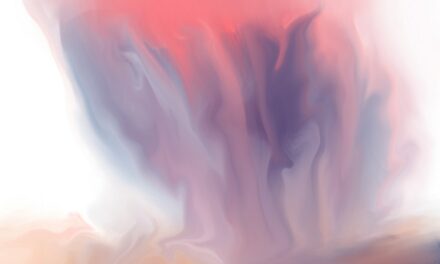
Louis’s first major series to emerge from his new approach was the “Veils,” created between 1954 and 1960. These monumental works are characterised by their ethereal quality, achieved through multiple layers of translucent, often dark, pigments poured over the entire surface of the canvas. The colours, typically ranging from deep blues, greens, and purples to more earthy tones, appear to glow from within, as if illuminated by an internal light source. The layering effect creates a remarkable depth and luminosity, with individual colours subtly revealing themselves through the translucent films above them. The “Veils” are not about distinct shapes or forms but about the sheer sensation of colour dissolving into colour, creating a powerful, almost spiritual, visual experience. Louis meticulously controlled the flow of the paint by tilting and manipulating the canvas, a process that required immense skill and foresight. The resultant compositions are often centralised, with the washes converging towards the middle, creating a sense of gravity and unfolding presence.
The Unfurleds: Negative Space and Dynamic Composition
Following the dense chromatic fields of the “Veils,” Louis embarked on the “Unfurleds” series in 1960. This series marked a significant departure, introducing a dynamic use of negative space and a more open, expansive composition. In the “Unfurleds,” Louis applied rivulets of vibrant, unmixed colours along the extreme edges of large, usually rectangular, canvases. These vibrant streams of pigment flowed inwards, leaving a vast expanse of bare, unstained canvas in the centre. The effect is one of dramatic tension and exhilarating movement. The central void, far from being empty, becomes an active element, amplifying the intensity and purity of the flanking colour bands. The “Unfurleds” highlight Louis’s increasing confidence in the power of pure colour and his innovative use of the canvas itself as an integral part of the artwork. The precise control Louis exerted over the flow of these individual colour streams, preventing them from merging completely, is a testament to his mastery of his unique pouring technique.
The Stripes: The Purity of Line and Colour
Louis’s final and most concise series, “The Stripes” (also known as “Pillars” or “Columns”), created shortly before his death in 1961-1962, pushed his minimalist aesthetic even further. In these works, he abandoned the broad washes of the “Veils” and the expansive negative space of the “Unfurleds,” opting instead for a series of narrow, parallel bands of pure, unmixed colour. These stripes, often of varying widths and hues, run vertically down the canvas, occasionally diverging or converging slightly. The “Stripes” are perhaps the purest expression of Louis’s commitment to colour as the sole subject of painting. They are unadulterated explorations of chromatic juxtaposition and optical vibration. The simplicity of their structure belies the profound visual impact they deliver, demonstrating the ability of pure colour to evoke emotion, rhythm, and a powerful sense of presence. These late works, tragically cut short, hinted at new directions in his ongoing exploration of colour and form.
Critical Reception and Enduring Influence
Morris Louis’s work was initially met with a mixed reception. While influential critics like Clement Greenberg championed his innovative approach, many established art world figures struggled to come to terms with his radical departure from traditional painting. His absence of traditional brushwork, lack of discernible imagery, and emphasis on the materiality of paint itself were challenging for some. However, as the art world gradually embraced Abstract Expressionism and Colour Field painting, Louis’s genius became increasingly apparent.
Clement Greenberg and the Formalist Canon
Clement Greenberg was arguably Louis’s most vocal and significant advocate. Greenberg, a hugely influential art critic, saw Louis’s work as a crucial step in the modernist project of painting, which he believed was moving towards ever-greater purity and self-definition. He praised Louis for eliminating illusionistic depth and for allowing the paint to declare its flatness, becoming one with the canvas. For Greenberg, Louis’s “Veils” in particular embodied the modernist ideal of “opticality,” where the artwork exists purely as a visual experience, devoid of literary or anecdotal content. Greenberg’s enthusiastic endorsement played a vital role in elevating Louis’s profile and securing his place within the canon of modern art.
A Legacy of Pure Abstraction
Louis’s influence on subsequent generations of artists, particularly those associated with Minimalism and Post-Painterly Abstraction, is undeniable. His pioneering use of staining techniques, his emphasis on the flatness of the picture plane, and his radical exploration of colour as the primary subject matter paved the way for many significant developments in abstract art. Artists who followed, like Frank Stella and Ellsworth Kelly, further explored the geometric and optical possibilities of colour and form, often building upon the foundational principles laid by Louis. He demonstrated that painting could be profoundly impactful without relying on representation or overt emotional expression.
Preserving a Fragile Oeuvre
Due to his unique technique of staining unprimed canvas with highly thinned acrylics, many of Louis’s works are inherently fragile. The paint is absorbed directly into the fibres of the canvas, making them susceptible to damage from environmental factors like humidity and light. Consequently, a significant amount of effort has been dedicated to the conservation and preservation of his oeuvre. Galleries and museums housing his works meticulously control environmental conditions to ensure these luminous and delicate paintings can be appreciated by future generations.
For those interested in exploring the innovative techniques of abstract expressionism, an in-depth guide to the artist Morris Louis offers valuable insights into his unique approach to colour and form. Additionally, readers may find it enriching to examine the historical context of other significant artworks, such as the Madonna of the Rose Bower by Stefan Lochner, which highlights the evolution of artistic styles over the centuries. This connection between different eras of art can deepen one’s appreciation for the transformative power of creative expression.
The Man Behind the Mystique: Personality and Private Life
Despite the profound impact of his work, Morris Louis remained a remarkably private and somewhat reclusive individual. Unlike some of his more flamboyant contemporaries, he shied away from public life and avoided the glare of the art world’s social scene. This reticence contributed to the enigmatic quality surrounding his persona, and much of what we know about his personal life comes from the accounts of close friends, family, and a handful of fellow artists.
A Dedicated and Obsessive Practice
Louis was intensely dedicated to his art, often working in isolation in his relatively modest home studio in Washington D.C. He was known for his almost obsessive focus, meticulously experimenting with different paint consistencies, pouring methods, and canvas preparations. His process was one of rigorous trial and error, often leading to numerous discarded works that did not meet his exacting standards. This dedication speaks to his profound commitment to pushing the boundaries of painting and finding a truly unique artistic voice. He was not interested in commercial success or fame; his primary drive was the relentless pursuit of his artistic vision.
Relationships and Support System
While private, Louis was not entirely isolated. He maintained close relationships with a small circle of fellow artists, most notably Kenneth Noland, with whom he shared ideas and critical feedback. His wife, Marcella Louis, played a crucial supportive role, managing his affairs and creating an environment conducive to his intense creative practice. These personal connections, though limited, were vital for an artist who often found himself on the cutting edge, challenging established norms.
The Tragic End and Posthumous Recognition
Morris Louis’s life was tragically cut short in 1962 at the age of 49, succumbing to lung cancer. His death came at the height of his creative powers, leaving behind a body of work that was still evolving and hinting at new directions. The art world mourned the loss of a truly original voice, and his passing undoubtedly deprived us of further innovative contributions.
However, his posthumous recognition grew exponentially. Major retrospectives and exhibitions cemented his status as a key figure in 20th-century art. His works are now held in the collections of leading museums worldwide, including the Museum of Modern Art in New York, the National Gallery of Art in Washington D.C., the Tate Modern in London, and the Centre Pompidou in Paris. The enduring presence of his luminous canvases continues to captivate and inspire, a testament to the power of his vision and his unwavering commitment to the expressive potential of pure colour.
For those interested in exploring the evolution of abstract expressionism, a related article delves into the fascinating work of Nicolas Poussin, specifically his painting “The Adoration of the Golden Calf.” This piece offers a contrasting perspective to Morris Louis’s innovative techniques and can enhance your understanding of the broader art movements that influenced him. You can read more about it in this insightful piece on Poussin’s masterpiece.
Concluding Thoughts: The Enduring Legacy of Morris Louis
Morris Louis fundamentally reshaped our understanding of abstract painting. He stripped away the anecdotal, the symbolic, and the gestural, arriving at a pure, unadulterated experience of colour and surface. His revolutionary staining technique, combined with his unwavering dedication to an evolving artistic vision, resulted in an oeuvre that is both intellectually rigorous and deeply moving. From the contemplative depths of the “Veils” to the dynamic energy of the “Unfurleds” and the concise purity of “The Stripes,” Louis consistently pushed the boundaries of what painting could be.
His work challenges viewers to engage with art on a purely optical and experiential level, inviting them to immerse themselves in the interplay of colour, light, and the raw materiality of the canvas. In an era often dominated by intellectual complexities and grand narratives, Louis offered a path of elegant simplicity and profound visual impact. He reminds us that the most profound artistic statements can often be found in the most direct and unassuming forms. The legacy of Morris Louis is not merely one of aesthetic innovation, but one of a quiet yet powerful conviction in the enduring power of art to transport and transform. His presence continues to be felt in contemporary art, serving as a beacon for those who seek to explore the boundless possibilities of abstraction and the timeless allure of colour.
FAQs
Who was Morris Louis?
Morris Louis was an American painter, born on November 28, 1912, in Baltimore, Maryland. He is best known for his contributions to the Colour Field movement, which emerged in the 1950s and 1960s, characterised by large expanses of colour and an emphasis on the physical act of painting.
What is the Colour Field movement?
The Colour Field movement is an art movement that emerged in the United States in the late 1940s and 1950s, primarily associated with abstract painting. Artists in this movement, including Morris Louis, focused on the use of colour as the primary means of expression, often employing large canvases and techniques that allowed for the colour to interact with the surface of the canvas.
What techniques did Morris Louis use in his artwork?
Morris Louis is known for his innovative techniques, particularly his use of the ‘pouring’ method, where he would pour thinned paint onto unprimed canvases, allowing the colours to flow and blend organically. This technique created a sense of movement and depth in his works, which often featured vibrant, translucent layers of colour.
What are some notable works by Morris Louis?
Some of Morris Louis’s most notable works include the ‘Veil’ series, which features large canvases with flowing, layered colours, and the ‘Unfurled’ series, known for its bold, sweeping forms. These works exemplify his mastery of colour and form, and they are celebrated for their emotional impact and visual complexity.
Where can one view Morris Louis’s artwork today?
Morris Louis’s artwork can be found in several major art institutions, including the National Gallery of Art in Washington, D.C., the Guggenheim Museum in New York City, and the Hirshhorn Museum and Sculpture Garden. Additionally, many private collections and galleries feature his works, reflecting his enduring influence in the art world.