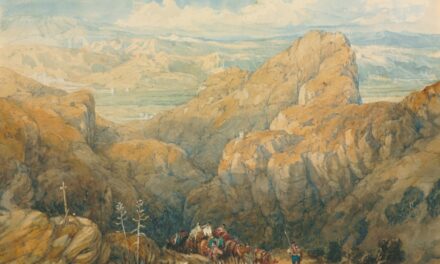
Albert Bierstadt: A Panoramic Vision of the American West
Albert Bierstadt. The name conjures images of colossal canvases, epic mountain ranges, and skies ablaze with an ethereal light. For many, he is the definitive painter of the American West, a visual chronicler of a frontier that was simultaneously a land of opportunity and stark wilderness. Yet, Bierstadt’s legacy is complex, his career a rollercoaster of immense fame, critical disdain, and a eventual, well-deserved resurgence. As a professional artist and writer, I find his journey utterly compelling, a mirror reflecting not only the artistic trends of his time but also the evolving American identity. Let us embark on an in-depth exploration of this fascinating figure, delving into the brushstrokes that defined his extraordinary vision.
Albert Bierstadt’s artistic trajectory was not born on American soil, but rather nurtured in the rich artistic traditions of Europe. Understanding his origins is crucial to appreciating the unique blend of romantic sensibility and meticulous observation that characterises his later work.
Immigrant Roots and Early Ambition
Born in Solingen, Prussia (modern-day Germany) in 1830, Bierstadt’s family immigrated to New Bedford, Massachusetts, when he was just two years old. This early exposure to both European heritage and the nascent American spirit would undoubtedly shape his perspective. While his family’s economic circumstances were modest, Bierstadt displayed an innate artistic talent from a young age. He began sketching and drawing, demonstrating a keen eye for detail and a desire to capture the world around him. This nascent ambition, coupled with the burgeoning artistic scene in America, set the stage for his future.
Düsseldorf School Influence
The mid-19th century saw many aspiring American artists seeking formal training in Europe, and Bierstadt was no exception. In 1853, he returned to Germany to study at the prestigious Düsseldorf Academy, a pivotal decision that would profoundly impact his artistic development. The Düsseldorf School was renowned for its meticulous draftsmanship, emphasis on narrative, and a romantic, often theatrical approach to landscape painting. Artists like Andreas Achenbach and Carl Friedrich Lessing, under whom Bierstadt studied, instilled in him a rigorous methodology for constructing a composition, mastering light and shadow, and depicting realistic detail. This grounding in European academic tradition provided him with the technical prowess to tackle the grand subjects he would later embrace. It is important to note that while Düsseldorf provided a strong technical foundation, it also imbued him with a certain dramatic flair and an inclination towards idealised landscapes, which would later become a point of both praise and criticism.
For those interested in exploring more about the world of art collecting and the significance of artists like Albert Bierstadt, a related article can be found at The Art Collector’s Corner. This resource delves into the nuances of art acquisition and appreciation, providing valuable insights that complement the in-depth guide to Bierstadt’s work and his impact on the American landscape painting movement.
Venturing West: The Call of the Frontier
armed with his European training, Albert Bierstadt returned to America, but it was not long before a new, uncharted canvas began to beckon – the vast, untamed American West. This would prove to be the crucible in which his artistic identity truly forged.
First Expeditions and Sketching Tours
Bierstadt’s first significant foray into the American West came in 1859, when he joined Colonel Frederick W. Lander’s expedition to survey an overland wagon route from Nebraska to the Rocky Mountains. This was not a mere artistic holiday; it was an arduous journey through challenging terrain, exposing Bierstadt to the raw, unfiltered grandeur of the untamed wilderness. He meticulously documented everything, filling sketchbooks with detailed drawings of geological formations, indigenous peoples, and the dramatic effects of light on the landscape. These initial sketches, often accompanied by written notes on colour and atmosphere, served as invaluable source material for the monumental canvases he would later create in his studio. These expeditions were crucial for understanding the sheer scale and unique characteristics of the Western landscape, far removed from the rolling hills of Europe.
The Role of Photography
While Bierstadt is celebrated as a painter, his expeditions were often accompanied by photographers, and he himself dabbled in the medium. Photography, still a relatively new art form, allowed him to capture instantaneous records of landscapes and details that might otherwise be missed. These photographic studies would later serve as valuable references in his studio, supplementing his sketches and strengthening the sense of verisimilitude in his paintings. This innovative use of technology demonstrates his pragmatic approach to art-making and his commitment to accuracy, even within a romanticised vision. It’s a testament to his progressive artistic mindset, embracing new tools to achieve his creative goals.
The Zenith of His Career: Monumental Landscapes and Public Acclaim
The mid-19th century saw Bierstadt soar to unprecedented heights of fame and fortune, becoming a household name synonymous with the epic beauty of the American West. His colossal canvases captivated audiences and critics alike, earning him immense popular appeal.
Grand Scale and Luminous Light
Bierstadt’s signature style revolved around a dramatic combination of grandeur and atmospheric lighting. His canvases were often enormous, sometimes spanning several metres, overwhelming the viewer with their sheer scale. He meticulously rendered details, from individual leaves on a tree to the craggy surfaces of distant mountains, creating a sense of hyper-realism within an idealised framework. However, it was his mastery of light that truly set him apart. Bierstadt excelled at depicting the ethereal glow of sunrise, the dramatic shadows of a midday sun, or the golden hues of a sunset, often imbuing his landscapes with a spiritual, almost transcendent quality. This use of “luminism” – a style characterised by its emphasis on light – transformed his depictions of the West into something more than mere topography; they became expressions of awe and wonder.
Shaping the American Frontier Myth
Bierstadt’s paintings were more than just pretty pictures; they played a significant role in shaping the American imagination of the West. At a time when many Easterners had never ventured beyond the Mississippi, his work offered a vivid, captivating glimpse into a land of unparalleled beauty and opportunity. His monumental canvases, often displayed in opulent galleries with specially designed lighting, became cultural events. They fed into the burgeoning idea of Manifest Destiny, presenting the West as a pristine wilderness awaiting settlement and development. As the National Cowboy & Western Heritage Museum recently highlighted in their “This Week in the West” episode on February 16, 2026, Bierstadt’s works, such as Emigrants Crossing the Plains, undoubtedly contributed to the romanticisation of the frontier experience, showcasing both its challenges and its undeniable allure. He helped solidify the images of towering peaks, vast plains, and untamed rivers in the collective American consciousness, images that persist even today.
Criticisms and Decline: A Shifting Artistic Landscape
While Bierstadt’s early career was marked by universal acclaim, the latter half of his life saw a significant decline in his critical standing and popular appeal. This shift reflects both the evolving artistic tastes of the era and certain inherent characteristics of his own work that began to fall out of favour.
The Rise of French Impressionism
One of the primary factors contributing to Bierstadt’s decline was the dramatic shift in artistic trends. Towards the end of the 19th century, the art world began to embrace new movements, most notably French Impressionism. Artists like Monet and Renoir prioritised capturing fleeting moments, subjective perceptions, and the effects of light and colour over the meticulous detail and grand narratives favoured by the Düsseldorf School. Bierstadt’s polished, academic style, once celebrated, now seemed outmoded and even artificial to a new generation of critics and collectors. His romanticised landscapes, with their often theatrical compositions and emphasis on spectacle, began to be viewed as overly dramatic and lacking in genuine emotional depth.
Accusations of “Too Much” and Repetition
Critics increasingly accused Bierstadt of being formulaic and repetitive. While his mastery of light and monumental scale was initially lauded, some began to feel that his paintings lacked originality and genuine artistic innovation. The sheer volume of his output, combined with a perceived reliance on certain compositional tropes, led to accusations of artistic stagnation. There was a sense that his landscapes, while undeniably beautiful, were more about spectacle than profound artistic insight. This, coupled with a general weariness towards the overly dramatic and anecdotal styles of the Hudson River School, of which Bierstadt was a prominent member, contributed to his fall from grace. His work, once revolutionary, now felt stagnant to a public looking for fresh artistic perspectives.
For those interested in exploring the evolution of artistic styles, a fascinating article can be found that delves into the journey of artists over time. This piece, which examines how portfolios reflect growth and changes in artistic expression, complements the insights provided in the in-depth guide to the artist Albert Bierstadt. You can read more about this intriguing topic by visiting this article, which highlights the significance of understanding an artist’s development in relation to their work.
Legacy and Revival: A Reassessment of His Vision
Despite the critical downturn in the late 19th and early 20th centuries, Albert Bierstadt’s work has experienced a significant revival, particularly from the mid-20th century onwards. His enduring appeal lies in his undeniable skill and the historical significance of his artistic contributions.
Historical and Artistic Importance
Bierstadt’s immense contribution to American art history is undeniable. He was a pioneer in depicting the vastness and grandeur of the American West, capturing a wilderness that was rapidly changing and being settled. His paintings offer invaluable historical documentation of landscapes, peoples, and the spirit of exploration during a pivotal period in American history. Furthermore, his technical mastery, particularly his handling of light and atmospheric effects, remains impressive. For over two decades, he was arguably the most famous painter in America, commanding exorbitant prices for his works. The sale of Mirror Lake for $1.78 million and Old Faithful for $191,000, along with a record-breaking sale of $7.32 million in 2008, underscore the enduring market value and recognition of his artistic merit.
Enduring Popularity and Modern Relevanc
Today, Bierstadt’s paintings are once again celebrated, gracing the walls of major museums across the globe, including the Smithsonian American Art Museum and the Metropolitan Museum of Art. His work resonates with contemporary audiences for several reasons. Firstly, there is a renewed appreciation for the raw beauty of the natural world, and Bierstadt’s sweeping landscapes offer a powerful connection to that. Secondly, his depictions of the American West continue to be a vital part of the nation’s cultural identity and artistic narrative. The ongoing interest in his life and legacy, evidenced by recent explorations such as the National Cowboy & Western Heritage Museum’s 2026 YouTube episode, highlights his continued relevance. While the frontier he painted has long since been tamed, the sense of wonder, majesty, and the sheer scale of his vision continue to captivate. He reminds us of a wilder America, a land of untamed beauty, and the enduring human desire to explore and represent the sublime in art. Albert Bierstadt’s panoramic vision, once dismissed as passé, now stands as a testament to the power of art to both capture a moment in time and transcend it.
FAQs
Who was Albert Bierstadt?
Albert Bierstadt was a 19th-century German-American painter known for his majestic landscapes of the American West. He was a leading figure of the Hudson River School, a group of landscape painters who were influenced by romanticism.
What are some notable works by Albert Bierstadt?
Some of Bierstadt’s most famous works include “The Rocky Mountains, Lander’s Peak,” “Among the Sierra Nevada, California,” and “Sunset in the Rockies.” These paintings are known for their dramatic portrayal of the American wilderness.
What was Albert Bierstadt’s artistic style?
Bierstadt’s artistic style was characterized by his use of light and color to create dramatic, realistic landscapes. He often depicted grand, sweeping vistas with a sense of awe and wonder, capturing the sublime beauty of the American West.
What impact did Albert Bierstadt have on American art?
Bierstadt’s paintings played a significant role in shaping the public’s perception of the American West during the 19th century. His work helped to popularize the idea of the American frontier as a place of natural beauty and grandeur.
What is Albert Bierstadt’s legacy?
Albert Bierstadt’s legacy lies in his contributions to American landscape painting and his influence on the portrayal of the American West. His work continues to be celebrated for its technical skill and its role in shaping the cultural and artistic identity of the United States.