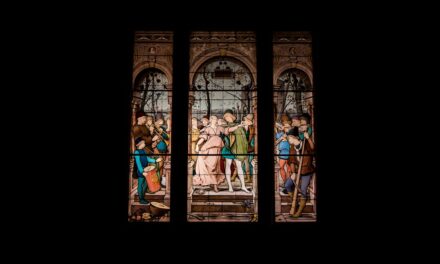
Albert Moore: A Study in Aesthetic Purity
Albert Joseph Moore (1841-1893) was a British painter whose name is inextricably linked with the Aesthetic movement. Often overshadowed by his more prolific contemporaries, Moore carved out a distinct niche for himself, focusing on the distillation of beauty and form, largely through his depictions of classical female figures. His work stands as a testament to the movement’s core tenets: art for art’s sake, the pursuit of aesthetic pleasure above all else, and a deep appreciation for classical antiquity. As you delve into the life and art of Albert Moore, you will find a painter whose dedication to his unique vision offers a compelling counterpoint to the narrative-driven art that often dominated the Victorian era.
Albert Moore’s artistic journey began in an environment ripe for the blossoming of his unique sensibility. Born in York in 1841, his early life was shaped by a family with artistic leanings, fostering an environment conducive to creative exploration. His father, William Moore, was a landscape painter and teacher, and his siblings, Henry, Albert, and Edwin, all pursued artistic careers. This familial bedrock provided Albert with an initial grounding in the technicalities of painting, but it was his exposure to broader artistic currents that truly set his trajectory.
Early Influences and the Pre-Raphaelite Echo
While Albert Moore is more commonly associated with the later Aesthetic movement and the influence of James McNeill Whistler, his early artistic inclinations show a discernible engagement with the Pre-Raphaelites. The movement, which had burst onto the scene in the mid-19th century with its revolutionary emphasis on naturalism, detail, and moral earnestness, undeniably left an imprint on young artists of the period. Moore, like many of his peers, would have absorbed the prevailing artistic discourse and the visual language of these influential painters.
However, Moore’s relationship with Pre-Raphaelitism was more an echo of its initial shockwave than a direct imitation. He absorbed its commitment to truth to nature and its rejection of academic conventions, but his own nascent aesthetic sensibilities soon pulled him in a different direction. Unlike the Pre-Raphaelites, whose narratives were often imbued with literary or religious significance, Moore began to look towards a more abstract and generalised ideal of beauty. The detailed observation of nature, so crucial to the Pre-Raphaelites, evolved in Moore’s hands into a stylistic refinement, an abstraction of form and line that would become his hallmark.
The Pivotal Encounter with Whistler
A significant turning point in Albert Moore’s artistic development was his meeting with James McNeill Whistler. The precise date of their first encounter is recorded as 1865, a period when Whistler himself was forging his own path, moving away from earlier influences and towards a more personal and experimental aesthetic. Whistler, an American expatriate, was a charismatic figure who championed a radical approach to art, advocating for the primacy of colour and form and the emancipation of painting from literary or anecdotal subject matter.
The friendship and artistic dialogue between Moore and Whistler proved to be mutually enriching. Whistler’s influence can be seen in Moore’s increasing emphasis on harmonious colour relationships, flattened planes, and a sophisticated understanding of decorative composition. Conversely, Moore’s meticulous draughtsmanship and his ability to imbue his figures with a serene monumentality likely resonated with Whistler’s own quest for elegant design. This intellectual and artistic kinship provided Moore with a crucial validation for his burgeoning aesthetic ideals, pushing him further along the path of his unique artistic vision.
For those interested in exploring the works of other significant artists from the same period, a related article that delves into the life and contributions of Bartolomeo Schedoni can be found at An in-depth guide to the artist Bartolomeo Schedoni. This article provides a comprehensive overview of Schedoni’s unique style and his influence on the Baroque movement, making it a valuable resource for art enthusiasts seeking to broaden their understanding of the artistic landscape during Albert Moore’s time.
The Aesthetic Movement and Moore’s Place Within It
The Aesthetic movement, with its rallying cry “art for art’s sake,” provided fertile ground for artists like Albert Moore who sought to liberate art from its Victorian constraints of didacticism and overt moralising. This movement, which flourished in the latter half of the 19th century, placed a premium on beauty, elegance, and refinement, drawing inspiration from diverse sources including classical antiquity, Japanese art, and the decorative arts.
Art for Art’s Sake: A Core Tenet
Central to the Aesthetic movement was the principle of “art for art’s sake,” a philosophy that asserted art’s intrinsic value, irrespective of any moral, social, or political message it might convey. For Albert Moore, this was not merely a theoretical stance but a guiding principle that permeated his entire oeuvre. He was not interested in telling stories, illustrating moral lessons, or capturing the fleeting moments of everyday life. Instead, his artistic ambition was to create objects of pure visual delight, compositions that would appeal directly to the senses and the soul through their formal qualities.
This dedication to aesthetic pleasure meant that narrative was deliberately effaced from his canvases. His figures, though often recognisably human, transcend the specificity of individual identity. They become embodiments of generalised concepts of beauty, grace, and serenity. This focus on form and colour, on the arrangement of lines and planes, allowed Moore to cultivate a highly personal and instantly recognisable style. He was, in essence, a painter of visual harmonies, crafting compositions that aimed for a timeless and universal appeal, much like a piece of music seeks to move the listener through its sonic architecture.
Classical Inspiration and Idealised Form
Moore’s profound and abiding fascination with classical antiquity served as a primary source of inspiration for his aesthetic philosophy. The art of ancient Greece and Rome, with its emphasis on idealised human form, balanced composition, and serene beauty, resonated deeply with his artistic sensibilities. He sought to emulate the perceived perfection and timelessness of classical sculpture and painting, translating these ideals into his own oil and watercolour works.
His female figures, in particular, are often reminiscent of Greek goddesses or nymphs, rendered with a smooth, almost sculpted quality. The drapery in his paintings, meticulously rendered, often echoes the graceful folds of classical statuary, suggesting a deep understanding of form and mass. This reliance on classical archetypes allowed Moore to move beyond the particularities of contemporary life and create figures that possessed an enduring and universal appeal. They are not portraits of specific individuals but rather embodiments of an idealised beauty, timeless and serene. This engagement with the classical world was not a mere rehashing of ancient motifs; rather, it was a sophisticated reinterpretation, filtered through the lens of 19th-century artistic concerns and Moore’s own distinctive vision for formal purity.
The Signature Style of Albert Moore
Albert Moore’s artistic output is characterised by a distinctive and highly refined style that sets him apart from his contemporaries. His paintings are instantly recognisable, testament to his unwavering commitment to a specific aesthetic language. This language is woven from a careful manipulation of colour, a precise rendering of form, and a masterful understanding of compositional balance.
Colour Palettes: Subtlety and Harmony
The colour palettes employed by Albert Moore are a crucial element in the creation of his signature aesthetic. He favoured subtle, harmonious arrangements of hues, eschewing jarring contrasts or overly vibrant tones. His colours often possess a muted elegance, reminiscent of ancient frescoes or refined textiles. This deliberate choice in colour application contributes significantly to the overall sense of serenity and refinement that pervades his work.
Moore understood that colour not only added visual appeal but also contributed to the mood and atmosphere of a painting. His use of pastels, earth tones, and soft blues and greens creates a dreamy, ethereal quality, inviting the viewer into a world of tranquil contemplation. The careful juxtaposition of these colours, often with a keen eye for subtle tonal shifts, results in a visual resonance that is both sophisticated and deeply pleasing. Think of the way a perfectly tuned orchestra creates a layered and immersive soundscape; Moore achieves a similar effect with his judicious application of colour, building up rich, nuanced visual chords.
Form and Line: A Sculptural Sensibility
Beyond his use of colour, Moore’s mastery of form and line is paramount to his artistic identity. He approached the human figure with a sculptor’s sensibility, focusing on the purity of outline and the smooth, flowing representation of the body. His lines are elegant and assured, defining forms with a clarity that hints at underlying structure without resorting to harshness.
The figures in his paintings possess a tangible presence, imbued with a sense of volumetric solidity, yet they also appear weightless and ethereal. This delicate balance is achieved through his meticulous rendering of musculature and drapery, which, while anatomically informed, is nonetheless stylised to enhance the overall aesthetic appeal. The interaction of the figure with its surrounding space is also carefully orchestrated, creating a sense of visual harmony and balance. His figures are rarely depicted in dynamic or energetic poses; rather, they are presented in repose, their forms distilled to their essential beauty. This emphasis on polished, almost perfected, form speaks to his desire to create art that transcended the ephemeral and aspired to a Platonic ideal of beauty.
Compositional Balance and Decorative Virtuosity
Albert Moore’s compositions are characterised by a remarkable sense of balance and decorative virtuosity. He possessed an innate understanding of how to arrange elements within the frame to create a harmonious and visually pleasing whole. His arrangements often exhibit a strong sense of symmetry or carefully considered asymmetry, guiding the viewer’s eye through the painting in a controlled and deliberate manner.
His paintings are not merely a collection of figures; they are carefully constructed aesthetic objects, akin to finely woven tapestries or elaborately carved friezes. The interplay of positive and negative space, the relationship between the figures and their background, and the overall rhythm of the composition are all meticulously considered. This attention to decorative detail, the subtle inclusion of pattern and motif, further enhances the sense of refinement and elegance. His canvases are designed to be not just looked at, but to be experienced as complete aesthetic environments, where every element contributes to the overarching sense of beauty and order.
Key Works and Their Significance
Albert Moore’s relatively limited body of work is punctuated by several key pieces that encapsulate his artistic philosophy and showcase the evolution of his talents. While he did not produce a vast number of canvases, those that remain are potent examples of his dedication to aesthetic purity and his unique interpretation of classical ideals. Examining these works allows us to trace the trajectory of his career and understand the lasting impact of his contributions to British art.
The Apricots (1860s): An Early Exploration
The Apricots, a work dating from the 1860s, suggests an early phase of Moore’s exploration of classical themes and his developing interest in the graceful rendering of female form. In this painting, the figures are presented with a softer focus than in his later works, but the nascent signs of his compositional skills and his predilection for muted colour palettes are already evident. The subject matter, while seemingly simple, hints at a more generalised, almost allegorical, representation rather than a literal depiction. It is a stepping stone, demonstrating his move away from the more narrative-driven art of the time towards a more generalised ideal of beauty. The natural elements, the apricots, are rendered with a smooth finish, a precursor to the polished surfaces that would define his mature style.
Diaspora (1876): A Monumental Statement
Diaspora, painted in 1876, stands as a significant work in Moore’s oeuvre, embodying his mature aesthetic. The title itself, suggesting scattering or displacement, offers a subtle layer of interpretation, though the primary focus remains on the visual harmony and the idealized forms of the figures. The painting is characterised by its grand scale and its carefully orchestrated arrangement of reclining female nudes, draped in flowing fabrics. The colour palette is restrained yet rich, with warm tones and subtle juxtapositions that create a sense of luxurious calm. The sculptural quality of the figures is pronounced, their bodies rendered with anatomical precision and an almost marble-like smoothness. Diaspora exemplifies Moore’s ability to create compositions that are both sensuous and intellectually engaging, offering a powerful statement on the enduring power of ideal beauty. It demonstrates his complete command of composition, his ability to imbue classical forms with a contemporary sensibility, and his unwavering dedication to the pursuit of aesthetic perfection.
The Loves of the Winds and the Seasons (1893): The Culmination and Farewell
The Loves of the Winds and the Seasons, completed just days before Albert Moore’s death in 1893, can be considered the culmination of his artistic journey and a poignant farewell. This ambitious work, though perhaps not as widely recognised as some of his smaller pieces, represents a final, grand statement of his aesthetic principles. It is a complex allegorical work, weaving together his characteristic elements of classical female figures with the personifications of natural forces. The painting showcases his continued mastery of colour and form, with a richly layered composition that invites detailed observation. The presence of multiple figures engaged in a subtle, perhaps even symbolic, interaction underscores his lifelong interest in the evocative power of visual arrangement. It is a testament to his enduring dedication to his art, even in the face of his declining health, and stands as a powerful summation of his unique contribution to the Aesthetic movement, a final flourish of idealised beauty.
For those interested in exploring the works of artists who share a similar aesthetic to Albert Moore, a fascinating read is available in the article about Pierre Subleyras. This piece delves into the nuanced techniques and themes that both artists employed in their creations, highlighting the rich interplay of light and colour that characterises their work. You can find the article here: an in-depth guide to the artist Pierre Subleyras. This connection not only enhances the understanding of Moore’s artistry but also situates him within a broader context of 18th-century art.
Exhibitions and Legacy
| Metric | Details |
|---|---|
| Full Name | Albert Joseph Moore |
| Birth Year | 1841 |
| Death Year | 1893 |
| Nationality | British |
| Art Movement | Pre-Raphaelite, Aestheticism |
| Primary Medium | Oil on canvas |
| Common Themes | Classical figures, decorative patterns, harmony of colour and form |
| Notable Works | “The Marble Seat”, “A Musician”, “The Blue Wave” |
| Exhibition History | Regular exhibitor at the Royal Academy from 1864 to 1893 |
| Influences | Classical antiquity, Japanese art, and the decorative arts |
| Legacy | Influential in the development of the Aesthetic Movement and decorative painting |
Despite his relatively prolific output within his chosen style, Albert Moore’s works were not always met with widespread public acclaim during his lifetime. The art-buying public and critics often favoured more narrative, illustrative, or overtly sentimental subject matter. However, his unique contribution to the Aesthetic movement and his meticulous craftsmanship ensured his place in art history and garnered posthumous recognition.
Exhibitions During His Lifetime
Albert Moore exhibited his work at the Royal Academy of Arts, a significant platform for artists in Victorian Britain. His participation in these prestigious exhibitions exposed his work to a broad audience, though critical reception was often mixed. While some recognised the technical brilliance and the refined aesthetic of his paintings, others found his focus on idealized female forms and the absence of clear narrative to be limiting or even monotonous. He was, in many ways, an artist ahead of his time, proposing an art whose primary function was sensual and visual pleasure, a concept that was still challenging for many Victorian sensibilities.
The York Art Gallery Exhibition (2017)
A significant moment in the reassessment of Albert Moore’s artistic importance was the major monographic exhibition held at the York Art Gallery in 2017. This was the first comprehensive exhibition dedicated to his work since 1894, underscoring the long period during which his contributions were perhaps less prominently highlighted. The exhibition provided an invaluable opportunity for the public and art historians to engage deeply with his paintings, watercolours, and drawings. It also explored his family connections, shedding light on the artistic environment in which he was nurtured. The success and breadth of this exhibition served to re-establish Moore as a key figure within the Aesthetic movement, validating his distinct artistic vision and his mastery of form and colour.
Enduring Influence and Collections
Albert Moore’s legacy endures through the presence of his works in major public collections, most notably the Victoria and Albert Museum and Tate Britain in London. These institutions hold significant examples of his paintings, ensuring that his art remains accessible for study and appreciation. His influence can be seen in subsequent generations of artists who have embraced decorative aesthetics and the exploration of form and colour for their own sake. While he may not have achieved the same level of popular fame as some of his contemporaries, Moore’s unwavering dedication to a highly personal and refined aesthetic vision has secured his place as a significant artist of the Aesthetic movement, a painter who masterfully distilled beauty and form into enduring works of art. His paintings remain quiet sanctuaries of aesthetic pleasure, offering a contemplative respite from the often clamorous world of narrative art.
FAQs
Who was Albert Moore?
Albert Joseph Moore was a British artist born in 1841, renowned for his decorative paintings and association with the Aesthetic Movement. He specialised in classical subjects and was known for his use of colour and form.
What artistic style is Albert Moore known for?
Albert Moore is best known for his work in the Aesthetic Movement, which emphasised beauty and decorative qualities over narrative content. His paintings often feature idealised figures, harmonious compositions, and a focus on pattern and colour.
Where can Albert Moore’s artworks be viewed?
Albert Moore’s artworks are held in several major museums and galleries, including the Victoria and Albert Museum in London and the Tate Gallery. Some of his works are also in private collections.
What themes are commonly found in Albert Moore’s paintings?
Moore’s paintings frequently depict classical and mythological themes, often featuring female figures in serene, decorative settings. His work highlights beauty, tranquillity, and the interplay of colour and texture.
Did Albert Moore receive any formal art education?
Yes, Albert Moore studied at the Royal Academy Schools in London, where he developed his skills and was influenced by classical art and the ideals of the Aesthetic Movement.