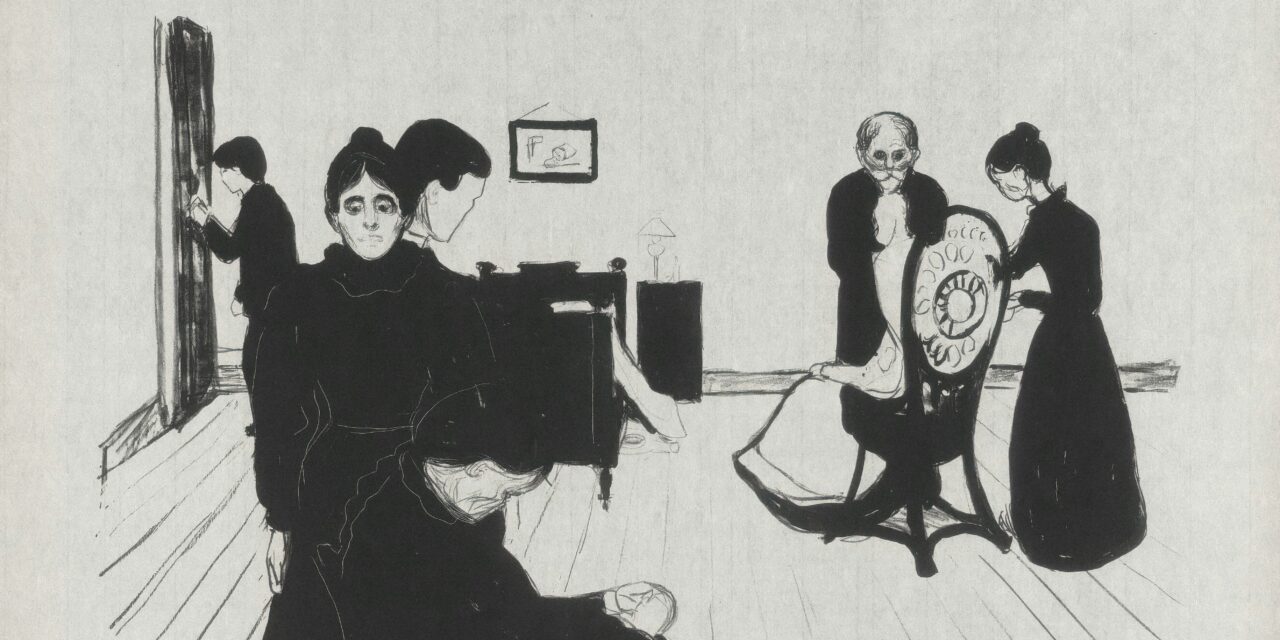
Edvard Munch was born on December 12, 1863, in Loten, Norway, into a family marked by illness and tragedy. His father, a physician, passed away when Munch was just five years old, leaving a profound impact on his young psyche. This early encounter with death and suffering would later permeate his artistic expression. Munch’s mother, who succumbed to tuberculosis when he was only 14, further entrenched the themes of loss and existential dread in his work. Growing up in a household steeped in grief, Munch found solace in art, which became a means for him to process his tumultuous emotions and the stark realities of life.
Munch’s formative years were also influenced by the cultural milieu of Norway during the late 19th century. The burgeoning Symbolist movement, with its emphasis on emotional experience over realism, resonated deeply with him. He was particularly inspired by the works of fellow Norwegian artists such as Hans Gude and the writings of Henrik Ibsen, whose exploration of human psychology and societal issues mirrored Munch’s own artistic inquiries. The natural landscapes of Norway, with their dramatic contrasts and haunting beauty, also played a significant role in shaping his aesthetic sensibilities. These early experiences and influences laid the groundwork for Munch’s distinctive voice in the art world, one that would challenge conventions and delve into the complexities of human emotion.
For those interested in exploring the broader context of modern art, a related article that delves into another significant cultural institution is available at An Introduction to Museo de Arte Moderno de Buenos Aires (MAMBA). This piece offers insights into the rich collection and exhibitions at MAMBA, which, much like Edvard Munch’s work, reflects the evolution of artistic expression in the modern era.
Key Artworks and Themes
Throughout his career, Edvard Munch produced a remarkable body of work that explored a myriad of themes, including love, anxiety, death, and existential despair. His paintings often reflect a deep psychological insight into the human condition, capturing the tumultuous emotions that accompany life’s experiences. One of his most notable works, “The Madonna,” exemplifies this exploration of love and desire intertwined with themes of mortality. In this piece, Munch presents a sensual yet haunting portrayal of a woman, her expression both alluring and melancholic, suggesting the duality of love as both a source of joy and pain.
Another recurring theme in Munch’s oeuvre is the concept of isolation and alienation. Works such as “The Lonely Ones” and “The Dance of Life” depict figures that seem disconnected from their surroundings or from one another, embodying the profound sense of loneliness that can accompany human existence. Munch’s ability to convey these complex emotions through colour, form, and composition is what sets him apart as an artist. His use of bold colours and expressive brushwork creates an atmosphere that resonates with viewers on an emotional level, inviting them to confront their own feelings of anxiety and despair.
The Scream: Iconic Masterpiece
Perhaps the most recognisable work in Edvard Munch’s repertoire is “The Scream,” painted in 1893. This iconic masterpiece has transcended its origins to become a symbol of modern existential angst. The painting depicts a figure standing on a bridge against a swirling sky, its mouth agape in a silent scream that echoes the inner turmoil of the human experience. The vivid colours and distorted forms create an unsettling atmosphere that captures the essence of anxiety and despair. Munch himself described the inspiration for this work as a moment when he felt an overwhelming sense of dread while walking at sunset, an experience that resonates with many who have grappled with similar feelings.
“The Scream” has been interpreted in various ways over the years, reflecting the complexities of human emotion and the struggles inherent in existence. It speaks to the universal experience of fear and alienation in an increasingly modern world. The painting’s impact extends beyond the realm of art; it has permeated popular culture, appearing in countless adaptations and references across various media. Its ability to evoke such strong emotional responses is a testament to Munch’s skill as an artist and his profound understanding of the human psyche.
Munch’s Impact on the Art World
Edvard Munch’s influence on the art world is both profound and far-reaching. As a pioneer of Expressionism, he paved the way for future generations of artists to explore emotional depth and psychological complexity in their work. His innovative approach to colour and form challenged traditional artistic conventions, encouraging others to break free from realism and embrace abstraction as a means of expressing inner experiences. Munch’s exploration of themes such as love, anxiety, and existential dread resonated with many artists who followed in his footsteps, including German Expressionists like Ernst Ludwig Kirchner and Emil Nolde.
Moreover, Munch’s impact extended beyond his immediate contemporaries; his work has continued to inspire countless artists throughout the 20th century and into the present day. The raw emotionality present in his paintings can be seen echoed in the works of artists such as Francis Bacon and Vincent van Gogh, who similarly grappled with themes of suffering and isolation. Munch’s ability to articulate complex emotions through visual language has solidified his place as a key figure in art history, one whose contributions continue to shape contemporary artistic practices.
For those interested in exploring the artistic techniques that influenced Edvard Munch’s work, the article on relief printing offers valuable insights. Munch, known for his emotive use of colour and form, often incorporated various techniques into his creations, and understanding relief printing can enhance one’s appreciation of his unique style. This guide delves into the intricacies of the technique, shedding light on how it may have shaped the works of Munch and other artists of his time.
Personal Life and Struggles
Munch’s personal life was fraught with challenges that deeply influenced his artistic output. He struggled with mental health issues throughout his life, grappling with anxiety and depression that often manifested in his work. These struggles were exacerbated by his tumultuous relationships with women, which frequently served as both inspiration and source of pain for him. Munch’s love life was marked by unrequited affections and heartbreaks that left indelible marks on his psyche, leading him to explore themes of love and loss in his art.
In addition to his emotional struggles, Munch faced societal pressures as an artist who defied conventional norms. His bold exploration of taboo subjects such as sexuality and mental illness often met with criticism from conservative circles. Despite this adversity, Munch remained steadfast in his commitment to authenticity in his work. He used art as a means to confront his demons, transforming personal anguish into powerful visual narratives that resonate with audiences even today.
Legacy and Influence on Modern Art
Edvard Munch’s legacy is one that continues to resonate within the contemporary art world. His pioneering spirit laid the groundwork for movements such as Expressionism and Surrealism, which sought to delve into the depths of human emotion and experience. Artists today still draw inspiration from Munch’s ability to convey complex psychological states through visual means. His exploration of themes such as anxiety, alienation, and existential dread remains relevant in an increasingly fragmented world where individuals often grapple with similar feelings.
Moreover, Munch’s influence extends beyond painting; his ideas have permeated literature, theatre, and film. The emotional intensity found in his work has inspired writers like Virginia Woolf and filmmakers such as Ingmar Bergman to explore similar themes within their own mediums. As society continues to confront issues related to mental health and emotional well-being, Munch’s work serves as a poignant reminder of the power of art to articulate the human experience in all its complexity.
Munch’s Technique and Style
Munch’s artistic technique is characterised by a unique blend of symbolism and expressionism that sets him apart from his contemporaries. He employed bold colours and dynamic brushwork to evoke emotional responses from viewers, often using colour not merely for representation but as a means to convey mood and atmosphere. His innovative use of line—sometimes fluid and other times jagged—mirrors the tumultuous emotions he sought to express. This approach allows for a visceral connection between the viewer and the artwork, drawing them into the emotional landscape he created.
In addition to his distinctive use of colour and line, Munch often experimented with composition to heighten emotional impact. He frequently employed unconventional perspectives and cropping techniques that create a sense of immediacy within his works. This dynamic approach invites viewers to engage with the subject matter on a deeper level, encouraging them to confront their own feelings of anxiety or despair. Munch’s style is not merely about aesthetic appeal; it is an integral part of his exploration of complex psychological themes that continue to resonate with audiences today.
Munch’s Place in Art History
Edvard Munch occupies a significant position within art history as one of the forefathers of modern art movements that emerged in the late 19th and early 20th centuries. His innovative approach to subject matter—focusing on emotional depth rather than mere representation—set him apart from many artists of his time. As a precursor to Expressionism, Munch’s work paved the way for subsequent movements that sought to explore the inner workings of human emotion through abstraction.
Munch’s contributions have been recognised not only for their artistic merit but also for their cultural significance. His ability to articulate complex psychological states has made him an enduring figure whose influence can be traced through various artistic disciplines. Today, Edvard Munch is celebrated not only for masterpieces like “The Scream” but also for his role in shaping modern artistic discourse around themes of identity, emotion, and existential inquiry. His legacy endures as a testament to the power of art to reflect the intricacies of human experience across time and space.
FAQs
Who is Edvard Munch?
Edvard Munch was a Norwegian painter and printmaker, born on December 12, 1863, in Loten, Norway. He is best known for his iconic painting “The Scream” and is considered a pioneer of the Expressionist movement.
What are some of Edvard Munch’s most famous works?
In addition to “The Scream,” some of Munch’s most famous works include “The Madonna,” “The Dance of Life,” “The Sick Child,” and “The Vampire.”
What is the significance of Edvard Munch’s art?
Munch’s art is significant for its exploration of themes such as love, anxiety, death, and the human condition. His use of bold colors, swirling lines, and emotional intensity set him apart as a leading figure in the development of modern art.
What influenced Edvard Munch’s art?
Munch’s art was influenced by his own experiences of illness, death, and emotional turmoil, as well as by the Symbolist and Post-Impressionist movements. He was also influenced by the work of other artists such as Vincent van Gogh and Paul Gauguin.
What is Edvard Munch’s legacy?
Edvard Munch’s legacy is that of a pioneering artist whose work continues to inspire and influence artists and art lovers around the world. His impact on the development of modern art and his exploration of the human psyche have secured his place as one of the most important artists of the 20th century.