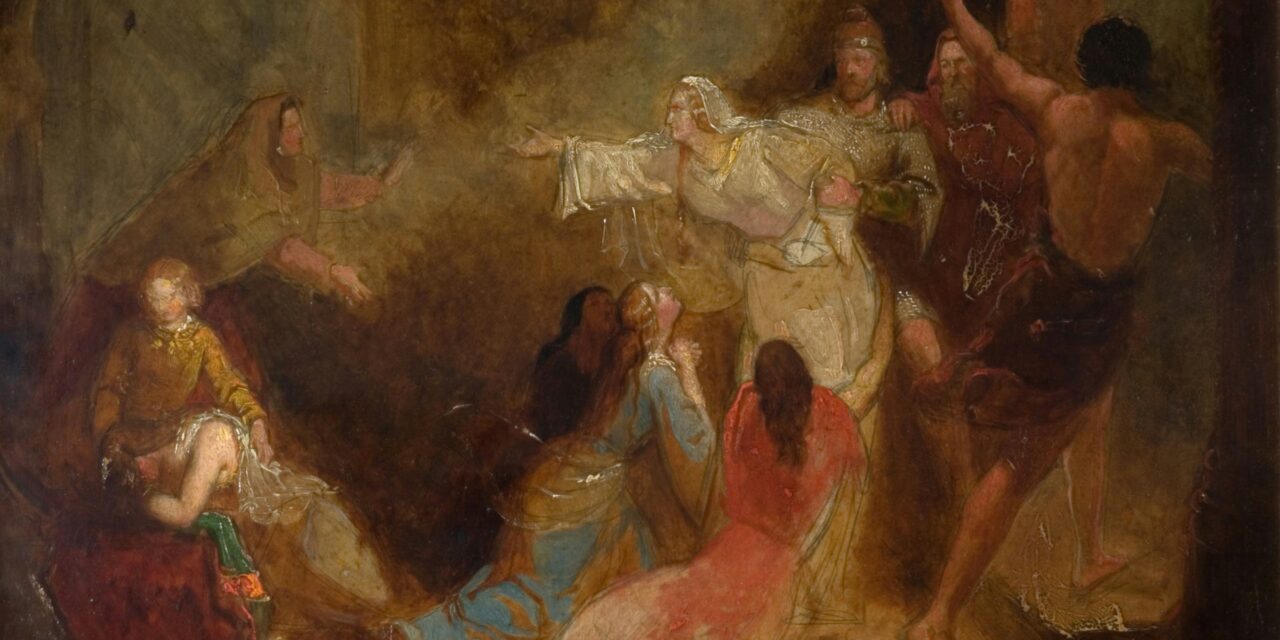
Jozef Israëls was born on 27th February 1824 in Groningen, a city in the northern part of the Netherlands. His early life was steeped in the rich cultural milieu of the region, which would later inform his artistic sensibilities. Israëls was the son of a Jewish merchant, and his upbringing in a family that valued education and culture played a significant role in shaping his artistic journey. From a young age, he exhibited a keen interest in drawing and painting, often sketching the landscapes and people around him. His initial exposure to art came from local artists, but it was his move to Amsterdam at the age of 16 that marked a pivotal moment in his development. There, he studied under the tutelage of the renowned painter, Barend Cornelis Koekkoek, who introduced him to the techniques of Romanticism and the importance of light in painting.
The influence of the Dutch Masters, particularly Rembrandt, was profound on Israëls’ early work. He was captivated by Rembrandt’s ability to convey emotion through light and shadow, a technique known as chiaroscuro. This fascination would later manifest in Israëls’ own paintings, where he sought to capture the essence of human experience through dramatic lighting and expressive figures. Additionally, the socio-political climate of the Netherlands during his formative years, marked by industrialisation and urbanisation, provided a backdrop that would inform his thematic choices. The struggles of the working class and the beauty of everyday life became central to his artistic narrative, reflecting both his empathy for the human condition and his desire to elevate the ordinary to the realm of art.
For those interested in exploring the rich tapestry of 17th-century art, a related article that delves into the works of another prominent artist of the era is available. This piece focuses on Anthony van Dyck’s renowned painting “Samson and Delilah,” created between 1628 and 1630. To gain further insight into the stylistic elements and historical context of this masterpiece, you can read the article here: An Introduction to the Painting “Samson and Delilah” by Anthony van Dyck.
Artistic style and themes
Jozef Israëls’ artistic style is often characterised by its realism and emotional depth. He was a master of capturing the nuances of light and shadow, which lent a palpable sense of atmosphere to his works. His palette was typically muted, favouring earthy tones that evoked a sense of nostalgia and introspection. This choice of colour not only enhanced the emotional weight of his subjects but also aligned with the broader trends of 19th-century realism, which sought to depict life as it truly was, devoid of romantic embellishments. Israëls’ brushwork was fluid yet deliberate, allowing him to convey both movement and stillness within a single frame.
The themes prevalent in Israëls’ work often revolved around the lives of ordinary people, particularly fishermen and rural labourers. He had an innate ability to portray their struggles and joys with dignity and respect, elevating their experiences to that of universal significance. His paintings frequently depicted scenes of daily life, such as fishermen mending their nets or families gathered around a hearth, encapsulating moments that resonated with viewers on a personal level. This focus on the human experience was not merely an artistic choice; it was also a reflection of Israëls’ own values and beliefs. He sought to highlight the beauty in simplicity and the profound stories that lay within the lives of those often overlooked by society.
The Hague School and Jozef Israëls’ role in it
The Hague School emerged in the late 19th century as a significant movement within Dutch art, characterised by its emphasis on naturalism and the depiction of contemporary life. Jozef Israëls played a crucial role in this movement, serving as both an inspiration and a mentor to many younger artists who sought to capture the essence of Dutch life through their work. The Hague School artists were known for their plein air painting techniques, which involved working outdoors to capture the changing effects of light and atmosphere directly from nature. Israëls embraced this approach wholeheartedly, often painting en plein air along the Dutch coast or in rural settings.
Israëls’ influence extended beyond his own paintings; he was instrumental in fostering a sense of community among artists in The Hague. He encouraged collaboration and dialogue among his peers, advocating for a collective approach to art that emphasised shared experiences and mutual support. His commitment to realism and his focus on social themes resonated deeply with other members of The Hague School, who sought to break away from traditional academic constraints. Through exhibitions and informal gatherings, Israëls helped to establish The Hague School as a formidable force in the art world, paving the way for future generations of artists who would continue to explore similar themes.
Notable works and their significance
Among Jozef Israëls’ most notable works is “The Fisherman’s Family,” painted in 1880. This poignant piece captures a moment of quiet reflection within a family of fishermen, showcasing Israëls’ ability to convey deep emotion through simple yet powerful imagery. The figures are rendered with remarkable sensitivity, their expressions reflecting both weariness and resilience. This work exemplifies Israëls’ commitment to portraying the dignity of everyday life while also highlighting the struggles faced by those who depend on the sea for their livelihood. The painting serves as a testament to his belief that art should elevate the ordinary and celebrate the human spirit.
Another significant work is “The Return of the Fisherman,” created in 1886. In this piece, Israëls masterfully depicts a fisherman returning home after a long day at sea, greeted by his family with open arms. The interplay of light and shadow creates an intimate atmosphere, drawing viewers into this tender moment. The painting not only showcases Israëls’ technical prowess but also reinforces his thematic focus on familial bonds and community ties. Through such works, Israëls contributed to a broader narrative within Dutch art that celebrated the lives of working-class individuals while simultaneously addressing social issues such as poverty and labour rights.
For those interested in exploring the techniques behind Jozef Israëls’ captivating works, a related article on the pouncing technique offers valuable insights into the methods that artists have employed throughout history. This technique, which involves transferring designs onto a canvas, has played a significant role in the creation of many masterpieces, including those by Israëls. By understanding such artistic processes, one can gain a deeper appreciation for the intricacies of Israëls’ art and the broader context of 19th-century painting.
Recognition and impact on the art world
Jozef Israëls’ contributions to art did not go unnoticed during his lifetime; he received considerable recognition both nationally and internationally. His works were exhibited widely across Europe, earning accolades for their emotional depth and technical skill. In 1873, he was awarded a gold medal at the World Exhibition in Vienna, further solidifying his reputation as one of the leading figures in Dutch art. His ability to connect with audiences through relatable themes allowed him to transcend geographical boundaries, making him an influential figure not only in the Netherlands but also across Europe.
Israëls’ impact on the art world extended beyond his own creations; he played an essential role in shaping artistic discourse during a transformative period in art history. His commitment to realism inspired countless artists who sought to depict contemporary life with authenticity. Moreover, his involvement with The Hague School helped establish a new paradigm for Dutch art that prioritised individual expression and social commentary over traditional academic styles. As such, Israëls can be seen as a bridge between earlier artistic movements and modernism, paving the way for future artists to explore new themes and techniques.
Jozef Israëls’ legacy and influence on future artists
The legacy of Jozef Israëls is evident in the works of many artists who followed in his footsteps. His emphasis on realism and social themes resonated deeply with subsequent generations, influencing movements such as Social Realism in the early 20th century. Artists like Vincent van Gogh and Paul Gauguin drew inspiration from Israëls’ ability to convey emotion through everyday subjects, incorporating similar themes into their own work while pushing boundaries further into abstraction.
Moreover, Israëls’ role as a mentor within The Hague School established a tradition of collaboration among artists that continues to this day. His belief in community engagement and shared experiences fostered an environment where creativity could flourish. This spirit of camaraderie has been echoed by many contemporary artists who seek to create inclusive spaces for dialogue and collaboration within their own practices. As such, Israëls’ influence extends beyond mere stylistic choices; it encompasses an ethos that values connection, empathy, and social responsibility within art.
Personal life and relationships
Jozef Israëls’ personal life was marked by both triumphs and challenges that shaped his artistic vision. He married his first wife, Anna de Vries, in 1852; however, their union was tragically cut short when she passed away just a few years later. This loss profoundly affected Israëls, infusing his work with a sense of melancholy that would resonate throughout his career. In 1864, he remarried to Marie de Vries, Anna’s sister, which brought him both companionship and stability during tumultuous times.
Throughout his life, Israëls maintained close relationships with fellow artists and intellectuals who shared his passion for art and social issues. He often hosted gatherings at his home where discussions about art theory and practice flourished. These interactions not only enriched his own understanding but also fostered a sense of community among artists striving for similar goals. His friendships with contemporaries such as Anton Mauve and Willem Maris further solidified his position within The Hague School while allowing him to exchange ideas that would ultimately shape Dutch art.
Exhibitions and collections of Jozef Israëls’ work
Jozef Israëls’ works are housed in numerous prestigious collections around the world, reflecting his enduring significance within the art historical canon. Major museums such as the Rijksmuseum in Amsterdam hold several key pieces that showcase his mastery of light and emotion. Additionally, institutions like the Van Gogh Museum have dedicated exhibitions highlighting his contributions alongside those of other prominent Dutch artists.
Throughout his career, Israëls participated in numerous exhibitions that showcased not only his own work but also that of emerging artists influenced by him. These exhibitions served as platforms for dialogue about contemporary issues within art while celebrating the rich tradition of Dutch painting. Today, retrospectives continue to be organised in honour of Israëls’ legacy, ensuring that new generations can appreciate his contributions to both art history and society at large.
In conclusion, Jozef Israëls remains an essential figure within Dutch art history whose influence continues to resonate today. His commitment to realism, emotional depth, and social themes has left an indelible mark on future generations of artists while fostering a sense of community among creatives striving for authenticity in their work. Through exhibitions showcasing his remarkable oeuvre, we are reminded not only of Israëls’ artistic achievements but also of the enduring power of art to connect us all through shared human experiences.
FAQs
Who is Jozef Israëls?
Jozef Israëls was a Dutch painter, known for his contributions to the Hague School movement in the 19th century. He was particularly renowned for his realistic and emotive portrayals of everyday life, often focusing on the lives of the Dutch peasantry.
What are some notable works by Jozef Israëls?
Some of Jozef Israëls’ most notable works include “The Fisherman’s Wife” (1863), “A Son of the Chosen People” (1889), and “The Widower” (1876). These paintings are celebrated for their emotional depth and masterful use of light and shadow.
What was the Hague School movement?
The Hague School was a Dutch artistic movement that emerged in the 19th century, characterized by its focus on realistic and atmospheric depictions of rural landscapes and everyday life. Jozef Israëls was a prominent figure within this movement, alongside artists such as Anton Mauve and Jacob Maris.
What influenced Jozef Israëls’ artistic style?
Jozef Israëls’ artistic style was influenced by the Realist and Barbizon schools of painting, as well as the work of Dutch Golden Age artists such as Rembrandt and Frans Hals. He was also inspired by the natural beauty of the Dutch countryside and the lives of its inhabitants.
What is Jozef Israëls’ legacy in the art world?
Jozef Israëls is remembered as a pioneering figure in Dutch art history, known for his poignant and evocative portrayals of everyday life. His work continues to be celebrated for its emotional resonance and technical skill, and he remains a significant influence on realist and genre painters to this day.