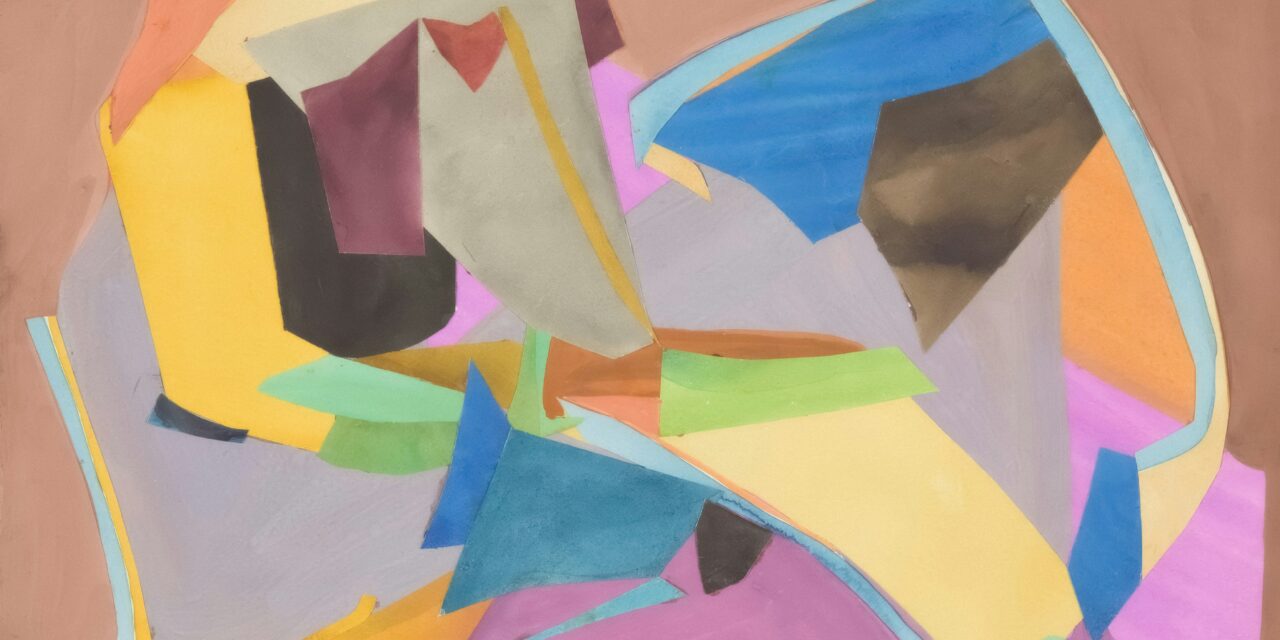
Robert Delaunay (1885-1941) stands as a towering figure in the annals of early 20th-century art, a visionary who, alongside his equally talented wife Sonia Delaunay, spearheaded Orphism – a vibrant, colour-driven offshoot of Cubism. His work, characterised by its luminous palettes, fragmented forms, and an almost musical rhythm, explored the profound interrelationship between light, movement, and the urban landscape. Delaunay’s quest was to liberate colour from its descriptive role, allowing it to become the primary subject and expressive force of a painting, creating a dynamic, almost spiritual experience for the viewer. This in-depth guide delves into the fascinating world of Robert Delaunay, tracing his artistic evolution, dissecting his groundbreaking techniques, and understanding his enduring legacy.
Early Life and Artistic Awakening
Robert Delaunay’s formative years were a crucible of influence and experimentation, laying the groundwork for his revolutionary approach to art. Born in Paris, the epicentre of artistic innovation, his early experiences and training were instrumental in shaping his unique aesthetic.
Childhood and Education
Delaunay was born into an aristocratic family, a background that, while providing him with a degree of comfort, also instilled in him a restless spirit and an inclination towards independent thought. His parents, Count Georges Delaunay and Berthe Félicie de la Fille, divorced early in his life, and he was primarily raised by his maternal aunt and uncle in Burgundy. This period offered him a degree of freedom and exposure to natural beauty, which would subtly inform his later works. He initially pursued a career in decorative arts, apprenticing with a theatre designer, Eugène Ronsin, in Belleville from 1902 to 1904. This early exposure to stage design, with its emphasis on colour, light, and illusion, undoubtedly planted seeds for his future explorations of optical effects and rhythmic compositions. While he did not attend a formal art academy, a decision that further cemented his independent trajectory, he did frequent galleries and absorbed the burgeoning artistic movements of the time.
Impressionist and Post-Impressionist Influences
Delaunay’s early works, from around 1905 to 1907, reveal a deep engagement with the late Impressionists and Post-Impressionists. Artists like Georges Seurat, with his scientific approach to colour and light in Pointillism, and Paul Cézanne, whose analytical fragmentation of form laid the groundwork for Cubism, were particularly influential. Delaunay’s landscapes and portraits from this period demonstrate a keen interest in the interplay of light and shadow, and a meticulous application of paint, often in small, distinct brushstrokes. He was also drawn to the vibrant, non-naturalistic colours of the Fauves, particularly Henri Matisse, appreciating their bold departure from traditional representation. However, Delaunay quickly recognised the limitations of these movements. While they liberated colour to a certain extent, he felt they still remained tied to the objective reality of the subject. His ambition was to transcend this, to allow colour to exist as an autonomous entity, generating its own light and movement.
The Bridge to Cubism and the Eiffel Tower Series
The pivotal years between 1907 and 1910 saw Delaunay grappling with Cubism, particularly the analytical phase pioneered by Pablo Picasso and Georges Braque. He was fascinated by their deconstruction of form and multiple perspectives but found their subdued, monochromatic palette restrictive. He sought to imbue Cubist principles with the dynamism and luminosity that he felt were missing. This period is famously marked by his groundbreaking Eiffel Tower series. The Eiffel Tower, a symbol of modernity, technological advancement, and the vibrant energy of Paris, became a recurring motif for Delaunay. He depicted it from various angles, fracturing its structure, and experimenting with different light conditions. These paintings, while still recognisable, move beyond mere representation. He wasn’t just painting the tower; he was painting the sensation of the tower, its immense scale, its soaring form, and its interaction with the surrounding environment. This series demonstrates his growing confidence in manipulating form and space, foreshadowing his complete embrace of abstraction.
For those interested in exploring the broader context of Robert Delaunay’s work, a related article that provides insight into the significance of art institutions is available at the National Gallery of Art in Washington, D.C. This article delves into the gallery’s extensive collection and highlights how it showcases various movements, including those that influenced Delaunay’s vibrant style. You can read more about it in this informative piece: An Introduction to the National Gallery of Art, Washington D.C., USA.
The Birth of Orphism: Colour as a Liberating Force
Delaunay’s dissatisfaction with the monochromatic nature of Analytical Cubism propelled him towards a radical new artistic language, one where colour took centre stage. This led to the development of Orphism, a term coined by the poet Guillaume Apollinaire in 1912, acknowledging its lyrical and musical qualities.
Moving Beyond Cubism
For Delaunay, Cubism, despite its revolutionary approach to form, ultimately remained too analytical and too grounded in objective reality. He believed that the full expressive potential of colour was being stifled by its subservience to form. He saw colour not as an addition to form, but as the very essence of form and movement. His desire was to create paintings that were not merely representations of the world but independent, self-sufficient entities, generating their own internal light and rhythm through the interplay of pure colours. This marked a profound shift in artistic philosophy, moving from a descriptive art to an art that was purely evocative and experiential.
For those interested in exploring the vibrant world of Robert Delaunay, a related article that delves into the rich history of art can be found in an introduction to the Louvre, which houses many masterpieces that influenced Delaunay’s work. This insightful piece not only highlights the significance of the Louvre in the art world but also provides context for understanding the evolution of modern art. You can read more about it here.
Simultaneous Contrasts and the Discs Series
The theoretical underpinning of Orphism lay in the scientific principles of colour theory, particularly the concept of simultaneous contrasts, heavily influenced by the 19th-century chemist Michel Eugène Chevreul. Delaunay understood that juxtaposing complementary colours, such as red and green, or blue and orange, creates a vibrant, shimmering effect, enhancing their intensity and generating a sense of movement. He applied this principle with unparalleled rigour in his work.
This exploration culminated in his iconic Discs series, beginning around 1912 with Simultaneous Contrasts: Sun and Moon. These works represent a complete break from representational art. Here, the subject is no longer a recognisable object or landscape, but rather the dynamic interplay of pure, concentric circles of colour. These circles, pulsating with vibrant hues, appear to rotate and vibrate, creating a visual symphony of light and motion. The viewer’s eye is drawn into a dizzying dance of colour, where each hue influences and intensifies its neighbour. Delaunay believed that these abstract forms, governed by the laws of simultaneous contrast, could evoke profound emotional and sensory experiences, akin to music.
The Role of Light and Movement
At the heart of Orphism was the belief that light and movement were the fundamental building blocks of reality, and therefore of art. Delaunay aimed to capture the ethereal, ever-shifting quality of light, not as it falls on objects, but as an inherent property of colour itself. His use of simultaneous contrasts creates an optical illusion of light radiating from within the canvas, rather than being merely reflected by it. This internal luminescence, coupled with the rhythmic arrangement of his forms, generates a powerful sense of dynamism. His paintings feel alive, imbued with a ceaseless energy, reflecting the modern world’s accelerating pace and the constant flux of visual information. He sought to create a new kind of spatial experience, one that was not static or defined by linear perspective, but fluid and multi-directional, mirroring the way we perceive the world through fragmented glimpses and shifting viewpoints.
Key Works and Thematic Explorations
Delaunay’s prolific career saw him constantly refining his artistic language, applying his Orphist principles to a diverse range of subjects, from monumental urban panoramas to intimate, abstract studies.
The Saint-Séverin Series
Dating from 1909 to 1910, the Saint-Séverin series marks a crucial transitional phase in Delaunay’s development. These paintings depict the interior of the historic Gothic church of Saint-Séverin in Paris. While still identifiable as architectural spaces, the series shows Delaunay’s early experimentation with breaking down form and using colour to define space and light. The stained-glass windows, with their fragmented, luminous hues, profoundly influenced his approach. He renders the arched windows and vaulted ceilings in a series of interlocking, prism-like forms, allowing light to pour in and fragment the internal structure. The colours, though still somewhat descriptive, are intensified and juxtaposed in ways that hint at his later explorations of simultaneous contrast. This series demonstrates his growing interest in the spatial and atmospheric effects of light within an enclosed environment, laying the groundwork for his more abstract investigations into pure colour and form.
The Windows Series
Following the Eiffel Tower series, Delaunay embarked on his Windows series (1912-1914), a direct prelude to his full embrace of abstraction. In these works, the window acts as a metaphorical frame, separating the interior from the exterior, but also providing a conduit for light and a glimpse into the bustling modern city beyond. The window panes themselves are fractured into prismatic segments, reflecting and refracting the light and colours of the outside world. This series showcases Delaunay’s increasing departure from descriptive representation. While elements of the cityscape – buildings, streetlights, even tiny glimpses of people – might still be discernible, they are dissolved into a vibrant tapestry of interlocking coloured planes. The emphasis shifts from the scene itself to the optical effects generated by the interplay of light, form, and colour, demonstrating his commitment to creating paintings that are self-referential and generate their own internal logic.
The Cardiff Team
A notable departure from his purely abstract and architectural themes, The Cardiff Team (1913), also known as The Cardiff Rugby Team, is a vibrant and dynamic celebration of sport and modernity. While still employing his signature fragmented forms and simultaneous contrasts, this painting depicts a rugby match with a distinctly Futurist energy. The players, the stadium, and the advertising hoardings are all broken down into energetic, overlapping planes of bright colour, conveying the speed, power, and excitement of the game. The inclusion of commercial advertisements within the painting further links it to the contemporary urban experience and the burgeoning consumer culture of the early 20th century. This work illustrates Delaunay’s belief that his Orphist principles could be applied to represent the dynamism of modern life in all its facets, not just the abstract realm of pure colour.
Delaunay’s International Impact and Later Years
Robert Delaunay’s innovative spirit and theoretical contributions resonated far beyond the confines of Parisian art circles, leaving an indelible mark on international modernism.
Influence on the Blue Rider Group and German Expressionism
Delaunay’s influence extended significantly to Germany, particularly to the artists of the Blue Rider (Der Blaue Reiter) group, including Wassily Kandinsky and Franz Marc. Kandinsky, in particular, was deeply impressed by Delaunay’s Windows series and his theoretical writings on colour and abstraction. He saw in Delaunay’s work a confirmation of his own quest for spiritual expression through non-objective art. Delaunay’s theories on simultaneous contrast and the autonomy of colour profoundly impacted German Expressionism, contributing to their use of vivid, often non-naturalistic colours to convey emotion and inner experience. His work was exhibited widely in Germany, and his ideas were disseminated through publications like the Blue Rider Almanac, further cementing his reputation as a key figure in the international avant-garde.
Collaboration with Sonia Delaunay
Robert Delaunay’s artistic journey was inextricably linked with that of his wife, Sonia Delaunay (née Terk). Their marriage in 1910 marked the beginning of one of modern art’s most profound and fruitful collaborations. Sonia, a talented artist in her own right, was a pioneer of Orphism in her own sphere, applying its principles to textiles, fashion, bookbinding, and interior design. Their shared artistic philosophy, centered on the expressive power of colour and simultaneous contrast, led to a synergistic exchange of ideas. While Robert focused primarily on painting, Sonia extended Orphism into the applied arts, proving that abstract, colour-driven art could permeate everyday life. Their studios were a hub of innovation, and their individual and collaborative works represent a unified vision of art as a total environment.
Later Work and Legacy
In his later years, particularly after the First World War, Delaunay continued to explore colour and rhythm, often returning to familiar themes like the Eiffel Tower and circular forms. He also engaged with public art projects, including monumental murals for the 1937 Paris International Exposition, demonstrating his belief in art’s ability to uplift and inspire. While his focus remained on colour and light, his forms became somewhat softer and more curvilinear, perhaps reflecting a more mature and contemplative outlook.
Delaunay’s legacy is multifaceted. He is celebrated as the pioneer of Orphism, a crucial bridge between Cubism and pure abstraction, and a prophet of the expressive power of colour. His tireless exploration of simultaneous contrasts fundamentally altered the way artists understood and utilised colour. He paved the way for subsequent abstract movements, influencing artists from the Op Art movement of the 1960s to contemporary artists exploring the optical effects of colour and light. Delaunay’s vision was not merely aesthetic; it was philosophical. He believed that art could reveal the underlying harmony and dynamism of the universe, offering a pathway to a more enlightened and vibrant understanding of existence. His work remains a testament to the transformative potential of colour, a radiant testament to a lifelong pursuit of pure visual sensation.
FAQs
Who is Robert Delaunay?
Robert Delaunay was a French artist known for his role in the development of abstract art. He was a key figure in the Orphism art movement, which focused on the use of bold colors and geometric shapes to create abstract compositions.
What are some of Robert Delaunay’s most famous works?
Some of Robert Delaunay’s most famous works include “Simultaneous Windows on the City,” “The Eiffel Tower,” and “Rythme n°1.” These works are known for their vibrant use of color and dynamic compositions.
What is Orphism?
Orphism was an art movement founded by Robert Delaunay and his wife, Sonia Delaunay. It was characterized by its use of bold colors and geometric shapes to create abstract compositions. Orphism was closely related to Cubism, but focused more on the use of color and light to create a sense of movement and rhythm in the artwork.
How did Robert Delaunay contribute to the development of abstract art?
Robert Delaunay was a pioneer in the development of abstract art, particularly through his work in the Orphism movement. He was one of the first artists to explore the use of pure color and geometric shapes to create non-representational compositions, paving the way for future abstract artists.
What is Robert Delaunay’s legacy in the art world?
Robert Delaunay’s legacy in the art world is significant, as he played a key role in the development of abstract art. His use of color and form to create dynamic, non-representational compositions has had a lasting impact on the art world, influencing generations of artists to come.