Henri Matisse, a titan of 20th-century art, stands as a beacon of colour, form, and unyielding creative spirit. His life, a tapestry woven with daring artistic exploration, profound personal resilience, and an enduring fascination with the expressive potential of his medium, continues to captivate and inspire. From his unexpected entry into the art world to his revolutionary late-career achievements, Matisse’s journey is a testament to the power of vision and the relentless pursuit of artistic truth. This exploration delves into the multifaceted life of an artist who fundamentally reshaped the landscape of modern art.
Matisse’s path to becoming one of art’s most celebrated figures was far from a straight line. Born in Le Cateau-Cambrésis, a small town in northern France, on December 31, 1869, Henri-Émile-Benoît Matisse initially followed a more conventional trajectory. His early life was marked by a quiet upbringing, and it was his father’s desire for him to pursue a legal career that shaped his initial educational path.
A Student of Law, Not Life
Upon completing his secondary education, Matisse was sent to Paris in 1887 to study law. He diligently attended the lectures at the École de Droit, and in 1889, he qualified as a solicitor. He returned to his hometown and began working in a law office. This period, however, would prove to be a quiet prelude to a seismic shift in his life’s direction. While he was immersed in the structured world of legal practice, an unseen artistic awakening was stirring within him.
The Illness That Unlocked a Vision
The catalyst for Matisse’s artistic metamorphosis arrived in 1889, during his convalescence from an attack of appendicitis. While recuperating, his mother, recognising his boredom and perhaps sensing a latent artistic inclination, bought him a box of paints. This simple gift proved to be a revelation. He later famously recounted, “As soon as I started to paint, I felt as if I had entered a paradise.” This period of enforced idleness, marked by illness, paradoxically liberated him, allowing him to discover a profound passion that would redefine his existence. The mundane world of legal documents was replaced by the vibrant possibilities of pigment and canvas.
A Father’s Hesitation, A Mother’s Support
Matisse’s decision to abandon law for art was met with a degree of apprehension, particularly from his father, who envisioned a secure professional future for his son. However, his mother, Amélie, proved to be a crucial source of support and encouragement. She recognised the sincerity of his newfound passion and facilitated his pursuit of formal artistic training. This early familial dynamic, with its initial tension and eventual maternal backing, underscores the personal sacrifices and burgeoning self-belief that characterized Matisse’s transition into the art world.
Henri Matisse, renowned for his vibrant use of colour and innovative approach to form, shares a fascinating connection with his contemporary, Pierre-Auguste Renoir. Both artists played pivotal roles in the development of modern art, yet their styles diverged significantly, with Matisse embracing bold abstraction while Renoir celebrated the beauty of impressionism. To explore more about Renoir’s life and artistic contributions, you can read the article at An Introduction to the Artist Pierre-Auguste Renoir. This piece provides insight into the world of impressionism and the influences that shaped Renoir’s work, complementing the understanding of Matisse’s artistic journey.
The Dawn of Fauvism: A Revolution of Colour
Matisse’s early artistic development was marked by a period of intense study and experimentation. He enrolled in various art academies, absorbing different techniques and styles, but it was his encounter with Impressionism and Neo-Impressionism that truly began to shape his individual voice. His pivotal role in the Fauvist movement, however, cemented his reputation as a radical innovator.
From Realism to Expression
After his initial foray into art, Matisse enrolled at the Académie Julian and later at the École des Beaux-Arts, where he studied under the tutelage of Gustave Moreau. Moreau, himself a symbolist painter, encouraged his students to be independent and explore their own artistic visions. During these formative years, Matisse absorbed lessons in drawing and traditional techniques, but he was increasingly drawn to the expressive potential of colour, moving away from strict mimesis towards a more subjective interpretation of reality. His early works showed a debt to artists like Chardin and later Poussin, demonstrating a mastery of classical composition before his revolutionary breakthrough.
The Birth of “Wild Beasts”
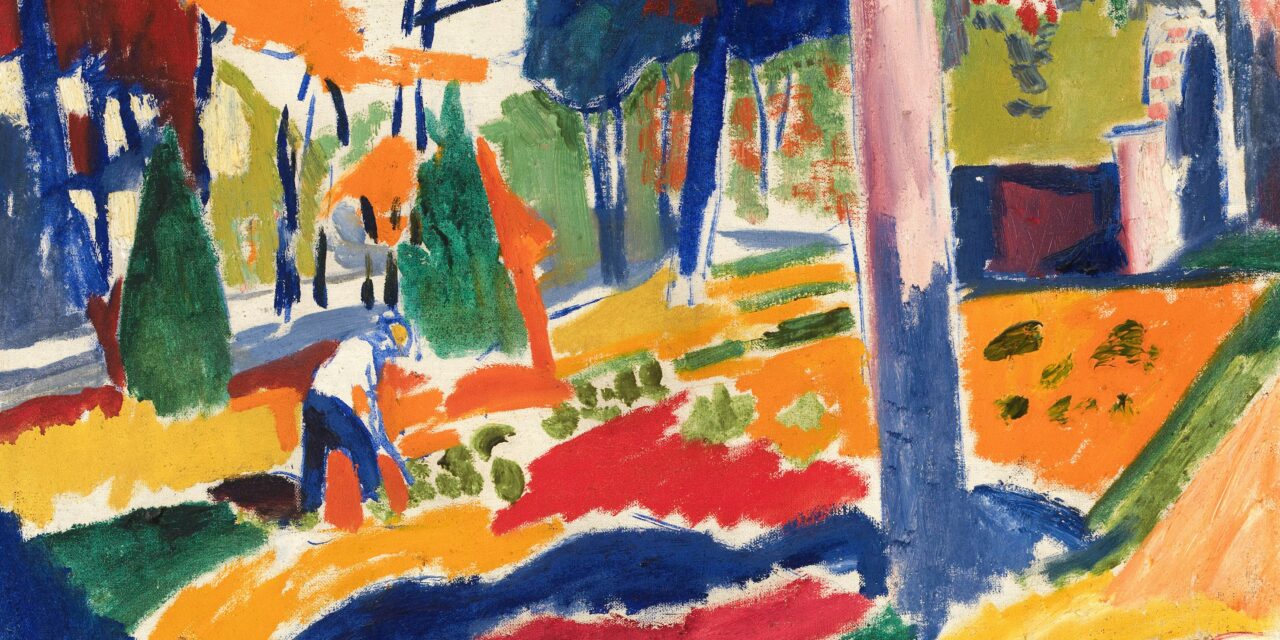
By the early 1900s, Matisse, along with artists like André Derain and Maurice de Vlaminck, began to push the boundaries of colour. They employed bold, non-naturalistic hues, applied with vigorous brushstrokes, to convey emotional intensity and subjective experience. This daring approach led to the coining of the term “Fauvism,” derived from the French word “fauves,” meaning “wild beasts.” The Salon d’Automne of 1905 proved to be the movement’s explosive debut. Matisse’s painting Woman with a Hat and Derain’s Charing Cross Bridge shocked and scandalised the public and critics alike with their unbridled use of colour. This exhibition marked a definitive break from academic tradition and heralded a new era in art.
Matisse as the Leader of the Pack
Despite the collaborative spirit of Fauvism, Matisse quickly emerged as its intellectual and artistic leader. His theoretical writings, such as his 1908 essay Notes of a Painter, articulated the movement’s core principles: the use of colour for expressive rather than descriptive purposes, the simplification of forms, and the pursuit of a harmonious and balanced composition. He advocated for art that was “an art of balance, of purity and serenity, devoid of troubling or depressing subject matter… a soothing, calming influence on the mind, something like a good armchair which provides relaxation from physical fatigue.” This philosophical underpinning, combined with his undeniable talent, solidified his position as a guiding force for the Fauves.
Exploring New Horizons: Beyond Fauvism
The intense energy and revolutionary spirit of Fauvism, while groundbreaking, was a phase that Matisse, ever an evolving artist, would eventually move beyond. His artistic journey was characterized by a constant quest for new modes of expression, leading him to explore different artistic styles and influences, including his significant engagement with the art of the Islamic world.
The Mediterranean Muse
The warm, vibrant light and the rich cultural heritage of the Mediterranean became a profound source of inspiration for Matisse. His travels to Algeria and Morocco in the early 1910s, and later extended stays in Nice, infused his work with a new sensuality and a focus on decorative elements. The exoticism of North Africa, with its intricate patterns, vibrant textiles, and sun-drenched landscapes, found expression in his canvases. This period saw a subtle shift in his palette, a greater emphasis on flat planes of colour, and a fascination with interior scenes, often featuring his signature odalisques.
The Influence of Islamic Art
The decorative arts of the Islamic world had a profound impact on Matisse’s aesthetic sensibilities. He was captivated by the intricate patterns, the rhythmic repetition of motifs, and the rich materiality of Islamic ceramics, textiles, and metalwork. This influence manifested in his work through a greater emphasis on pattern, texture, and a flattened perspective. He began to incorporate decorative elements directly into his compositions, blurring the lines between subject and background, and creating a sense of all-over unity. This engagement was not merely superficial; it informed his understanding of colour and composition on a fundamental level, leading him to explore the decorative potential of art in its purest form.
A Dialogue with Cubism
While Matisse remained largely outside the strict tenets of Cubism, he was keenly aware of its revolutionary impact on the art world. He engaged in a lively intellectual and artistic dialogue with key figures like Picasso, often seen as rivals yet profoundly influential on each other. Matisse’s response to Cubism was not to adopt its fragmented forms but rather to refine and intensify his own exploration of simplified forms and flattened planes, creating a distinct approach to abstracting reality that maintained a strong sense of emotional resonance and decorative harmony.
The “Second Life”: Resilience and the Cut-Outs
The period after 1941 marked a profound turning point in Henri Matisse’s life and artistic career. Faced with severe health challenges, he entered what is often described as his “second life,” a phase of remarkable resilience and creative output that saw the development of his iconic cut-out technique. This period, particularly the last thirteen years of his life, has recently been the subject of significant renewed interest, with exhibitions like Matisse 1941–1954 at the Grand Palais in Paris in March 2026 highlighting this prolific final act.
A Battle for Health, A Triumph of Spirit
In 1941, Matisse underwent a major abdominal surgery for cancer. The operation left him largely confined to a wheelchair and, for a time, bedridden. This severe physical limitation could have easily led to a cessation of his artistic practice. However, rather than succumbing to despair, Matisse found a new way to create. He began to dictate his artistic intentions to assistants and to use scissors to “draw with colour.” This period of his life, as highlighted by The New York Times in March 2026, underscores his extraordinary ability to continue creating despite significant health setbacks, demonstrating a profound triumph of spirit over physical adversity.
The Joyful Revolution of the Cut-Outs
The cut-outs, often referred to as “painting with scissors,” became Matisse’s primary medium in his later years. He would meticulously cut shapes from sheets of coloured paper, which were then pasted onto a supporting surface by his assistants. These vibrant, organic forms, liberated from the constraints of the brush, allowed him to explore pure colour and shape in a way he had never before achieved. Works like Blue Nudes, The Snail, and the monumental chapel at Vence, were born from this technique. The cut-outs are characterized by their dynamic compositions, their intense chromatic harmonies, and their exuberant spirit. They represent a radical simplification of form, a distillation of his artistic vision to its most essential elements.
The Significance of Marguerite
The exhibition Matisse and Marguerite: Through Her Father’s Eyes, held at the Musée d’Art Moderne de Paris in April-August 2025, shed significant light on the crucial role his daughter, Marguerite Duthuit, played in his life and work, particularly during his later years. Marguerite was not only a devoted companion but also an active collaborator, assisting him with his cut-outs and acting as a vital link to the art world. The exhibition, featuring over 110 works, explored their intertwined creative journey across four decades, highlighting her presence and influence in his art and life, especially during his challenging final period.
Henri Matisse, renowned for his vibrant use of colour and innovative approach to form, has left an indelible mark on the world of modern art. His life story is not only a testament to his artistic genius but also reflects the broader movements within the art world during his time. For those interested in exploring the evolution of art and its influential figures, a fascinating read can be found in an article about the Museo Nacional del Prado in Madrid, which houses works from various artists, including those who were contemporaries of Matisse. You can delve into this rich artistic heritage by visiting this link.
Enduring Legacy and Contemporary Relevance
Henri Matisse’s artistic legacy is immeasurable. His lifelong dedication to exploring colour, form, and the emotional power of art has had a profound and lasting impact on generations of artists and art lovers. His work continues to be celebrated, studied, and reinterpreted, proving its enduring relevance in the contemporary art landscape.
A Master of Colour and Form
Matisse’s mastery of colour remains unparalleled. He understood colour not just as a descriptive tool but as a primary means of expression, capable of evoking emotion, creating mood, and defining space. His ability to harmonize seemingly disparate hues and to create vibrant, luminous compositions set a new standard for the use of colour in art. Furthermore, his persistent exploration of simplified forms, from the bold outlines of his Fauvist period to the organic shapes of his cut-outs, demonstrated a profound understanding of the essence of visual language.
The Influence on Modern and Contemporary Art
The impact of Matisse’s work can be seen across a wide spectrum of artistic movements and individual artists. His Fauvist innovations paved the way for abstract expressionism, while his later decorative explorations influenced artists interested in pattern and design. His emphasis on subjective experience and the emotional power of art continues to resonate with contemporary artists who seek to break free from traditional representational constraints. His consistent evolution and his fearless experimentation serve as a perpetual inspiration for those navigating the complexities of artistic creation.
Continued Art-World Fascination
Recent coverage, including the articles and exhibitions mentioned, demonstrates the ongoing art-world fascination with Matisse. His biography, from his unexpected career shift to his leadership of Fauvism and the inventive nature of his late cut-outs, continues to be a rich source of study and discourse. Each new exhibition and publication offers fresh perspectives, revealing deeper layers of his artistic genius and his profound influence on the trajectory of modern art. The Grand Palais exhibition in 2026, focusing on his final prolific years, promises to further illuminate this vital chapter, ensuring that Matisse’s vibrant spirit continues to inspire and ignite the imaginations of audiences worldwide. His life story is not merely a historical account but a living testament to the transformative power of art and the enduring strength of the creative will.
FAQs
Who was Henri Matisse?
Henri Matisse was a French artist known for his use of color and his fluid, expressive style. He was a leading figure in modern art and is best known for his paintings, but he also worked in sculpture and printmaking.
What was Henri Matisse’s artistic style?
Matisse is known for his use of bold, vibrant colors and his fluid, expressive style. He was a key figure in the Fauvism movement, which emphasized the use of intense color and simplified forms.
What are some of Henri Matisse’s most famous works?
Some of Matisse’s most famous works include “The Dance,” “The Red Studio,” “Woman with a Hat,” and “The Joy of Life.” These paintings showcase his use of color and his expressive style.
What was Henri Matisse’s life like?
Matisse was born in 1869 in Le Cateau-Cambrésis, France. He initially studied law but later turned to art, studying at the Académie Julian in Paris. He faced health challenges later in life, which led him to develop his cut-out technique.
What is Henri Matisse’s legacy?
Matisse’s work continues to be celebrated for its use of color and its influence on modern art. He is considered one of the most important artists of the 20th century and his legacy lives on through his impactful contributions to the art world.