
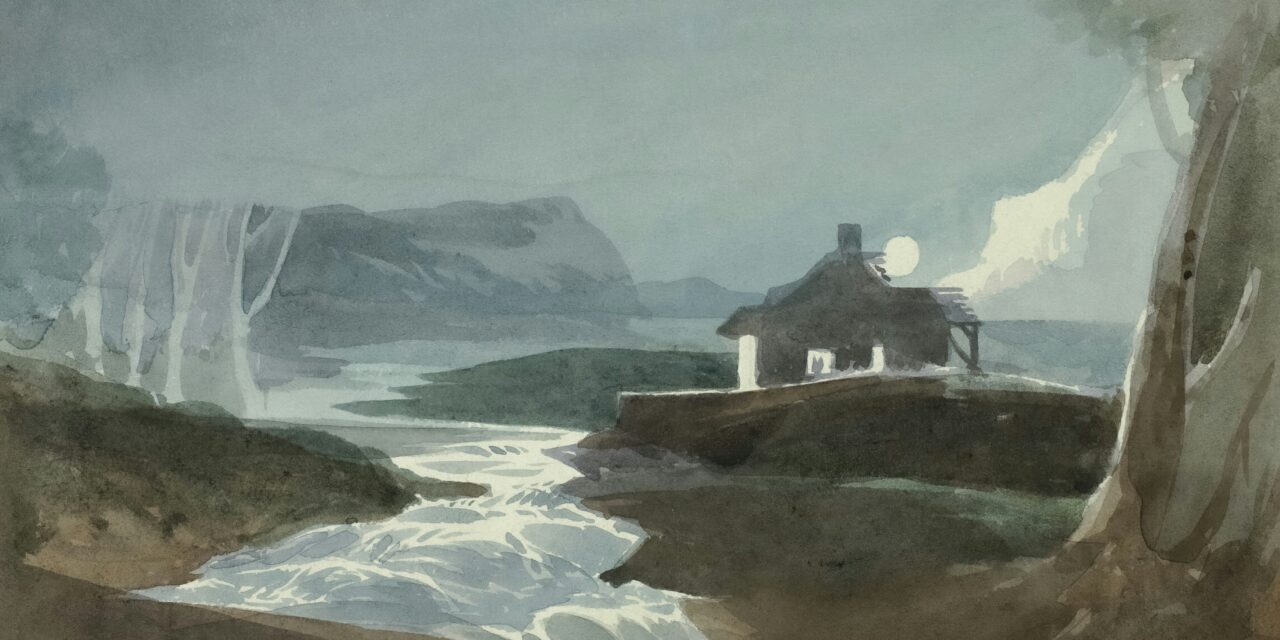
The life of John William Waterhouse spans a period of significant artistic and societal change in Britain. Born in Rome, Italy, in 1849, to English artist parents, William and Isabella Waterhouse, his early life was immersed in art. His father, a painter of portraits and landscapes, and his mother, a talented amateur, undoubtedly fostered his nascent artistic sensibilities from a young age. The family returned to England around 1850, settling in South Kensington, an area that was becoming a hub for artistic and academic pursuit thanks to the establishment of institutions like the South Kensington Museum (now the Victoria and Albert Museum) and the Royal College of Art.
Waterhouse’s upbringing in a creative household provided a natural entry point into the world of art. His initial artistic education appears to have been informal, guided by his father, who would have instilled the fundamentals of drawing and painting.
First Forays into Art
While detailed records of his early artistic explorations are scarce, it is reasonable to assume that he began drawing at a very young age, perhaps copying the masterworks his parents would have observed in Rome or the contemporary art displayed in London galleries. This formative period, characterized by practical experience and observation, laid the groundwork for his later academic training. The precise moment he decided to pursue art as a profession is not explicitly documented, but given his environment, it would have been a rather organic progression rather than a sudden revelation.
Royal Academy Schooling
At the age of 21, in 1870, Waterhouse was admitted to the Royal Academy Schools in London. This formal instruction marked a pivotal moment in his artistic development. The Royal Academy, at that time, adhered to a structured curriculum emphasizing drawing from antique sculpture, life drawing, and the study of composition and anatomy. This rigorous academic training provided him with a solid technical foundation, honing his draftsmanship and understanding of the human form, which would become central to his later mythological and literary subjects. It also exposed him to the prevailing artistic trends and academic standards of the era. His early works from this period often displayed a strong neoclassical influence, a testament to the Academy’s emphasis on classical ideals.
Early Exhibitions and Recognition
Waterhouse began exhibiting his work at the Royal Academy annual exhibitions in the early 1870s, a crucial step for any aspiring artist seeking recognition and patronage. His initial submissions were typically classical or historical subjects, reflecting his academic training and the popular taste of the time. These early works, while perhaps not as iconic as his later Pre-Raphaelite inspired pieces, gradually built his reputation within the artistic establishment. His painting, Sleep and His Half-Brother Death (1874), was well-received and purchased by the Royal Academy, marking a significant early success. This recognition encouraged him to continue exploring mythological and literary themes, which would deeply inform his subsequent career.
John William Waterhouse, renowned for his captivating depictions of mythological and literary subjects, often drew inspiration from the Mannerist movement, which is explored in detail in a related article. This article delves into the characteristics and significance of Mannerism in art, offering insights that can enhance one’s understanding of Waterhouse’s work and the broader context of his artistic influences. For more information, you can read the article here: An Introduction to Mannerism Art.
Artistic Style and Evolution
Waterhouse’s artistic style is often associated with the Pre-Raphaelite Brotherhood, though he was not a formal member and his career flourished after their initial heyday. His work, however, shared many aesthetic and thematic concerns with them, particularly their focus on literary and mythological subjects, their vivid colour palettes, and their meticulous attention to detail.
Pre-Raphaelite Influences
While Waterhouse’s early training was firmly rooted in academic classicism, he later developed a style that synthesised these classical ideals with the emerging aesthetics of the Pre-Raphaelites. He admired artists such as Dante Gabriel Rossetti and John Everett Millais, yet his approach was distinct. Rather than replicating their style, Waterhouse absorbed their spirit of storytelling, their fascination with medieval and classical narratives, and their desire for a return to the perceived purity and emotional intensity of early Renaissance art. This influence is evident in his choice of subjects drawn from Tennyson, Keats, and classical mythology, and the dramatic emotional content he imbued in his figures.
Colour Palette and Composition
Waterhouse’s palette was typically rich and harmonious, often featuring deep blues, greens, and reds, offset by luminous flesh tones. He masterfully employed light and shadow to create dramatic effects, highlighting key elements within his compositions and adding a sense of depth and atmosphere. His compositions were often complex, yet carefully balanced, drawing the viewer’s eye through the narrative he depicted. He frequently placed his figures in natural, often overgrown, settings, further enhancing the romantic and symbolic qualities of his work. His skill in rendering drapery and the textures of fabric and foliage added a tangible quality to his often ethereal subjects.
Narrative and Symbolism
Central to Waterhouse’s art was his commitment to storytelling. He chose narratives that allowed for exploration of themes such as love, loss, betrayal, longing, and destiny. His figures, particularly his female subjects, are often depicted at pivotal moments in their stories, imbued with a sense of quiet introspection or dramatic action. Symbolism is woven throughout his work, whether through specific objects, flowers, or the atmospheric quality of the landscape. For instance, in The Lady of Shalott, the wilting tapestries and the distant Camelot all contribute to the tragic narrative. While his interpretations were often personal, they resonated deeply with the Victorian public’s appetite for evocative and morally resonant narratives.
Major Works and Themes
Waterhouse produced a significant body of work throughout his career, often revisiting and refining themes that particularly captivated him. His ability to render emotion and narrative with technical skill earned him widespread acclaim.
Mythological and Classical Subjects
Many of Waterhouse’s most enduring works draw from classical mythology and ancient legends. Echo and Narcissus (1903) and Hylas and the Nymphs (1896) are prime examples. In these paintings, he explores themes of unrequited love, vanity, and fatal attraction, often depicting figures in lush, enigmatic landscapes. His approach to classical subjects was less academic and more imbued with a sense of romanticism and emotional depth than many of his contemporaries. He sought to bring these ancient stories to life, making them feel immediate and relatable to a Victorian audience. The female figures in these works often possess a compelling beauty and an underlying vulnerability or power.
Arthurian and Literary Themes
Waterhouse was captivated by Arthurian legends and the poetry of Alfred, Lord Tennyson. His interpretations of The Lady of Shalott are perhaps his most famous works, and he painted several versions of this tragic heroine. These paintings exemplify his ability to capture a narrative’s emotional core and translate it into a visually compelling image. Other literary inspirations included stories from Dante, Shakespeare, and John Keats. His choice of these narratives reflected a broader Victorian fascination with medieval romance and poetic drama, allowing him to explore themes of fate, sacrifice, and the often-unforeseen consequences of human actions.
The Femme Fatale and Innocent Maiden
A recurring motif in Waterhouse’s art is the portrayal of women who embody either the seductive, dangerous femme fatale or the innocent, often tragic, maiden. Figures like Circe or La Belle Dame sans Merci fall into the former category, exuding an enigmatic power and allure that can lead men to ruin. Conversely, characters such as Ophelia or the Lady of Shalott represent a more vulnerable, pure archetype, often succumbing to sorrow or fate. This duality reflects broader societal anxieties and romantic ideals concerning women in the Victorian era, allowing Waterhouse to explore complex psychological states and moral dilemmas through his female subjects.
Personal Life and Later Career
Details of Waterhouse’s personal life are somewhat scant, as he maintained a more private existence compared to some of his bohemian contemporaries. He appears to have been a dedicated and diligent artist, focused primarily on his craft.
Marriage and Family Life
In 1883, Waterhouse married Esther Kenworthy, also an artist and the daughter of an art master from Leeds. Their marriage seems to have been a stable and supportive partnership. Esther exhibited her own floral paintings at the Royal Academy, sharing a common artistic bond with her husband. The couple settled in St John’s Wood, London, a fashionable area for artists and writers. While they did not have children, their household environment would have been one steeped in artistic pursuit and intellectual exchange. This domestic stability likely provided Waterhouse with the necessary environment to focus on his ambitious painting projects.
Association with the St John’s Wood Clique
Waterhouse became loosely associated with the “St John’s Wood Clique,” a group of artists who, while not formal in their association, lived and worked in the same area and shared similar artistic interests, often focusing on historical and literary subjects. While he was not a core member known for their convivial gatherings and shared studio practices, his presence in the community and his artistic leanings placed him within theirphere of influence. This association allowed for informal exchange of ideas and a sense of belonging within the larger London art scene.
Recognition and Royal Academy Status
Waterhouse’s artistic achievements were consistently acknowledged by the art establishment. He was elected an Associate of the Royal Academy (ARA) in 1885, a significant honour that recognised his growing stature. Further cementing his position, he was elected a full Royal Academician (RA) in 1903. These appointments provided him with institutional support, access to exhibition opportunities, and a respected voice within the Royal Academy. His reputation during his lifetime was considerable, and he was regarded as one of the leading narrative painters of his generation. His works were eagerly sought after by collectors and institutions alike.
John William Waterhouse, renowned for his captivating depictions of mythological and literary subjects, has left an indelible mark on the art world. His works often evoke a sense of beauty and emotion that resonates with the ideals of the Aesthetic Movement. For those interested in exploring the deeper implications of beauty in art, a related article can be found at this link, which delves into the aesthetic experience and its significance in the realm of artistic expression. Waterhouse’s life and creations serve as a perfect illustration of these themes, showcasing how art can transcend mere representation to evoke profound emotional responses.
Legacy and Re-evaluation
Waterhouse continued to paint until his death in 1917, through a period marked by significant shifts in the art world, including the rise of Impressionism, Post-Impressionism, and early Modernism. Despite these avant-garde movements, Waterhouse maintained his distinct style, grounded in academic tradition yet infused with a romantic sensibility.
Enduring Appeal
Waterhouse’s paintings have retained a strong popular appeal, particularly his depictions of mythological and literary heroines. The emotive power of his narratives, combined with his technical skill and radiant colours, continues to captivate audiences. His works often feature on posters, book covers, and in popular culture, demonstrating their enduring visual impact. This widespread recognition, often facilitated by mass reproduction, ensures that his art reaches a broad and diverse public.
Posthumous Reception and Reassessment
Following his death and through much of the 20th century, particularly amidst the ascendance of Modernism, Waterhouse’s work, along with that of many Victorian artists, experienced a period of relative critical neglect. The perceived sentimentality and narrative focus of Victorian art were at odds with the emerging aesthetic values emphasizing abstraction and formal innovation. However, a significant reassessment of Victorian art began in the late 20th century. Exhibitions and scholarly publications highlighted the technical mastery, thematic depth, and cultural significance of artists like Waterhouse. This critical re-evaluation has firmly re-established his place within the canon of British art history.
Influence on Subsequent Art and Culture
While Waterhouse did not found an artistic movement or have direct disciples in the manner of some other prominent artists, his influence can be seen in the broader continued fascination with narrative painting and the romanticisation of historical and mythological subjects. His dramatic compositions and evocative female figures have left an indelible mark on popular imagination, inspiring subsequent generations of illustrators, fantasy artists, and filmmakers. The ethereal beauty and emotional resonance of his work continue to serve as a touchstone for those who appreciate art that merges meticulous craftsmanship with a powerful sense of storytelling and timeless human drama. His art serves as a rich visual record of Victorian intellectual and artistic preoccupations.
FAQs
1. Who was John William Waterhouse?
John William Waterhouse was a British painter known for his Pre-Raphaelite style and his depictions of classical and literary themes. He was born in Rome in 1849 to English parents and later moved to England where he studied at the Royal Academy of Arts.
2. What are some of John William Waterhouse’s most famous works?
Some of Waterhouse’s most famous works include “The Lady of Shalott,” “Hylas and the Nymphs,” “The Soul of the Rose,” and “Ophelia.” These paintings often depict romantic and mythical themes, and are known for their rich colours and attention to detail.
3. What was John William Waterhouse’s artistic style?
Waterhouse’s artistic style was heavily influenced by the Pre-Raphaelite Brotherhood, a group of English painters who sought to emulate the style and subject matter of early Italian Renaissance art. His paintings often feature vibrant colours, intricate details, and a focus on romantic and literary themes.
4. What was the significance of John William Waterhouse’s work?
Waterhouse’s work was significant for its contribution to the Pre-Raphaelite movement and its influence on later artists. His paintings captured the romantic and mythical themes of the Victorian era, and continue to be celebrated for their beauty and emotional depth.
5. What was John William Waterhouse’s legacy?
John William Waterhouse’s legacy includes his impact on the Pre-Raphaelite movement, as well as his enduring influence on the depiction of classical and literary themes in art. His paintings continue to be admired and studied for their technical skill and emotional resonance.



