Robert Delaunay: A Life Dedicated to Colour and Light
Robert Delaunay’s journey through the vibrant landscape of early 20th-century art is a testament to a relentless pursuit of capturing the essence of modern life through the intoxicating power of colour and light. Born in Paris in 1885, his life was a dynamic interplay of personal evolution and artistic innovation, a narrative that saw him co-found the influential Orphism movement and leave an indelible mark on the trajectory of abstract art. His story is not merely one of canvases and pigment; it is a chronicle of intellectual curiosity, passionate collaboration, and an unwavering belief in the transformative potential of pure colour.
Robert Florentin Delaunay-Terk was born into a family of discerning tastes, though not necessarily artistic ones. His father, Charles Delaunay, was a civil engineer, and his mother, Berthe Félicité Delon, came from a distinguished family. This background, while not steeped in the bohemian traditions of art, likely instilled in him a certain rigor and intellectual discipline that would later inform his artistic theories. It was his maternal uncle, Saint-Paul, a wealthy landowner, who provided the initial spark for Delaunay’s artistic career. Upon his uncle’s death, Robert inherited a substantial sum, which he chose to dedicate to his artistic education. This financial independence, though a fortunate circumstance, also allowed him the freedom to explore his nascent artistic inclinations without the immediate pressures of commercial success.
A Glimpse of Influence: Impressionism and Neo-Impressionism
Delaunay’s early artistic explorations were undeniably shaped by the prevailing artistic currents of the late 19th century. He began his formal training at the École de Dessin in Paris, where he encountered the foundational principles of drawing and design. However, it was his exposure to the works of the Impressionists and Neo-Impressionists that truly ignited his passion for colour. The Impressionists, with their revolutionary focus on capturing the fleeting effects of light and atmosphere, demonstrated the expressive potential of broken brushstrokes and vibrant palettes. Delaunay absorbed these lessons, but it was the Neo-Impressionists, particularly Georges Seurat and Paul Signac, who offered a more systematic approach to colour theory. Their pointillist technique, which involved applying small dots of pure colour that would blend optically in the viewer’s eye, resonated deeply with Delaunay’s growing interest in the scientific and perceptual aspects of colour. He spent time studying their works at galleries and exhibitions, dissecting their colour compositions and beginning to formulate his own ideas about how colour could be used to convey emotion and sensory experience.
The Unconventional Path: From Fine Arts to Fine Art
Despite his initial training, Delaunay found the traditional academic approach somewhat restrictive. He was drawn to the avant-garde, to artists who were pushing boundaries and challenging established norms. This led him away from purely academic pursuits and towards a more independent and experimental trajectory. He briefly attended the Académie Julian, but it was his engagement with independent exhibitions and his exposure to radical artistic ideas that truly propelled his development. The early seeds of his unique vision were sown during this period, a period of absorption, experimentation, and a growing dissatisfaction with conventional artistic representation.
Robert Delaunay, a pivotal figure in the Orphism movement, is renowned for his vibrant use of colour and innovative approach to abstraction. His life story is intricately linked to the evolution of modern art, as he sought to capture the dynamism of the modern world through his work. For those interested in exploring the broader context of modern art and its influential institutions, a related article on the Guggenheim Museum provides valuable insights into how such venues have shaped the appreciation of artists like Delaunay. You can read more about it in this article: An Introduction to the Guggenheim Museum, New York City, USA.
The Genesis of Orphism: Colour as Subject Matter
The true blossoming of Robert Delaunay’s artistic genius is intrinsically linked to the development of Orphism, a movement he co-founded with his wife, Sonia Delaunay, and writer Guillaume Apollinaire. Orphism, also known as Orphic Cubism, was a pivotal moment in the evolution of abstract art, moving away from the representational tendencies of Cubism towards a pure exploration of colour and form. This wasn’t simply a stylistic evolution; it was a philosophical shift that declared colour itself as the primary subject matter of painting.
Sonia and Robert: A Creative Partnership Forged in Colour
The arrival of Sonia Delaunay-Terk into Robert’s life in 1908 marked a profound turning point. Sonia, herself a gifted artist and designer, shared Robert’s fascination with colour and its potential. Their marriage was not just a personal union but a remarkable artistic partnership, a symbiosis of ideas and creative energies. They shared studios, debated theories, and inspired each other’s work. Sonia’s background in textiles and her pioneering work in fashion and design brought a unique dimension to their artistic discourse, emphasizing the tangible application of colour in everyday life. Together, they embarked on a journey to liberate colour from its descriptive role, allowing it to stand alone as a powerful expressive force.
The Rhythmic Dance of Colour: Theories of Simultaneous Contrast
Central to Delaunay’s artistic philosophy was the concept of “simultaneous contrast.” Influenced by the colour theories of Michel Eugène Chevreul and Ogden R. L. Rood, Delaunay understood that colours, when placed next to each other, affect each other’s perception. He observed how certain colour combinations could create vibrancy, movement, and a sense of depth, independent of any representational elements. This led him to develop a vocabulary of abstract forms and colour juxtapositions designed to evoke specific sensations and emotions in the viewer. His paintings became visual orchestrations, where contrasting hues engaged in a dynamic dialogue, creating a sense of rhythm and flow. This was a radical departure from traditional painting, where colour was primarily used to define form and create illusionistic space. For Delaunay, the interaction of colours was the space, the form, and the subject.
Apollinaire’s Blessing: Naming the Unnamed
It was the poet and art critic Guillaume Apollinaire who coined the term “Orphism” in 1912 to describe the art of Robert and Sonia Delaunay, along with artists like František Kupka and Fernand Léger. Apollinaire saw in their work a connection to the ancient, mystical tradition of Orpheus, suggesting an art that transcended mere visual representation to touch upon deeper, more spiritual dimensions. The name itself, with its evocative resonance, perfectly captured the avant-garde spirit of their work, hinting at a new artistic language that was both intellectual and deeply emotive. This endorsement by a leading figure of the Parisian art scene provided crucial validation for their experimental approach.
The Eiffel Tower: An Icon of Modernity Reimagined
The Eiffel Tower became one of Robert Delaunay’s most enduring and iconic subjects. He was captivated by its modern engineering, its soaring verticality, and its presence as a symbol of Paris and the burgeoning industrial age. His series of Eiffel Tower paintings, executed between 1909 and 1912, represent a crucial phase in his transition towards abstraction and his exploration of Orphist principles.
Cubist Foundations, Orphist Transformations
Delaunay’s initial engagement with the Eiffel Tower was influenced by Cubism. He dissected the structure into geometric planes and fragmented perspectives, reflecting the analytical approach of artists like Picasso and Braque. However, he quickly moved beyond the monochromatic palette and analytical focus of traditional Cubism. For Delaunay, the Eiffel Tower was not merely an object to be deconstructed, but an opportunity to explore the interplay of light and colour that defined its form. He began to imbue his Cubist-inspired structures with vibrant hues, using contrasting colours to define different planes and to suggest the shimmering play of light on metal.
Colour as Structure, Light as Subject
In his Eiffel Tower paintings, Delaunay demonstrates how colour can become the primary structural element. Instead of relying on lines and forms to define the tower’s architecture, he uses juxtaposed colours to suggest its volume and verticality. The colours themselves create the sense of planes and angles, and the viewer’s eye is invited to participate in the act of constructing the form through the optical mixing of hues. The Eiffel Tower, bathed in the artificial and natural light of Paris, became a vehicle for Delaunay to investigate how light itself, and its interaction with coloured surfaces, could be rendered on canvas. The paintings are not mere depictions of a landmark; they are explorations of visual perception and the dynamic energy of modern urban life.
The City as a Symphony of Colour
Beyond the individual monument, Delaunay saw the Eiffel Tower as a focal point within the larger chromatic symphony of Paris. He was fascinated by the city’s modern dynamism, its bustling streets, its electric lights, and its constant flux. His Eiffel Tower series, and indeed many of his subsequent works, aimed to capture this sense of urban energy through a vibrant, abstract language. The fragmented forms and bold colour contrasts in these paintings evoke the sensory overload of the modern city, its speed, its dynamism, and its dazzling visual spectacle.
The Windows Series and Beyond: Pure Abstraction
As Delaunay’s commitment to Orphism deepened, his work progressively moved towards pure abstraction, shedding even the vestiges of recognizable subject matter. His “Windows” series, initiated around 1912, represents a pivotal leap into this realm, where colour and form exist for their own sake, creating a purely visual experience.
Shattered Light, Harmonious Colour
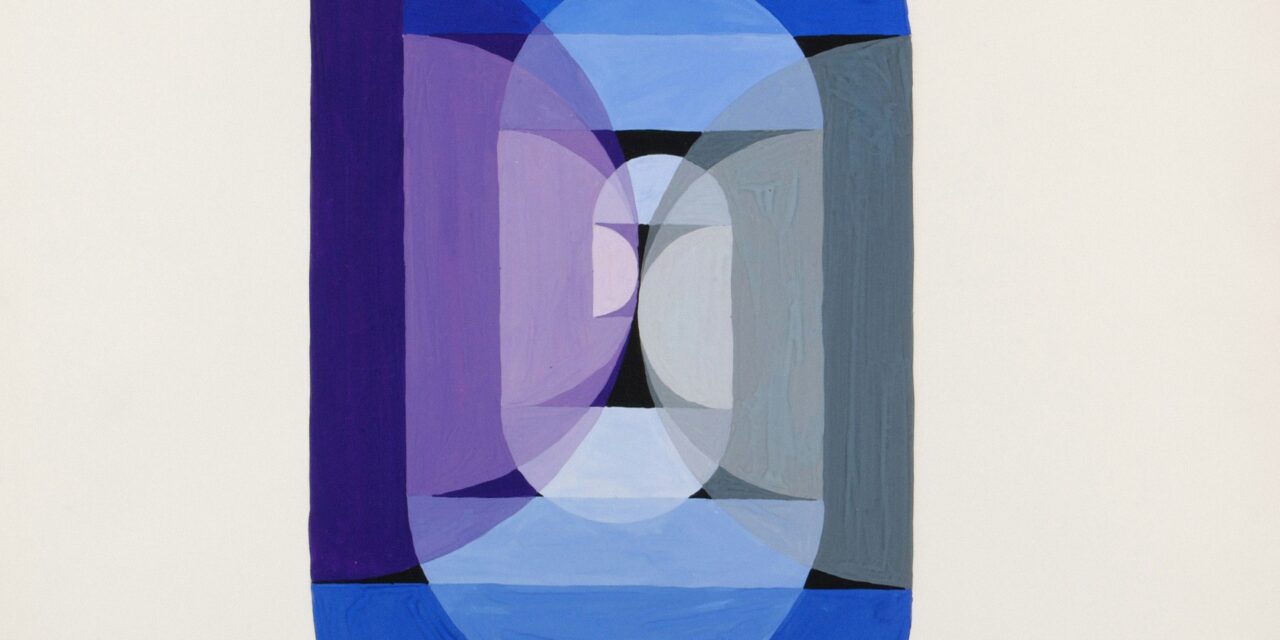
The “Windows” series can be seen as a natural evolution from his cityscapes and earlier abstract experiments. He imagined looking through different panes of glass, each offering a unique perspective and a distinct chromatic experience. These paintings are characterized by overlapping geometric shapes, often circular or rectangular, rendered in a dazzling array of colours. The effect is one of light being fragmented and reassembled, creating a kaleidoscopic interplay of hues. The boundaries between interior and exterior, between object and light, become blurred, as the paintings become immersive environments of pure visual sensation.
The Art of Pure Colour: Transcending the Visual
Delaunay’s ambition was to create an art that transcended mere visual representation, an art that could directly affect the viewer’s emotions and senses. He believed that pure colour possessed a universal language, capable of evoking feelings and conveying experiences without the need for narrative or figuration. In his later abstract works, he achieved this by carefully orchestrating colour juxtapositions, exploring harmonies and contrasts to create a sense of movement, rhythm, and emotional resonance. The viewer is invited to engage with the painting on a purely sensory level, allowing the colours to wash over them and create a unique, internal experience.
The Influence of Music and Poetry
The very name “Orphism” hints at the influence of music and poetry on Delaunay’s artistic thinking. He often spoke of his paintings in musical terms, describing them as “compositions” and referring to “chromatic harmonies.” He sought to create a visual equivalent to musical experiences, where rhythm, melody, and harmony could be conveyed through colour. Similarly, his collaboration with poets like Apollinaire and Blaise Cendrars underscores his desire to create an art that resonated with the lyrical and evocative qualities of poetry. This interdisciplinary approach was a hallmark of the avant-garde, and Delaunay was at its forefront.
Robert Delaunay, renowned for his vibrant use of colour and innovative approach to abstraction, has often been compared to other influential artists of his time. His exploration of light and movement can be seen as a precursor to the emotional intensity found in the works of Francis Bacon. For those interested in delving deeper into the complexities of modern art, a fascinating article on Bacon’s piece “Three Studies for Figures at the Base of a Crucifixion” provides insight into the emotional depth and stylistic choices that define his work. You can read more about it in this article.
Later Life and Legacy: A Visionary’s Enduring Impact
Despite personal hardships and the tumultuous backdrop of two World Wars, Robert Delaunay remained a steadfast advocate for his artistic vision. His later years were marked by continued exploration and a dedication to sharing his knowledge and passion for colour.
The Orphist Diaspora and Continued Innovation
The outbreak of World War I brought about a period of displacement for Robert and Sonia. They spent time in Spain and Portugal, where Robert continued to paint, adapting his style to the vibrant light and colours of the Iberian Peninsula. However, his Orphist principles remained at the core of his work. Upon their return to Paris, they continued to be influential figures in the art world, though the dominance of movements like Surrealism and Abstract Expressionism meant that Orphism, as a distinct movement, gradually faded into the background. Nonetheless, the Delaunays’ commitment to colour and abstraction had a profound and lasting impact on subsequent generations of artists.
Colour as a Universal Language: Teaching and Advocacy
In his later life, Robert Delaunay was increasingly focused on articulating his theories and advocating for the power of colour as a universal language. He taught at various institutions, including the Académie de la Grande Chaumière, where he shared his insights with aspiring artists. He believed that understanding and harnessing the principles of colour could lead to a more harmonious and vibrant world. His writings and lectures were instrumental in disseminating his ideas, ensuring that his groundbreaking work would not be forgotten.
A Legacy of Vibrancy and Light
Robert Delaunay’s legacy is one of audacious innovation and an unwavering commitment to the expressive potential of colour. He liberated painting from the constraints of representation, paving the way for pure abstraction and demonstrating that colour itself could be a potent subject, capable of evoking emotion, creating movement, and conveying the dynamism of modern life. His Orphist canvases, with their luminous hues and rhythmic compositions, continue to captivate and inspire, serving as a testament to a life lived in fervent pursuit of light and colour. He taught us to see the world not just as forms and objects, but as a glorious, ever-shifting kaleidoscope of hues, a vibrant symphony waiting to be discovered.
FAQs
Who was Robert Delaunay?
Robert Delaunay was a French artist known for his role in the development of abstract art and Orphism, a movement that focused on the use of strong colors and geometric shapes.
What were Robert Delaunay’s major artistic contributions?
Delaunay is best known for his use of vibrant colors and geometric shapes in his abstract paintings, as well as his exploration of the concept of simultaneity, which involved capturing multiple viewpoints of an object in a single image.
What is the significance of Robert Delaunay’s work?
Delaunay’s work is significant for its influence on the development of abstract art and its role in the Orphism movement. His use of color and form has had a lasting impact on the art world.
What are some of Robert Delaunay’s most famous works?
Some of Delaunay’s most famous works include “Simultaneous Windows on the City,” “The Eiffel Tower,” and “Rythme n°1.”
What is Robert Delaunay’s legacy?
Robert Delaunay’s legacy lies in his contributions to the development of abstract art and his influence on subsequent generations of artists. His work continues to be celebrated and studied by art enthusiasts and scholars around the world.