The life story of Theo van Doesburg unfolds as a vibrant tapestry of artistic evolution, fervent idealism, and tireless advocacy for a new visual language. Born Christian Emil Marie Küpper in Utrecht, Netherlands, on October 30, 1883, his early years give little indication of the radical innovator he would become. His artistic journey was not a straight line but a series of explorations, rejections, and reinventions, deeply intertwined with the turbulent socio-political landscape of the early 20th century. Van Doesburg’s life was a testament to the power of collaboration and the unwavering belief that art held the key to a more harmonious and ordered society.
Theo van Doesburg’s initial forays into the art world were marked by a more conventional artistic education. He received no formal art training in his youth, instead honing his skills through self-study and private lessons. His family, though not artists themselves, provided a stable environment for his nascent talents to develop.
A Foundation in Realism and Impressionism
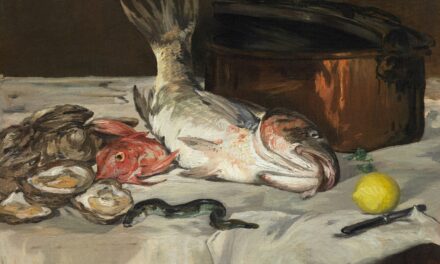
Van Doesburg’s early works betray a fascination with the prevalent artistic styles of his time. He painted landscapes, portraits, and still lifes in a manner that reflected the influence of Impressionism and its offshoots. His palette was initially rich and expressive, capturing the fleeting effects of light and colour as seen in the works of Dutch masters and contemporary French painters.
Initial Exhibitions and Critical Reception
Despite his adherence to more traditional styles, Van Doesburg was eager to share his work. He began exhibiting his paintings in the early 1900s, participating in various local and national exhibitions. While his talent was acknowledged, his work was largely seen as competent but not groundbreaking. Critics noted his technical skill but seldom glimpsed the revolutionary spirit that would later define him. This period of artistic exploration was crucial for Van Doesburg, as it allowed him to experiment with different techniques and subjects, laying the groundwork for his later radical departures.
The Influence of Artistic Circles and Intellectual Currents
Even in his early career, Van Doesburg was drawn to intellectual discourse and artistic camaraderie. He sought out like-minded individuals and engaged with the burgeoning artistic movements of the era. His exposure to various artistic theories and philosophies, even those he would later challenge, was instrumental in shaping his evolving artistic vision.
Early Collaborations and Intellectual Engagement
Van Doesburg’s early career saw him involved with various artistic societies and groups. He was keen to engage in discussions about art and its role in society. This period of intellectual engagement was a fertile ground for the germination of his more radical ideas. He was not merely an artist seeking to create beautiful objects; he was an thinker, deeply concerned with the broader implications of art for human experience.
Theo van Doesburg, a pivotal figure in the De Stijl movement, is renowned for his innovative approach to art and design, which sought to harmonise aesthetics with the principles of modernism. His life story is intricately woven with the evolution of abstract art, and exploring his journey can provide valuable insights into the broader context of early 20th-century artistic movements. For those interested in understanding the interplay between different artistic styles, a related article on the significance of narrative in art can be found at this link, which discusses William Holman Hunt’s “The Hireling Shepherd” and its impact on the Pre-Raphaelite movement.
The Birth of De Stijl and Neoplasticism
The most significant turning point in Theo van Doesburg’s life, and indeed in the history of 20th-century art, was his pivotal role in the founding of De Stijl. This movement, born out of the crucible of World War I, aimed to transcend the chaos and destruction of the time by creating a new, universal aesthetic based on pure abstraction and rational order.
Meeting Piet Mondrian and the Shared Vision
A pivotal encounter with Piet Mondrian in 1915 proved to be a catalyst for the formation of De Stijl. Mondrian, already a proponent of pure abstraction, found a kindred spirit in Van Doesburg. Together, they envisioned a movement that would advocate for a universal visual language, stripped of all subjective representation and emotional effusion. This collaboration was not without its tensions, however, as their personalities and approaches differed significantly.
The De Stijl Manifesto and Core Principles
In 1917, Van Doesburg, Mondrian, Bart van der Leck, and others formally launched De Stijl with a manifesto outlining their core principles. They championed geometric abstraction, using only primary colours (red, yellow, blue), the three primary values (black, white, grey), and horizontal and vertical lines. This strict geometric vocabulary was intended to represent a spiritual and universal harmony, a stark contrast to the perceived fragmentation of the modern world.
The Principles of Neoplasticism
Van Doesburg and Mondrian, in particular, developed the theoretical underpinnings of Neoplasticism, the artistic philosophy that guided De Stijl. Neoplasticism sought to liberate art from the limitations of natural forms and individual expression, aiming for an objective and universally comprehensible aesthetic.
Eliminating Subjectivity and Emotionalism
A key tenet of Neoplasticism was the elimination of subjective experience and emotionalism from art. Van Doesburg believed that art should not be a vehicle for personal expression but a means of achieving a higher, more spiritual order. This radical stance challenged centuries of artistic tradition, which often celebrated the artist’s individual genius and emotional depth.
The Embrace of Pure Abstraction
The embrace of pure abstraction was central to Neoplasticism. Artists working within this framework moved away from depicting recognizable objects and instead focused on the interplay of lines, planes, and colours. This pursuit of pure form was seen as a path to uncovering fundamental truths about reality and the universe.
Theo van Doesburg: Artist, Architect, and Designer
Van Doesburg’s artistic vision extended far beyond the canvas. He was a fervent believer in the total integration of art into all aspects of life, including architecture, interior design, and graphic design. He saw De Stijl not merely as an art movement but as a comprehensive design philosophy that could transform the world.
Architectural Collaborations and Innovations
Van Doesburg’s collaboration with the architect Gerrit Rietveld on the design for the Schröder House in Utrecht (1924) is a prime example of his architectural ambitions. This iconic house, with its open floor plan, cantilevered elements, and use of primary colours, became a physical embodiment of De Stijl principles. He envisioned buildings as three-dimensional compositions of colour and form, breaking down the traditional separation between interior and exterior space.
The Schröder House: A De Stijl Masterpiece
The Schröder House, designed in collaboration with Rietveld, stands as a testament to their shared vision. Van Doesburg’s contributions to the interior design, including the use of movable walls and the integration of colour, transformed the living space into a dynamic and adaptable environment. It remains a seminal example of how De Stijl principles could be applied to architectural design.
Interior Design and the “Living” Space
Van Doesburg was particularly interested in how De Stijl could influence the experience of living spaces. He designed interiors that were not merely decorative but functional and harmonious, aiming to create an environment that fostered a sense of order and well-being. His approach to interior design was as rigorous as his approach to painting, emphasizing balance, proportion, and the harmonious use of colour.
The Concept of the “Total Work of Art”
Van Doesburg championed the concept of the “total work of art” or “Gesamtkunstwerk,” where all artistic disciplines were integrated to create a unified aesthetic experience. He believed that by applying De Stijl principles to architecture, furniture design, and even clothing, society could be reformed and elevated.
Graphic Design and Typography
The influence of De Stijl extended to graphic design and typography. Van Doesburg experimented with new forms of lettering and layout, employing geometric shapes and primary colours to create visually arresting and legible designs. His work in this field helped to disseminate the De Stijl aesthetic to a wider audience.
Typography as a Visual Element
Van Doesburg saw typography not just as a means of conveying information but as a powerful visual element in its own right. He explored asymmetrical layouts, the use of geometric letterforms, and the integration of colour to create dynamic and engaging typographical compositions.
Divergences and the Later Years
Despite the initial success and shared vision of De Stijl, ideological differences, particularly between Van Doesburg and Mondrian, began to emerge. These divergences led to a re-evaluation of the movement’s core tenets and a period of intense artistic exploration for Van Doesburg.
The Break with Mondrian and the Introduction of Diagonal Lines
The most significant point of contention between Van Doesburg and Mondrian was the acceptance of the diagonal line. Mondrian remained steadfast in his commitment to only horizontal and vertical lines, believing they represented ultimate balance and stability. Van Doesburg, however, felt that the inclusion of the diagonal offered greater dynamism and a more expressive potential. This disagreement ultimately led to a split within De Stijl.
Expanding the De Stijl Vocabulary
Van Doesburg’s embrace of the diagonal line marked a significant expansion of the De Stijl vocabulary. He began to experiment with more dynamic compositions, incorporating angled elements that injected a sense of movement and energy into his work. This was a departure from the strict horizontality and verticality that had defined the movement’s early phase.
The Formation of Art Concret and Elementarism
In response to the evolving artistic landscape and his own developing theories, Van Doesburg introduced new concepts. He coined the term “Art Concret” (Concrete Art) to distinguish his increasingly dynamic and expressive abstract work from Mondrian’s more static Neoplasticism. He also developed the theory of Elementarism, which sought to combine the structured harmony of Neoplasticism with the dynamic energy of diagonals.
Elementarism: A Synthesis of Order and Dynamism
Elementarism represented Van Doesburg’s attempt to synthesize the rigid structure of Neoplasticism with the dynamic possibilities of diagonal lines. He believed that this approach could create a more vibrant and engaging form of abstract art, one that reflected the complexities of modern life.
International Travel and Wider Influence
Throughout his career, Van Doesburg travelled extensively, spreading the ideas of De Stijl and engaging with artists and architects in Germany, France, and other European countries. His international presence was crucial in establishing De Stijl as a significant force in the international avant-garde.
The Bauhaus Connection and Artistic Exchange
Van Doesburg had a significant influence on the Bauhaus, the renowned German art and design school. He gave lectures and offered workshops, fostering a dialogue between De Stijl principles and the Bauhaus’s own innovative approach to art, craft, and technology. This exchange was invaluable for both movements.
Theo van Doesburg, a pivotal figure in the De Stijl movement, is celebrated for his innovative approach to art and design, which sought to harmonise form and colour. His life story is intricately woven with the evolution of modernism, reflecting a deep commitment to abstraction and geometric simplicity. For those interested in exploring more about the broader context of artistic movements and their influential figures, a related article can be found at Artful Insights, which delves into the transformative power of art throughout history.
Legacy and Enduring Impact
Theo van Doesburg’s life was tragically cut short by a heart attack on March 7, 1931, at the age of 47. Despite his relatively brief but incredibly prolific career, his legacy is profound and far-reaching. He was not just a painter but a visionary who sought to revolutionize art and design, believing in its power to shape a better world.
De Stijl’s Influence on Modern Art and Design
De Stijl, under Van Doesburg’s energetic leadership, had a profound and lasting impact on the development of modern art and design. Its emphasis on geometric abstraction, primary colours, and the integration of art into everyday life influenced countless artists, designers, and architects in the decades that followed.
The Principles of Minimalism and Bauhaus
The principles of De Stijl, particularly its emphasis on simplicity, functionality, and geometric form, resonated deeply with the burgeoning minimalist art movement and the philosophy of the Bauhaus. The clean lines and bold colours of De Stijl can be seen reflected in the functionalist architecture and design that characterized much of the 20th century.
Van Doesburg’s Personal Artistic Evolution
Van Doesburg’s personal artistic evolution, from his early representational works to his later, more dynamic abstract compositions, exemplifies the experimental spirit of the avant-garde. He was unafraid to challenge his own established ideas and to push the boundaries of artistic expression.
The “Counter-Constructions” and Later Works
His “Counter-Constructions,” a series of works from his later period, showcase his most daring explorations of abstract form and colour, demonstrating a move towards a more kinetic and spatially complex abstract art. These works are often seen as precursors to later developments in abstract expressionism and op art.
The Role of the Artist as Social Reformer
Theo van Doesburg embodied the ideal of the artist as a social reformer, believing that art had the potential to transform not only individual perception but also the fabric of society itself. His unwavering commitment to a utopian vision of art and design continues to inspire those who believe in the power of creativity to shape a more harmonious and ordered future. His life story is a compelling testament to the transformative power of art and the relentless pursuit of an ideal.
FAQs
1. Who was Theo van Doesburg?
Theo van Doesburg was a Dutch artist, architect, and writer who was a leading figure in the De Stijl movement, which sought to create a new artistic language based on a strict geometry of horizontals and verticals.
2. What is Theo van Doesburg best known for?
Theo van Doesburg is best known for his role as the founder and leader of the De Stijl movement, as well as for his abstract paintings, architectural designs, and writings on art theory.
3. What were Theo van Doesburg’s major contributions to the art world?
Theo van Doesburg’s major contributions to the art world include his development of the principles of De Stijl, his advocacy for the use of geometric abstraction, and his efforts to unite art, architecture, and design in a cohesive, modernist vision.
4. What impact did Theo van Doesburg have on the art world?
Theo van Doesburg’s impact on the art world was significant, as he played a key role in shaping the development of modern art and design in the early 20th century. His ideas and work continue to influence artists, architects, and designers to this day.
5. What is Theo van Doesburg’s legacy?
Theo van Doesburg’s legacy lies in his pioneering efforts to create a new visual language that transcended traditional artistic boundaries, as well as in his role as a leading figure in the De Stijl movement. His ideas and work continue to inspire and influence artists and designers around the world.