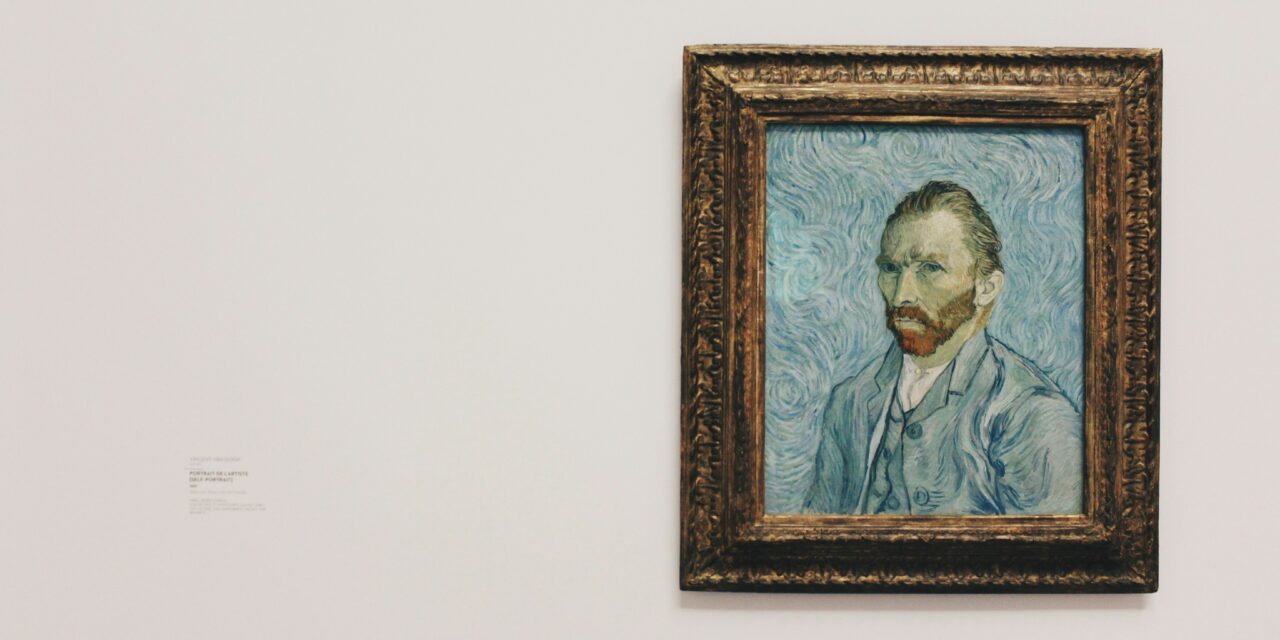
Vincent van Gogh was born on 30 March 1853 in the small village of Groot-Zundert in the southern Netherlands. He was the eldest son of Theodorus van Gogh, a Protestant minister, and Anna Cornelia Carbentus, who came from a family of artists. This familial connection to art would later play a significant role in Vincent’s life, although he initially pursued various other paths before fully embracing his artistic calling. Growing up in a religious household, Vincent was exposed to the complexities of human emotion and spirituality from an early age, which would later inform much of his work. His family was relatively well-off, but the pressures of expectation and the weight of familial duty often loomed large over him.
Vincent had a close relationship with his younger brother, Theo, who would become his most steadfast supporter throughout his tumultuous life. Their correspondence, filled with discussions about art, philosophy, and Vincent’s struggles, would later provide invaluable insight into the artist’s psyche. The van Gogh family was marked by a series of tragedies, including the death of Vincent’s stillborn brother, also named Vincent, just a year before his birth. This event is believed to have had a profound impact on Vincent, instilling in him a sense of loss and longing that would permeate his work. As he navigated his early years, Vincent’s experiences within this complex family dynamic would shape not only his artistic vision but also his understanding of human suffering and connection.
Vincent van Gogh’s tumultuous life and profound artistic legacy continue to captivate audiences around the world. For those interested in exploring more about the impact of his work and the emotional depth behind his creations, a related article titled “Artful Encounters” provides an insightful perspective on the connections between art and personal experiences. You can read it here: Artful Encounters. This article delves into the ways in which artists, including Van Gogh, channel their life stories into their art, offering a deeper understanding of their motivations and struggles.
Artistic Influences and Education
Vincent’s artistic journey began in earnest during his late twenties, a time when he was already grappling with various personal and professional challenges. His initial foray into the art world was as an art dealer, working for Goupil & Cie in The Hague and later in London and Paris. However, it was not until he turned to painting that he truly found his voice. Influenced by the works of Dutch masters such as Rembrandt and Frans Hals, as well as contemporary artists like Jean-François Millet, Vincent’s early works were characterised by dark tones and somber themes. He sought to capture the struggles of the working class, reflecting his own experiences of hardship and disillusionment.
In 1880, after several years of searching for purpose, Vincent decided to pursue formal artistic training. He enrolled at the Académie Royale des Beaux-Arts in Brussels, where he honed his skills in drawing and colour theory. However, he found the rigid structure of academic training stifling and soon turned to self-study, immersing himself in the works of other artists and experimenting with different techniques. This period of exploration allowed him to develop a unique style that combined elements of realism with expressive brushwork and vibrant colour palettes. His artistic influences were diverse, ranging from Japanese woodblock prints to the burgeoning Impressionist movement, which would later play a pivotal role in shaping his own distinctive approach to painting.
Struggles and Mental Health
Vincent van Gogh’s life was marked by profound struggles with mental health that would ultimately define both his personal narrative and artistic output. Throughout his life, he experienced episodes of depression, anxiety, and psychosis, which often left him feeling isolated and misunderstood. These mental health challenges were exacerbated by his tumultuous relationships with family and friends, as well as his relentless pursuit of artistic excellence. Despite his immense talent, Vincent often battled feelings of inadequacy and self-doubt, leading him to question the value of his work and his place in the art world.
The artist’s mental health struggles were not merely a backdrop to his creative process; they were intricately woven into the fabric of his art. Many of his paintings reflect a deep emotional intensity that resonates with viewers on a visceral level. The swirling skies of “The Starry Night” or the vibrant hues of “The Sunflowers” convey not only beauty but also a sense of turmoil and longing. Vincent’s ability to translate his inner turmoil into visual form is one of the hallmarks of his genius. However, it is essential to recognise that these struggles were not simply romanticised aspects of the artist’s life; they were debilitating realities that often left him feeling trapped in a world that seemed indifferent to his suffering.
Move to Paris and Impressionist Influence
In 1886, Vincent moved to Paris to join Theo, who was working as an art dealer in the bustling Montmartre district. This relocation marked a significant turning point in Vincent’s artistic development. Surrounded by a vibrant community of artists, including Henri Toulouse-Lautrec, Paul Gauguin, and Camille Pissarro, Vincent was exposed to new ideas and techniques that would profoundly influence his work. The Impressionist movement was gaining momentum during this time, characterised by its emphasis on capturing light and colour in innovative ways. Vincent quickly embraced these principles, experimenting with brighter palettes and looser brushwork that allowed for greater expression.
The Parisian period also saw Vincent’s style evolve dramatically as he began to incorporate elements from Japanese art into his work. He became fascinated with the bold colours and flat compositions found in ukiyo-e prints, which inspired him to explore new ways of depicting everyday subjects. This fusion of influences resulted in a body of work that was both innovative and deeply personal. However, despite the excitement of this new environment, Vincent struggled with feelings of alienation and inadequacy among his peers. He often felt overshadowed by the success of other artists and grappled with the fear that he would never achieve recognition for his own talents.
Vincent van Gogh’s tumultuous life and profound artistic journey continue to captivate art enthusiasts around the world. His struggles with mental health and his relentless pursuit of creativity are explored in depth in various articles. For those interested in delving deeper into the world of art and its impact on society, a fascinating read can be found in this related article, which discusses the broader context of artistic expression and its significance throughout history.
The Famous Sunflower Series
One of Vincent van Gogh’s most iconic series is undoubtedly the Sunflower paintings, created during his time in Arles between 1888 and 1889. These works are celebrated not only for their vibrant colour but also for their emotional resonance. The Sunflowers represent more than just a simple floral arrangement; they embody Vincent’s desire for beauty and joy amidst the chaos of his life. He painted several versions of sunflowers in various stages of bloom, capturing their ephemeral nature while infusing each canvas with a sense of warmth and vitality.
The Sunflower series also served as a symbol of friendship for Vincent. He envisioned these paintings as a welcoming gesture for Paul Gauguin, who he hoped would join him in Arles to create an artist community. The bright yellows and rich textures reflect Vincent’s optimism during this period; however, they also foreshadowed the turbulence that would soon follow. The Sunflowers stand as a testament to Vincent’s ability to transform personal longing into universal themes of beauty and connection, making them some of the most beloved works in art history.
The Ear Incident and Mental Breakdown
The infamous ear incident is perhaps one of the most notorious episodes in Vincent van Gogh’s life, encapsulating both his struggles with mental health and the tumultuous nature of his relationships. In December 1888, after a heated argument with Paul Gauguin—who had come to stay with him in Arles—Vincent experienced a severe mental breakdown. In a fit of despair, he famously severed part of his left ear with a razor blade. This act has been interpreted in various ways: some see it as a manifestation of his inner turmoil while others view it as an expression of desperation for connection.
Following this incident, Vincent was admitted to a local hospital where he received treatment for his injuries as well as for his deteriorating mental state. This period marked a significant turning point in his life; it forced him to confront the reality of his mental health issues while also providing him with an opportunity for reflection. During his recovery, he continued to paint prolifically, producing some of his most famous works during this time. The ear incident serves as a poignant reminder of the fragility of creativity and the often-painful intersection between genius and madness.
Move to Arles and The Yellow House
In February 1888, seeking solace and inspiration away from the frenetic pace of Parisian life, Vincent moved to Arles in southern France. He envisioned creating an artist community there—a haven where he could collaborate with fellow artists like Gauguin. To facilitate this dream, he rented a house known as “The Yellow House,” which became both a studio and a sanctuary for Vincent during this prolific period. The vibrant colours and light-filled landscapes of Arles captivated him; he found inspiration in the surrounding countryside and local inhabitants.
The Yellow House became a symbol of hope for Vincent—a place where he could cultivate creativity without the constraints he felt in Paris. He decorated it with bright colours and filled it with paintings that reflected his vision for an artistic utopia. However, despite these aspirations, tensions soon arose between Vincent and Gauguin when they finally reunited at The Yellow House. Their differing artistic philosophies led to conflict, ultimately culminating in Gauguin’s departure from Arles—a moment that left Vincent feeling abandoned and desolate.
The Starry Night and Other Masterpieces
Among Vincent van Gogh’s vast oeuvre, “The Starry Night” stands out as one of his most celebrated masterpieces. Painted during his stay at the Saint-Paul-de-Mausole asylum in Saint-Rémy-de-Provence in 1889, this iconic work captures the swirling night sky over a tranquil village landscape—a juxtaposition that reflects both turmoil and serenity within Vincent’s mind. The bold brushstrokes and vivid colours convey an emotional intensity that resonates deeply with viewers; it is as if one can feel the pulse of the universe through Vincent’s expressive strokes.
In addition to “The Starry Night,” this period yielded numerous other masterpieces that showcased Vincent’s evolving style and emotional depth. Works such as “Irises,” “Wheatfield with Crows,” and “Self-Portrait with Bandaged Ear” reveal an artist grappling with both external beauty and internal chaos. Each painting serves as a window into Vincent’s soul—an exploration of light amidst darkness that continues to captivate audiences today.
Final Years and Legacy
Vincent van Gogh’s final years were marked by increasing instability as he struggled with mental illness while continuing to produce remarkable works of art. After leaving the asylum in 1890, he moved to Auvers-sur-Oise near Paris under the care of Dr Paul Gachet—a physician who had an interest in art and supported Vincent’s creative endeavours. During this time, he painted prolifically despite battling severe depression; works such as “Wheatfield with Crows” are often interpreted as reflections on mortality and despair.
Tragically, on 29 July 1890, at just 37 years old, Vincent succumbed to his inner demons when he took his own life after shooting himself in the chest. His death marked not only the end of an extraordinary life but also left behind an indelible legacy that would shape future generations of artists. Though he sold only one painting during his lifetime—”The Red Vineyard”—his posthumous fame would grow exponentially as art critics began to recognise the brilliance inherent in his work.
Impact on the Art World
Vincent van Gogh’s impact on the art world cannot be overstated; he is often regarded as one of the most influential figures in Western art history. His innovative use of colour, expressive brushwork, and emotional depth paved the way for modern art movements such as Expressionism and Fauvism. Artists like Henri Matisse and Pablo Picasso drew inspiration from Van Gogh’s bold approach to colour theory while incorporating elements from their own cultural backgrounds into their work.
Moreover, Van Gogh’s exploration of psychological themes within art opened new avenues for self-expression among artists who followed him. His ability to convey complex emotions through visual language resonated deeply with audiences—encouraging future generations to embrace vulnerability within their creative practices. Today, Van Gogh’s works are celebrated worldwide; exhibitions dedicated to his life continue to draw millions each year—testament not only to his artistic genius but also to humanity’s enduring fascination with stories rooted in struggle and resilience.
Recognition and Posthumous Fame
Despite facing immense challenges during his lifetime—including poverty, mental illness, and lack of recognition—Vincent van Gogh has become one of history’s most celebrated artists since his death. His posthumous fame began to rise significantly in the early 20th century when influential art dealers began promoting his work alongside other modern masters like Pablo Picasso and Henri Matisse at exhibitions across Europe.
Today, Van Gogh’s paintings command staggering prices at auction—often fetching tens or even hundreds of millions—reflecting both their artistic significance and cultural value within contemporary society. Museums around the globe proudly display collections dedicated solely to Van Gogh’s oeuvre; institutions such as Amsterdam’s Van Gogh Museum serve as vital repositories for preserving not only his artwork but also letters exchanged between him and Theo—providing invaluable insight into their relationship.
In conclusion, Vincent van Gogh’s life story is one marked by passion, struggle, creativity—and ultimately—triumph over adversity through art itself. His legacy continues to inspire countless individuals across generations; reminding us all that beauty can emerge from even the darkest corners of existence—a testament worth celebrating long after our time has passed.
FAQs
1. What is Vincent van Gogh best known for?
Vincent van Gogh is best known for his post-impressionist paintings, particularly his vivid and emotional works such as “Starry Night” and “Sunflowers”.
2. What was Vincent van Gogh’s early life like?
Vincent van Gogh was born on March 30, 1853, in Groot-Zundert, Netherlands. He struggled with mental health issues throughout his life and only began painting in his late twenties.
3. What are some of Vincent van Gogh’s most famous works?
Some of Vincent van Gogh’s most famous works include “The Starry Night”, “Sunflowers”, “Irises”, “The Bedroom”, and “Café Terrace at Night”.
4. What was Vincent van Gogh’s impact on the art world?
Vincent van Gogh’s emotionally charged paintings and unique use of color and brushwork had a profound impact on the development of modern art. He is considered one of the most influential artists in history.
5. What was the tragic end of Vincent van Gogh’s life?
Vincent van Gogh struggled with mental illness and poverty throughout his life. In 1890, at the age of 37, he died from a self-inflicted gunshot wound.