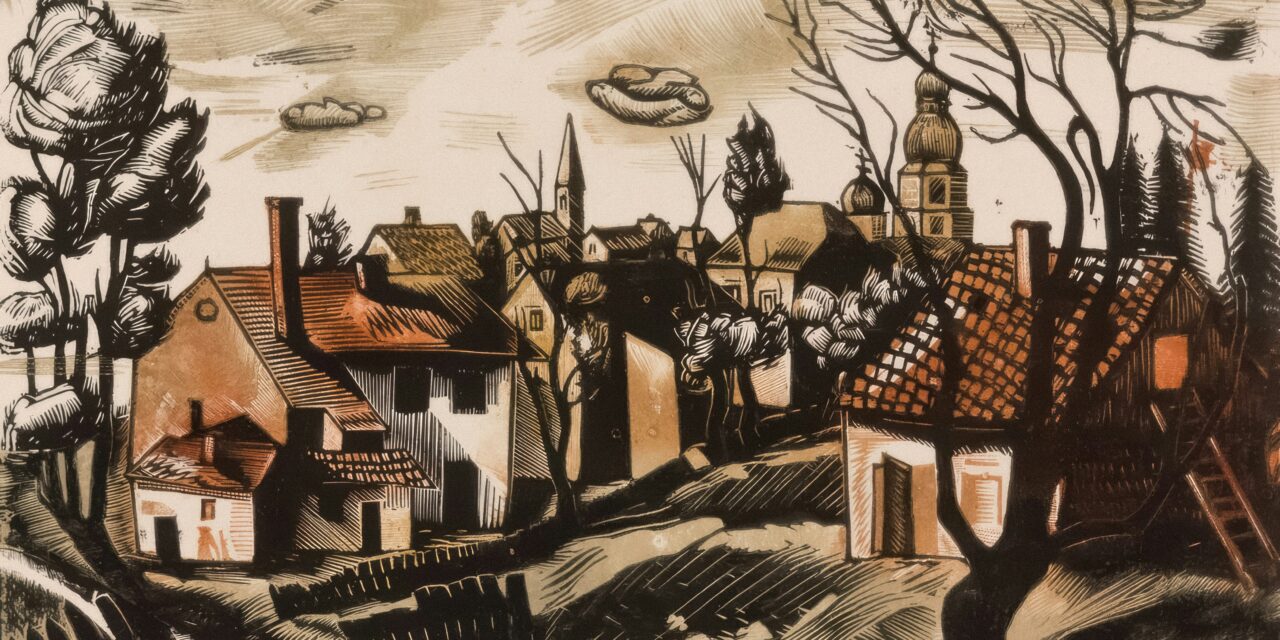
Émile Bernard: A Protégé of the Avant-Garde
Émile Bernard, a name often overshadowed by his more celebrated contemporaries, was in fact a pivotal figure in the development of Symbolism and Synthetism, two influential art movements of the late 19th century. His precocious talent, intellectual curiosity, and unwavering conviction in his artistic theories positioned him as an innovator, albeit one whose rebellious spirit sometimes led to fracturing relationships within the avant-garde. Though his career was marked by periods of intense creativity followed by prolonged detours, Bernard’s indelible contributions to modern art deserve far greater recognition and profound study.
Born in Lille, France, in 1868, Émile Henri Bernard’s artistic journey began at a young age. His family, though initially resistant to his artistic aspirations, eventually relented, allowing him to attend the École des Arts Décoratifs in Paris. However, it was his subsequent enrollment at the Atelier Cormon in 1884 that truly set the stage for his revolutionary artistic development.
Parisian Studios and Early Influences
The Atelier Cormon, though academically rigorous, was also a hotbed of emerging talent. It was here that Bernard befriended Louis Anquetin and, crucially, met Henri de Toulouse-Lautrec. These formative connections proved instrumental in shaping his early artistic outlook. While Cormon himself adhered to traditional academic principles, the bohemian atmosphere of Montmartre and the burgeoning avant-garde scene outside the studio walls exposed Bernard to a world of radical ideas. He devoured art journals, visited exhibitions by Impressionists and Neo-Impressionists, and engaged in fervent discussions with his peers.
The Meeting of Minds: Van Gogh and Gauguin
Bernard’s unorthodoxy and outspoken criticism of academic art quickly led to his expulsion from Cormon’s atelier in 1886. This dismissal, however, proved to be a serendipitous turning point. He began to explore his own artistic path, drawing inspiration from diverse sources. During this period, he encountered Vincent van Gogh, who, though initially more established, found in Bernard a kindred spirit and an astute artistic confidant. Their correspondence, particularly after Van Gogh’s move to Arles, provides invaluable insights into their shared artistic anxieties and burgeoning theories.
It was, however, his encounter with Paul Gauguin in Pont-Aven, Brittany, in 1886, that would truly ignite Bernard’s artistic revolution. Pont-Aven, a picturesque fishing village, had become a magnet for artists seeking escape from the perceived superficiality of Parisian life. Gauguin, already a figure of considerable influence, recognised Bernard’s raw talent and intellectual depth. This meeting marked the beginning of a complex and ultimately fraught collaboration that would dramatically reshape the landscape of late 19th-century art.
For those interested in exploring the techniques that can enhance their artistic practice, a related article titled “Layering and Blending in Acrylics: A Practical Guide” offers valuable insights into the use of acrylics, which can complement the study of Émile Bernard’s innovative approach to colour and form. You can read the article here: Layering and Blending in Acrylics: A Practical Guide. This resource provides practical tips that may inspire artists to experiment with layering techniques reminiscent of Bernard’s unique style.
The Birth of Synthetism and Cloisonnism: A Shared Vision
The intellectual and artistic ferment of Pont-Aven provided the perfect crucible for the development of Synthetism, a style that aimed to synthesise observation, emotion, and aesthetic principles. Bernard, alongside Gauguin and Anquetin, became a primary architect of this groundbreaking movement.
Moving Beyond Impressionism: The Quest for Essence
Synthetism emerged as a deliberate rejection of Impressionism’s fleeting optical observations. Bernard and his compatriots sought to move beyond the mere recording of sensory experience, aspiring instead to capture the underlying essence of their subjects. This involved simplifying forms, abandoning naturalistic colour, and emphasising symbolic content. They believed that art should not merely imitate nature but rather reinterpret it through the artist’s subjective lens, imbuing it with deeper meaning and emotional resonance.
Cloisonnism: A Bold New Aesthetic
A key component of Synthetism was Cloisonnism, a technique largely pioneered by Bernard and Anquetin. Inspired by medieval stained glass and Japanese prints, Cloisonnism involved outlining areas of flat, unmodulated colour with strong, dark contours. This not only created a striking visual impact but also served to flatten the picture plane, moving away from traditional perspectival depth. Bernard’s early Cloisonnist works, such as “Breton Women in a Meadow (Pardon at Pont-Aven)” (1888) and “The Buckwheat Harvesters” (1888), exemplify this radical departure from conventional painting. The bold outlines and vibrant, simplified colour fields were a deliberate challenge to the prevailing academic and Impressionistic aesthetics of the time.
The Role of Symbolism: Infusing Meaning
Synthetism and Cloisonnism were not merely stylistic innovations; they were deeply intertwined with the burgeoning Symbolist movement. Bernard, a voracious reader and intellectually curious individual, was particularly drawn to Symbolist literature and its emphasis on metaphor, allegory, and the exploration of inner worlds. He sought to imbue his paintings with symbolic meaning, transforming everyday scenes into vehicles for expressing spiritual, mystical, or emotional truths. “Vision After the Sermon” (1888), though often attributed solely to Gauguin, bears the undeniable hallmarks of Bernard’s influence, particularly in its flattened forms, bold outlines, and the symbolic representation of Jacob wrestling with the angel. This painting, a seminal work of the Synthetist movement, perfectly encapsulates the fusion of observation, memory, and spiritual insight that Bernard championed.
Collaboration and Conflict: The Gauguin-Bernard Dynamic
The relationship between Bernard and Gauguin was a turbulent one, characterised by periods of intense creative collaboration punctuated by bitter disagreements over attribution and artistic leadership.
Shared Ideas and Artistic Ferment
Initially, their collaboration in Pont-Aven was incredibly fertile. They engaged in endless discussions about art, philosophy, and the spiritual dimensions of creativity. Bernard, with his intellectual acumen and knowledge of Symbolist poetry, brought a strong theoretical framework to their shared exploration. Gauguin, with his more mature artistic vision and charismatic personality, provided direction and a powerful artistic presence. They experimented with new techniques, pushing the boundaries of colour, form, and composition. The “Pont-Aven School,” as it became known, was truly a collective effort, with Bernard playing a crucial role in shaping its aesthetic and intellectual underpinnings.
The Arles Experiment and Growing Tensions
The much-anticipated reunion of Gauguin and Van Gogh in Arles in 1888 further complicated the dynamic. Bernard, deeply admired by Van Gogh, was also invited to join, though he ultimately declined due to ill health. However, his strong influence on Van Gogh’s and Gauguin’s thinking during this period is undeniable. Van Gogh’s “Memory of the Garden at Etten” (1888) shows a clear engagement with Bernard’s Cloisonnist style, particularly in the use of strong contours and simplified areas of colour.
As Gauguin’s reputation grew, fueled in part by works that bore a striking resemblance to Bernard’s innovations, tensions began to simmer. Bernard felt increasingly sidelined and uncredited, particularly after Gauguin’s famous exhibition at the Café Volpini in 1889, where Gauguin was largely perceived as the sole innovator of Synthetism. This feeling of intellectual property theft would plague Bernard throughout his life.
The Bitter Rift and Diverging Paths
The conflict culminated in a bitter public dispute over the origins of Synthetism. Bernard, fiercely proud of his contributions, felt that Gauguin was taking undue credit for ideas that had originated, or at least been co-developed, with him. This dispute ultimately led to a permanent rupture in their relationship.
After the fallout, their artistic paths diverged significantly. Gauguin embarked on his iconic journeys to Tahiti, continuing to develop his Symbolist style with themes of primitivism and exoticism. Bernard, deeply disillusioned and feeling betrayed, embarked on his own protracted journey of self-discovery, moving away from the avant-garde circles he had once championed.
Journeys of the Soul: From Egypt to Rediscovery
Bernard’s artistic life after the Pont-Aven period was marked by restlessness, disillusionment, and a relentless search for spiritual and artistic renewal.
The Allure of the East: Egypt and Beyond
In 1893, seeking escape from the pressures and disappointments of the Parisian art scene, Émile Bernard embarked on a profound and transformative journey to Egypt. This period, lasting nearly ten years, proved to be a pivotal influence on his artistic output. He immersed himself in the culture, history, and art of the ancient world. His palette shifted, embracing the sun-drenched hues of the Middle East, and his subject matter expanded to include landscapes, genre scenes, and portraits reflecting his experiences in Cairo, Alexandria, and beyond. While in Egypt, he also travelled to Italy and Spain, further broadening his artistic perspectives and engaging with the masters of the Renaissance. This period, though less celebrated than his Synthetist phase, reveals a deeply contemplative artist grappling with issues of faith, identity, and the timelessness of art.
Religious Conversion and a Return to Tradition
Bernard’s travels and intellectual pursuits led him to a profound religious conversion to Catholicism. This spiritual awakening deeply impacted his artistic philosophy. He began to believe that modern art had lost its way, diverging from the grand traditions of monumental art and spiritual expression. He became an ardent advocate for a return to classical principles, drawing inspiration from Italian Renaissance masters like Fra Angelico, Botticelli, and Raphael. This shift alienated him further from the avant-garde, who were increasingly embracing abstraction and further pushing the boundaries of representational art.
Literary Pursuits and Artistic Polemics
Beyond painting, Bernard was a prolific writer, art critic, and poet. He contributed extensively to avant-garde journals, articulating his theories and often engaging in passionate polemics. His writings, though sometimes dogmatic, offer invaluable insights into the intellectual currents of his time and his own evolving artistic philosophy. He published numerous articles and essays, meticulously documenting his views on art history, aesthetics, and the role of the artist. He also authored several books, including “An Exhibition of Paintings and Caricatures” (1890) and “Notes on Painting” (1903), further cementing his intellectual standing. His literary output serves as a testament to his wide-ranging interests and his enduring commitment to shaping the discourse around art.
For those interested in exploring the broader context of Émile Bernard’s work, a fascinating article on the painting “Allegory of Art” by Georg Baselitz offers valuable insights into the evolution of artistic expression. This piece delves into the themes and techniques that resonate with Bernard’s own innovative approach to art. You can read more about it in this related article, which highlights the connections between these two influential artists and their contributions to the art world.
The Later Years: A Legacy Re-evaluated
Émile Bernard lived a long life, passing away in 1941. While his later work largely retreated from the revolutionary spirit of his youth, his early contributions to modern art continued to ripple through the avant-garde.
A Period of Retreat and Relative Obscurity
Following his return to France in 1904, Bernard found himself increasingly out of step with the prevailing artistic tastes. Cubism, Futurism, and other abstraction-focused movements dominated the avant-garde, leaving little room for his brand of spiritual, tradition-oriented art. He continued to paint, primarily religious and classical subjects, and to write extensively, but his influence on the contemporary art scene waned significantly. He became somewhat of a forgotten figure, living largely in self-imposed artistic isolation, a poignant contrast to the vibrant, innovative young artist who had once stood at the forefront of the Synthetist movement.
The Rediscovery and Reassessment of His Work
Despite his later obscurity, Bernard’s pivotal role in the development of Symbolism and Synthetism has been increasingly recognised and re-evaluated by art historians in recent decades. Exhibitions and scholarly studies have shed new light on his early experimental works, highlighting his crucial contributions to the stylistic innovations of the Pont-Aven School. His correspondence with Van Gogh and Gauguin, meticulously preserved, has provided invaluable primary source material for understanding the intellectual ferment of the period.
Enduring Influence on Modern Art
While not as widely known as Gauguin or Van Gogh, Bernard’s impact on modern art is undeniable. His push for simplification of form, the use of strong outlines, and the symbolic interpretation of subjects profoundly influenced not only his immediate circle but also subsequent generations of artists. The flattening of the picture plane and the decorative use of colour, central tenets of Cloisonnism, paved the way for later developments in Fauvism and Expressionism. His unwavering belief in the spiritual and intellectual dimensions of art continues to resonate with artists and scholars alike, reminding us that true originality often stems from a profound engagement with both tradition and innovation. Émile Bernard, the rebellious prodigy and intellectual force, ultimately carved his own unique and enduring niche in the annals of art history.
FAQs
1. Who is Émile Bernard?
Émile Bernard was a French Post-Impressionist painter and writer, who played a significant role in the development of modern art. He was a close friend of Vincent van Gogh and Paul Gauguin, and was known for his bold and innovative artistic style.
2. What are some key works by Émile Bernard?
Some of Émile Bernard’s key works include “Breton Women at a Pardon”, “Landscape at Pont-Aven”, and “The Harvest in Brittany”. He was known for his use of bold colours and expressive brushwork, and his works often depicted scenes from rural life and nature.
3. How did Émile Bernard contribute to the development of modern art?
Émile Bernard was a key figure in the development of modern art, particularly through his involvement in the Pont-Aven School and his role in the Synthetist movement. He was known for his innovative use of simplified forms and bold colours, which had a significant influence on the development of Fauvism and later abstract art.
4. What was Émile Bernard’s relationship with other artists like Vincent van Gogh and Paul Gauguin?
Émile Bernard had close relationships with both Vincent van Gogh and Paul Gauguin. He was a friend and supporter of van Gogh, and the two artists exchanged letters and ideas about art. Bernard also spent time with Gauguin in Brittany, and the two artists collaborated and influenced each other’s work.
5. What is Émile Bernard’s legacy in the art world?
Émile Bernard’s legacy in the art world is significant, as he was a pioneering figure in the development of modern art. His innovative use of colour and form, as well as his role in the Synthetist movement, had a lasting impact on the development of art in the 20th century. Today, his works are held in major museums and collections around the world.