Henri Martin, a name that evokes shimmering landscapes, dappled light, and a profound connection to the natural world, stands as a significant figure in the Post-Impressionist movement. While often mentioned alongside Luminism, a related but distinct artistic current, Martin forged his own unique path, developing a signature style that captured the very essence of French provincial life bathed in an almost ethereal luminescence. His dedication to depicting the subtle interplay of light and shadow, his meticulous technique, and his deep affection for his homeland have left an enduring legacy, continuing to captivate art lovers and scholars alike.
Born in Toulouse in 1860, Henri Martin’s artistic journey began with a strong academic grounding. However, the burgeoning artistic innovations of his time, particularly Impressionism, soon began to exert a powerful influence. While he admired the Impressionists’ liberation of colour and brushwork, Martin sought to imbue his work with a greater sense of order, harmony, and a deeper emotional resonance. This pursuit led him to develop a style that was both innovative and deeply personal, a testament to his discerning eye and his unwavering commitment to his artistic vision.
Early Life and Education: The Foundations of a Master
Henri-Jean Guillaume Martin’s early years were shaped by a love for his native Midi-Pyrénées region. Born into a family with modest means, his talent was recognised early on, leading to a scholarship that allowed him to attend the École des Beaux-Arts in Paris. Here, he studied under the tutelage of Jean-Paul Laurens, a renowned painter and sculptor known for his dramatic historical and mythological scenes. This academic training provided Martin with a solid foundation in drawing, composition, and the classical principles of art.
The Influence of Toulouse and the South of France
The sun-drenched landscapes and vibrant colours of his native Toulouse undoubtedly left an indelible mark on Martin’s artistic sensibilities from his earliest days. The distinctive light, the rich vegetation, and the picturesque villages of the south of France would become recurring motifs throughout his career. Even as he embraced Parisian artistic trends, the spirit of the Midi remained deeply embedded in his soul, infusing his canvases with a warmth and authenticity that resonated powerfully with viewers.
Parisian Sojourns and Artistic Awakening
While his academic roots were in Toulouse, Paris represented the crucible of artistic innovation in the late 19th century. His time in the capital exposed him to the radical ideas and experimental approaches that were transforming the art world. He encountered the works of the Impressionists, observing their revolutionary use of colour and their focus on capturing fleeting moments in nature. This exposure, combined with his formative academic training, provided the fertile ground for his own artistic evolution.
For those interested in exploring the works of influential artists, a related article that delves into the profound impact of religious themes in art is available at this link: An Introduction to the Painting Crucifixion from the Isenheim Altarpiece (1515) by Matthias Grunewald. This piece provides an insightful examination of Grunewald’s masterful depiction of the crucifixion, highlighting the emotional depth and technical prowess that resonate with the artistic explorations of Henri Martin.
Developing a Distinctive Style: Luminosity and Harmony
Martin’s artistic development was a journey of distillation and refinement. He moved beyond the immediate, almost journalistic, immediacy of Impressionism, seeking to capture a more enduring and poetic vision of reality. His exploration of light and colour became the central pillar of his mature style, leading to a body of work that is instantly recognisable and deeply admired.
The Pursuit of Luminism: More Than Just Light
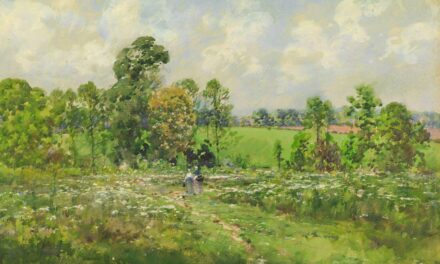
Luminism, often associated with Martin, is not simply about rendering light; it is about imbuing the scene with a radiant, almost spiritual, quality. Martin achieved this through a meticulous application of colour, often using small, broken brushstrokes that, when viewed from a distance, blend together to create a shimmering, vibrant effect. He favoured a palette of luminous blues, greens, yellows, and whites, which he masterfully orchestrated to evoke the sensation of sunlight filtering through leaves, dancing on water, or illuminating a tranquil garden. This was not a photographic representation of light, but an emotional and sensory interpretation.
Pointillism and Neo-Impressionism: A Dialogue with his Contemporaries
While Martin’s technique shared some similarities with Neo-Impressionist artists like Georges Seurat and Paul Signac, he did not strictly adhere to the scientific principles of Pointillism. Instead, he adopted a more fluid and expressive approach to applying dots and dashes of colour. His brushwork, while often small and distinct, retained a greater sense of spontaneity and emotional charge than the rigorously scientific application of Seurat. He engaged in a dialogue with these contemporaries, absorbing their innovations while filtering them through his own unique sensibility.
Harmonious Compositions and Subject Matter
Martin’s compositions are characterised by a profound sense of balance and harmony. He often favoured serene landscapes, intimate interior scenes, and portraits of his family within these natural settings. Whether depicting the sun-drenched vineyards of the south, the tranquil gardens of his home, or the quiet dedication of a mother and child, his compositions exude a palpable sense of peace and contentment. He sought to elevate the everyday, finding profound beauty in the simple moments of life.
Masterpieces and Key Works: Illuminating His Artistic Journey
Henri Martin’s oeuvre is rich with works that exemplify his distinctive style and his profound connection to his subject matter. These paintings serve as luminous testaments to his mastery of colour, light, and composition.
“The Painter’s Garden at Labastide-du-Vert” (Le jardin de Labastide-du-Vert)
This iconic series of paintings, painted over many years, represents perhaps the most intimate and profound expression of Martin’s artistic vision. The transformation of his own garden into a vibrant, sun-dappled paradise became his favoured subject. These works showcase his meticulous observation of nature’s changing moods and his ability to translate the sensory experience of being within such a space onto canvas. The dappled light filtering through the trees, the riot of flowers, and the quiet pathways all coalesce to create an immersive and deeply personal experience for the viewer.
“The Young Girl Reading” (La jeune fille lisant)
This exquisite portrait, and others of similar subject matter, demonstrate Martin’s ability to imbue his sitters with a quiet dignity and inner peace. The luminous light, characteristic of his style, bathes the young woman in a gentle glow, highlighting the subtle nuances of her expression and the delicate folds of her clothing. These portraits are not merely likenesses but rather intimate portrayals of contemplative moments, imbued with a profound sense of serenity.
Landscapes of the South of France
Throughout his career, Martin returned repeatedly to the landscapes of his homeland. His depictions of vineyards, olive groves, and rolling hills are infused with the warmth and golden light of the Midi. Works like “View of the Tarn” or “Harvest in the South” capture the essence of this region with a vibrant palette and a luminous touch, inviting the viewer to step into these sun-drenched scenes and experience their tranquil beauty.
The Role of Light and Colour: The Heart of His Technique
For Henri Martin, light was not merely an element to be depicted; it was a subject in itself, a transformative force that shaped his perception of the world and the very essence of his art. His understanding and application of colour were inextricably linked to this fascination with light, leading to a revolutionary approach to painting.
The Science and Art of Nuance
Martin’s meticulous application of colour, often employing small, broken brushstrokes, was a deliberate technique to capture the optical effects of light. He understood that colours, when placed side-by-side, interact and blend in the viewer’s eye. By carefully selecting and juxtaposing pigments, he could create a shimmering vibrancy that mimicked the way light reflects and refracts off surfaces. This was a far cry from the flat, uniform application of colour prevalent in earlier traditions.
The Expressive Power of the Palette
His palette was dominated by luminous hues – the vibrant blues of the Provençal sky, the golden yellows of ripe wheat, the verdant greens of foliage, and the pearly whites of sunlight. He used these colours not just to describe, but to evoke emotion and atmosphere. The interplay of warm and cool tones created a sense of depth and movement, while the sheer luminosity of his palette infused his scenes with an almost spiritual glow. Each brushstroke was a deliberate choice, contributing to the overall harmony and brilliance of the finished work.
For those interested in exploring the nuances of Henri Martin’s artistic journey, a related article that delves into broader themes in art can be found at Artistic Reflections. This piece offers insightful commentary on various artists and movements, providing context that enhances the understanding of Martin’s work and its significance within the wider art landscape.
Later Life and Legacy: A Lasting Impression
As Henri Martin’s career progressed, his distinct style gained widespread recognition and acclaim. He continued to paint prolifically, nurturing his artistic vision and remaining steadfast in his dedication to his craft. His later years were marked by continued artistic output and a deepening appreciation for his unique contribution to French art.
Honoured and Celebrated
Martin’s artistic achievements were not left unrecognised. He received numerous accolades and honours throughout his career, including being appointed an Officer of the Legion of Honour. His works were exhibited internationally and acquired by prestigious museums, solidifying his position as a master of his generation. The Salon des Artistes Français provided a significant platform for him to showcase his evolving style.
The Influence on Subsequent Generations
The impact of Henri Martin’s Luminist approach, his harmonious compositions, and his ability to capture the ephemeral beauty of light and nature, resonated with artists who followed. While he didn’t form a rigid school, his sensitive exploration of colour and light offered a lyrical counterpoint to more avant-garde movements, providing a source of inspiration for those seeking to infuse their work with a sense of beauty, tranquility, and a deep connection to the world around them. His influence can be seen in the works of artists who continued to explore the expressive potential of colour and the evocative power of light, demonstrating the enduring appeal of his vision. His dedication to capturing the soul of the southern French landscape continues to inspire artists to find beauty in their own surroundings.
FAQs
Who was Henri Martin?
Henri-Jean Guillaume Martin was a French impressionist painter, known for his use of pointillism and his depictions of landscapes and figures.
What is Henri Martin known for?
Henri Martin is known for his use of pointillism, a painting technique in which small, distinct dots of color are applied in patterns to form an image. He is also known for his depictions of landscapes and figures, often capturing the beauty of the French countryside.
What are some notable works by Henri Martin?
Some notable works by Henri Martin include “The Pink Rose,” “The Harvest,” “The Capitoline Hill,” and “The Banks of the Lot at St. Cirq Lapopie.”
Where can Henri Martin’s artwork be found?
Henri Martin’s artwork can be found in various museums and galleries around the world, including the Musée Henri Martin in Cahors, France, the Musée d’Orsay in Paris, and the Metropolitan Museum of Art in New York.
What is Henri Martin’s artistic style?
Henri Martin’s artistic style is characterized by his use of pointillism, as well as his vibrant and expressive depictions of nature and everyday life. He often used a warm and harmonious color palette to create his distinctive works.