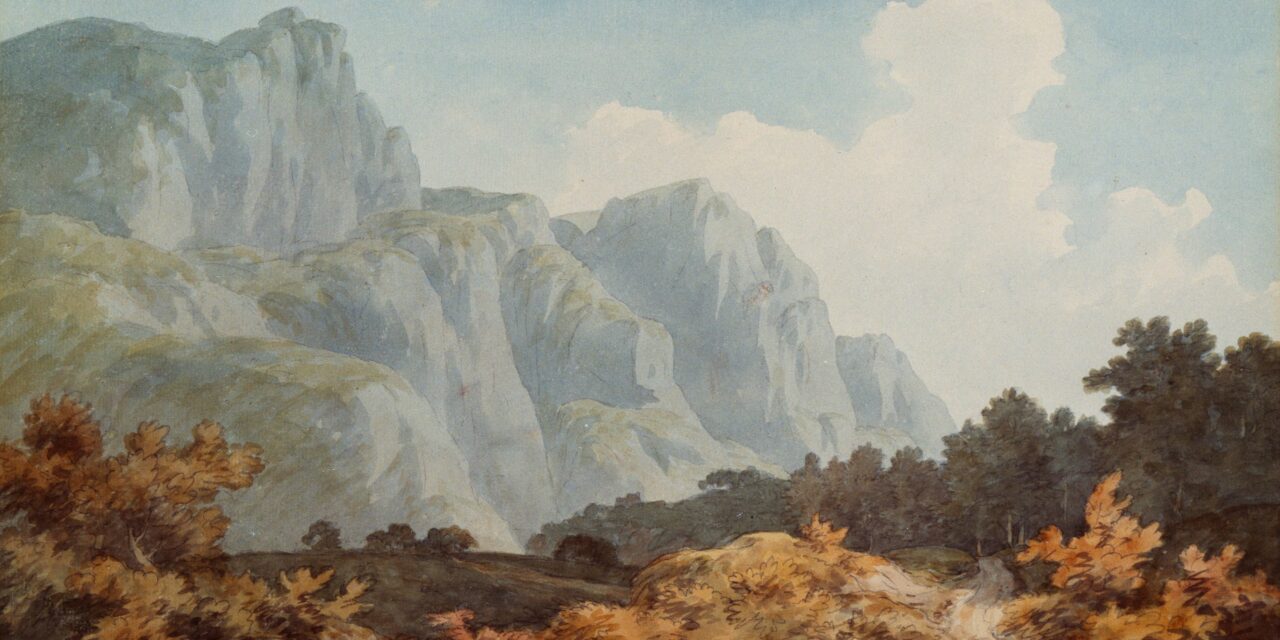
The monumental canvases of Albert Bierstadt beckon us to a dramatic past, a time when the American wilderness was still an largely untamed frontier, a landscape of awe and wonder. His work, vibrant with light and imbued with romanticism, captured the imagination of a nation and continues to captivate viewers today. To understand the power of these epic vistas, we must delve into the life of the artist himself, a journey that spans two continents and parallels the expansionist spirit of 19th-century America.
Albert Bierstadt’s story begins not in the vast American West he so famously depicted, but across the Atlantic. Born in Solingen, Germany, in 1830, his early years were steeped in a European cultural tradition. His family, facing economic hardship, made the momentous decision to emigrate to the United States when Albert was just a year old, settling in New Bedford, Massachusetts. This whaling port, bustling with maritime activity and international trade, offered a stark contrast to the small German town he was born into.
A Budding Artistic Inclination
Despite his humble beginnings, Bierstadt displayed an early aptitude for art. While no formal training was immediately available, he was a keen observer of the world around him. His early drawings and sketches suggest a natural talent for rendering form and perspective, hinting at the meticulous detail that would later characterise his mature work. The maritime environment of New Bedford, with its dramatic skies, powerful seas, and bustling docks, may well have instilled in him a foundational appreciation for grand compositions and atmospheric effects.
Returning to Europe: Artistic Apprenticeship
The yearning for formal artistic training led Bierstadt back to his homeland in 1853, embarking on what would be a pivotal three-year period of study. This was not an uncommon path for ambitious American artists of the era, as European academies and art centres were considered the pinnacle of artistic education.
Düsseldorf’s Influence
Bierstadt enrolled at the Düsseldorf Academy in Germany, then a highly respected institution known for its meticulously detailed landscape painting. Here, he studied under prominent artists such as Karl Friedrich Lessing and Andreas Achenbach. The “Düsseldorf School” emphasised precise rendering, atmospheric perspective, and a strong sense of drama – all elements that would become hallmarks of Bierstadt’s style. He honed his skills in composition, colour theory, and the technical aspects of oil painting, absorbing the prevailing aesthetic of romantic realism. This period also introduced him to the tradition of plein air sketching, a practice that would prove invaluable for his later explorations of the American West.
Travel and Inspiration
His time in Europe was not confined to academic studies. Bierstadt travelled extensively, sketching and painting across Germany, Switzerland, and Italy. These travels exposed him to the sublime landscapes of the Alps and the picturesque beauty of the Italian countryside. The dramatic mountains, deep valleys, and expansive vistas he encountered undoubtedly shaped his understanding of grandeur and natural majesty, laying the groundwork for his heroic portrayals of the American West.
Albert Bierstadt, renowned for his breathtaking landscapes and mastery of light, has left an indelible mark on the art world. His life story, filled with exploration and artistic innovation, resonates with the themes of creativity and technique found in various art forms. For those interested in delving deeper into artistic methods, a related article on mosaic art can provide valuable insights into another unique technique. You can read more about it in this article: An Introduction to the Art Technique: Mosaic Art.
The Call of the American West
Upon his return to the United States in 1857, Bierstadt was armed with European training and a burgeoning artistic vision. The nation itself was in a state of flux, gripped by the spirit of Manifest Destiny and an insatiable desire to explore and understand its vast western territories. This convergence of artistic ambition and national expansion proved to be the perfect catalyst for Bierstadt’s career.
The First Expedition: A Life-Altering Journey
A pivotal moment arrived in 1859 when Bierstadt seized the opportunity to join Colonel Frederick W. Lander’s survey expedition to the American West. This journey was not solely for artistic pursuits; Bierstadt went as an unpaid member, driven by an insatiable curiosity and the desire to witness the awe-inspiring landscapes firsthand.
Documenting the Untouched Wilderness
The expedition traversed through Kansas, Nebraska, Wyoming, and Colorado, exposing Bierstadt to a landscape unlike anything he had ever encountered. The towering Rocky Mountains, vast plains, and pristine rivers provided an endless source of inspiration. He diligently sketched and photographed the scenery, the indigenous peoples, and the wildlife. These field studies, often rapid and spontaneous, served as invaluable raw material for the elaborate studio compositions he would later create. They were his visual diary, capturing the essence of the West in its raw, unadulterated state.
Studio Transmutations: From Sketch to Monumental Canvas
Back in his New York studio, Bierstadt began the arduous process of translating these field sketches and photographic references into grand, often theatrical, oil paintings. His European training in composition and atmospheric perspective allowed him to imbue these canvases with a sense of dramatic scale and emotional resonance.
The Power of Light and Scale
Bierstadt’s large-scale works, often several metres wide, were designed to overwhelm the viewer, to transport them to the heart of the wilderness. He masterfully employed dramatic lighting effects, rendering sun-drenched peaks, misty valleys, and shimmering lakes with an almost hyper-realistic intensity. The interplay of light and shadow became a crucial element in creating a sense of awe and the sublime. His landscapes were not merely topographical records; they were epic narratives, inviting contemplation on the power and grandeur of nature.
Rise to Prominence and Public Acclaim
Bierstadt’s sensational depictions of the American West quickly garnered him immense public and critical acclaim. His paintings perfectly encapsulated the romantic ideal of the frontier, resonating with a nation eager to define its identity through its natural wonders.
Exhibitions and Recognition
His monumental works were exhibited widely, often in dedicated single-painting shows, allowing audiences to fully immerse themselves in the experience. The Rocky Mountains, Lander’s Peak (1863), a truly iconic work, was a resounding success, establishing Bierstadt as a leading landscape painter. He meticulously managed the exhibition of his works, employing techniques such as artificial lighting and even stage curtains to enhance their dramatic effect.
Patronage and Wealth
Bierstadt’s art attracted wealthy patrons and collectors, eager to own a piece of this visual narrative of westward expansion. He became one of the wealthiest and most celebrated American artists of his time, able to afford a lavish lifestyle and an opulent home, “Malkasten,” in the Hudson River Valley. His paintings commanded extraordinary prices, a testament to their popularity and perceived value.
The Hudson River School Connection
While Bierstadt is often associated with the Hudson River School, a group of 19th-century American landscape painters, his style differed in its grandiosity and more overtly European romanticism. However, like the artists of the Hudson River School, he celebrated the American landscape, imbuing it with spiritual and nationalistic significance. He, along with Frederic Edwin Church, represented the culminating phase of this movement, pushing the boundaries of scale and dramatic effect.
Later Years and Shifting Tastes
As the decades progressed, Bierstadt’s artistic fortunes began to wane. The public’s taste in art started to shift, moving away from romantic realism towards more impressionistic and intimate styles. The “frontier” itself was also undergoing a profound transformation, with increasing settlement and industrialisation diminishing the sense of untouched wilderness that Bierstadt had so effectively captured.
Critical Declination
Critics, once effusive in their praise, began to accuse Bierstadt of being overly theatrical, his canvases too grand and lacking in genuine emotion. They argued that his works prioritised spectacle over subtle artistic expression. This shift in critical opinion profoundly impacted his standing in the art world.
Changing Artistic Winds
The rise of European Impressionism and Post-Impressionism, with their focus on light, colour, and subjective experience, created a new aesthetic paradigm that Bierstadt’s traditional approach struggled to fit into. Younger artists sought new ways of seeing and representing the world, moving away from the meticulously rendered detail and dramatic compositions of the Düsseldorf School.
Enduring Legacy
Despite the decline in his popularity towards the end of his life, Bierstadt’s legacy as a pivotal figure in American art remains secure. He passed away in 1902, largely forgotten by the mainstream art world but leaving behind an unparalleled visual record of a bygone era.
Albert Bierstadt, renowned for his breathtaking landscapes that capture the grandeur of the American West, shares a fascinating connection with other artists who have explored the theme of creativity and the artistic process. For instance, the article on Vermeer’s “The Artist in His Atelier” delves into the intimate setting of an artist’s studio, highlighting the significance of the creative environment in shaping an artist’s work. This exploration of artistic spaces complements Bierstadt’s own journey, as both artists sought to convey their unique visions through their respective mediums. To learn more about the intricate relationship between an artist and their workspace, you can read the article here.
Reassessment and Enduring Appeal
In the 20th century, a reassessment of Bierstadt’s work began, acknowledging his significant contributions to American art history. His technical mastery, his ability to convey the sublime, and his role in shaping the national consciousness were once again appreciated.
A Documentarian of the Wilderness
Today, Bierstadt’s paintings are recognised not just for their aesthetic beauty but also for their historical value. They serve as invaluable documents of a pristine American West, providing a window into landscapes that have since been altered by human intervention. His works offer a powerful reminder of the vastness and majesty of nature.
The Power of the Sublime
Bierstadt’s enduring appeal lies in his ability to evoke the sublime – that powerful blend of awe, terror, and wonder inspired by the grandeur of nature. His canvases transport us to a realm beyond the mundane, inviting us to contemplate our place within the vastness of the natural world. In a world increasingly disconnected from wild spaces, Bierstadt’s paintings offer a compelling and timeless connection to the raw power and beauty of the American wilderness. His life story, From small-town German beginnings to grand artistic triumphs and eventual critical neglect, mirrors the dramatic landscapes he so eloquently depicted, leaving behind a profound and unforgettable visual testament to the American spirit.
FAQs
1. Who was Albert Bierstadt?
Albert Bierstadt was a 19th-century German-American artist known for his romanticized landscapes of the American West. He was a prominent figure in the Hudson River School, a group of landscape painters who were influenced by romanticism.
2. What are some of Albert Bierstadt’s most famous works?
Some of Albert Bierstadt’s most famous works include “The Rocky Mountains, Lander’s Peak,” “Among the Sierra Nevada, California,” and “Sunset in the Rockies.” These paintings are known for their grandeur and dramatic portrayal of the American wilderness.
3. What was Albert Bierstadt’s artistic style?
Albert Bierstadt’s artistic style was characterized by his use of luminism, a painting style that emphasized the effects of light and atmosphere. His landscapes often featured dramatic lighting and vivid colours, creating a sense of awe and wonder.
4. What impact did Albert Bierstadt have on American art?
Albert Bierstadt’s paintings played a significant role in shaping the public’s perception of the American West. His romanticized depictions of the landscape helped to fuel the nation’s interest in westward expansion and the preservation of natural beauty.
5. What was Albert Bierstadt’s legacy?
Albert Bierstadt’s legacy lies in his contributions to American art and his influence on the public’s perception of the American West. His paintings continue to be celebrated for their beauty and grandeur, and he is remembered as one of the most important landscape painters of the 19th century.