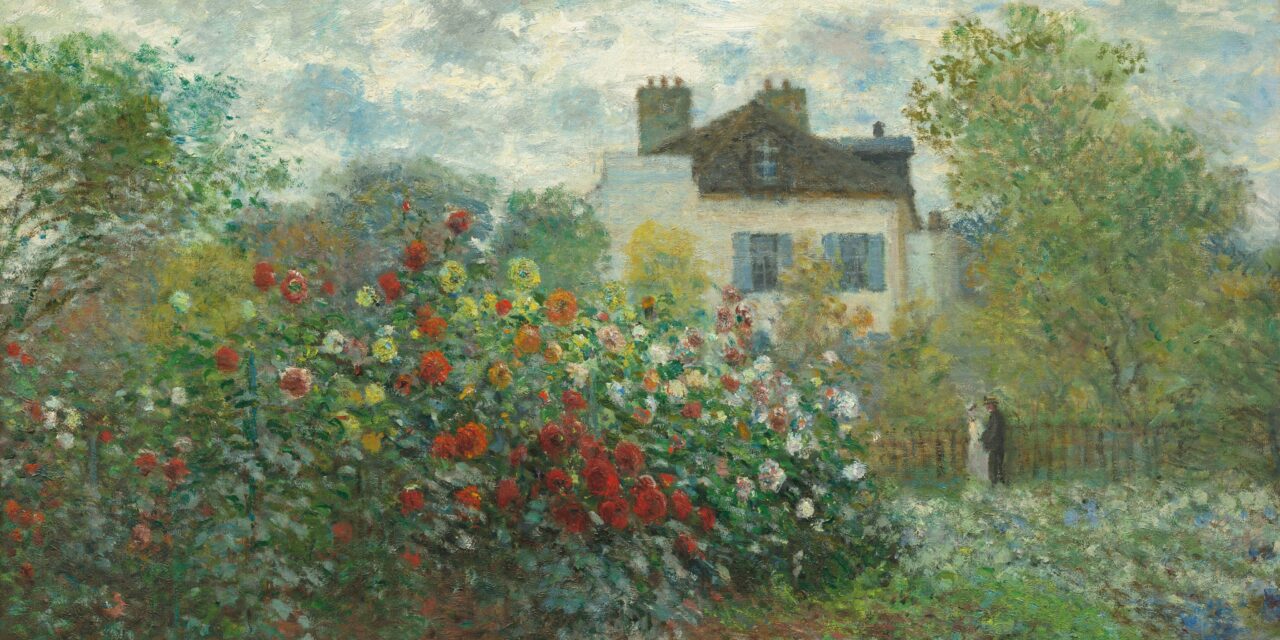
The Iridescent Soul of Claude Monet: A Life Painted in Light
Claude Monet, a name synonymous with the very essence of Impressionism, was not merely an artist but a revolutionary spirit who fundamentally altered the way the world perceived and depicted light, colour, and the fleeting moments of existence. His life story is a testament to unwavering dedication, profound personal struggle, and a visionary understanding of the natural world. Born into a bustling Paris, Monet’s formative years were spent far from the artistic salons, amidst the windswept coastlines of Le Havre, a setting that would indelibly shape his artistic vision. His journey from a young man indifferent to art to the undisputed patriarch of Impressionism is a captivating narrative of passion, perseverance, and the transformative power of observation.
Monet’s initial forays into the art world were far from the grand canvases that would later define him. His early talent lay in capturing likeness with a satirical edge, a skill honed in the less formal spaces of his youth. This period, though seemingly tangential, provided him with an acute eye for observation and the ability to distill character and form with a few swift lines. However, it was the encounter with a seasoned professional that truly ignited the artistic fire within him.
The Crucial Encounter with Eugène Boudin
The year 1856 marked a pivotal moment in young Claude Monet’s life. In the port town of Le Havre, where he had grown up somewhat estranged from his artistic aspirations, he met Eugène Boudin. Boudin, already an established landscape painter, recognised the raw potential in the spirited adolescent. He was not just a mentor; he was a liberator. Boudin’s most significant gift to Monet was the concept of en plein air painting – the practice of working outdoors, directly from nature. This was a radical departure from the studio-bound tradition, where paintings were meticulously composed from sketches and memory. Boudin showed Monet how to capture the immediate sensation of light and atmosphere, the transient play of colour on surfaces, and the ever-changing nuances of the sky. Monet later recalled Boudin’s influence with profound gratitude, acknowledging that it was through this teaching that he truly became a painter. This early exposure to direct observation of nature laid the groundwork for the Impressionist revolution Monet would later champion.
A Frustrating Start and the Shadows of Doubt
Despite Boudin’s encouragement, Monet’s path was not immediately smooth. He eventually made his way to Paris, seeking formal artistic training. He studied briefly at the Atelier Suisse, where he encountered other burgeoning artists. However, he found the rigid academic doctrines stifling. His early attempts to gain recognition were met with indifference, and the art establishment remained largely captivated by historical and mythological subjects painted in a polished, classical style. This period was marked by financial hardship and a gnawing sense of artistic isolation. The pressure to conform to established tastes, coupled with the practical realities of poverty, began to take its toll.
Claude Monet, renowned for his pioneering role in the Impressionist movement, transformed the art world with his innovative techniques and vibrant depictions of nature. His life story is not only a testament to his artistic genius but also reflects the broader cultural shifts of his time. For those interested in exploring the intersection of art and innovation, a related article titled “Visionary Vibes: Embracing the Future with Innovative Ideas” delves into how contemporary artists draw inspiration from historical figures like Monet while pushing the boundaries of creativity. You can read the article here: Visionary Vibes: Embracing the Future with Innovative Ideas.
The Trial by Water: Despair and an Unlikely Rescue
The weight of artistic and personal struggles can be an immense burden, and for Monet, this burden became almost unbearable in the late 1860s. Poverty and professional disappointment can lead even the most resilient spirit to the brink. It was during this intensely difficult phase of his life that Monet confronted his deepest despair, an event that serves as a stark reminder of the human cost of artistic ambition in a world often resistant to change.
A Leap into the Unknown
In 1868, an impoverished and deeply depressed Claude Monet found himself at the edge of the Seine River. The future, both artistically and personally, seemed bleak. In a moment of profound despair, he attempted to end his life by throwing himself into the cold waters of the river. This was not born out of a lack of passion for his art, but rather from an overwhelming sense of failure and hopelessness. The artistic world he aspired to conquer seemed impenetrable, and the means to sustain his life and his art were absent.
Survival and a Renewed Glimmer of Hope
Fortunately for the art world, Monet’s attempt was not successful. He was saved from the unforgiving currents of the Seine. While the scars of such an experience would undoubtedly linger, his survival offered a second chance. This brush with mortality, paradoxically, may have also served as a catalyst for a deeper resolve. Though the exact emotional impact of this event on his subsequent artistic output is difficult to quantify, it underscores the immense pressures he faced and the sheer tenacity that would eventually see him triumph. The experience, a stark encounter with the fragility of life, perhaps imbued his later works with an even greater appreciation for the beauty and transience of the world around him. He would, in time, channel this deeper understanding of life’s uncertainties into the vibrant, fleeting moments he captured on canvas.
The Birth of an Ism: Impression, Sunrise and the Dawn of a New Era
The mid-19th century was a time of immense artistic ferment in Europe, but the prevailing academic system dictated strict rules for what constituted “proper” art. Traditionalists favoured historical scenes, mythological narratives, and meticulously rendered portraits, all executed with a smooth, almost invisible brushstroke. Monet and his contemporaries, however, felt an irresistible urge to break free from these constraints, seeking to capture a more immediate, personal, and truthful representation of modern life.
Revolutionising Perception: The Salon des Refusés and its Echoes
While not directly involved in the Salon des Refusés of 1863, where rejected works from the official Paris Salon were exhibited, Monet and his fellow radical artists drew inspiration from this act of defiance. This exhibition highlighted the growing dissatisfaction with the conservative jury of the official Salon and showcased a more experimental spirit. Monet’s artistic journey, shared with luminaries like Renoir, Sisley, Pissarro, and Degas, was marked by a collective desire to depict the world as they saw and felt it, rather than as prescribed by academic dogma. They were drawn to the ephemeral qualities of light, the vibrant hues of everyday life, and the emotional impact of colour.
The Accidental Naming of a Movement
The year 1872 saw Monet create a painting that would inadvertently give a name to one of art history’s most influential movements: Impression, Sunrise. This work, depicting the harbour of Le Havre at dawn, was characterised by its loose brushwork, focus on atmospheric effects, and bold use of colour. When this painting, along with others by the group, was exhibited in 1874 at their first independent exhibition, held in the former studio of the photographer Nadar, a hostile critic, Louis Leroy, seized upon the title. He mockingly referred to the artists as “Impressionists,” suggesting their work was merely a sketch or an unfinished impression, lacking the polish and substance of true art. Ironically, what was intended as an insult became a badge of honour, and the term “Impressionism” was adopted by the artists themselves, forever linking Monet to the genesis of this groundbreaking artistic style. This exhibition marked a decisive break from the old order and declared the arrival of a new vision in art.
Tides of Love and Loss: Camille and the Enduring Power of Nature
The personal life of an artist can be as dramatic and colourful as their canvasses, and Claude Monet’s journey was profoundly shaped by his relationships, particularly with Camille Doncieux. Her presence in his life was not just that of a partner but also a constant source of inspiration, capturing the essence of a woman living in the vibrant, sometimes challenging, world that Monet sought to depict.
Camille: The Muse and the Model
Camille Doncieux first entered Monet’s life in the early 1860s, and she quickly became his companion, muse, and frequent model. Their relationship was forged in the crucible of bohemian life and shared artistic pursuits. She represented more than just a subject to paint; she embodied the vitality and spirit of the era. Many of Monet’s most tender and intimate works from this period feature Camille, her form rendered with the characteristic Impressionist focus on light and atmosphere. Their marriage in 1870 brought a sense of stability, but the constant financial struggles and the demanding nature of their lifestyle cast a long shadow.
The Anguish of Absence and a Shift in Focus
Tragically, Camille’s life was cut short in 1879, a devastating loss that profoundly impacted Monet. Her death left him heartbroken and facing the daunting task of raising their two sons alone. The grief was so profound that it led to a significant shift in his artistic focus. After Camille’s passing, Monet largely stopped painting people. He turned his attention almost exclusively to the natural world, finding solace and a renewed sense of purpose in the landscapes, gardens, and seascapes that surrounded him. Her absence was a void, but the resilience of nature provided a new, albeit different, wellspring of inspiration. He would later find companionship and domestic support with Alice Hoschedé, whose presence became an important part of his life, but the memory of Camille and her influence on his early work remained a significant part of his artistic biography.
Claude Monet, renowned for his pivotal role in the Impressionist movement, transformed the world of art with his innovative techniques and vibrant use of colour. His life story is not just a tale of artistic genius but also a reflection of the changing landscapes of his time. For those interested in exploring other artistic techniques that have shaped the art world, you might find it fascinating to read about glassblowing in this related article, which delves into the intricate process and artistry behind this captivating craft. Monet’s legacy continues to inspire artists and art lovers alike, highlighting the enduring power of creativity.
A Garden of Obsessions: The Series and the Legacy of Giverny
As Monet’s career progressed and his reputation grew, his artistic pursuits became increasingly focused and arguably more profound. The later decades of his life were characterised by a relentless exploration of particular subjects, analysed and reanalysed under countless atmospheric conditions. This period, largely centered around his beloved home and garden at Giverny, became the crucible for some of his most iconic and enduring works, solidifying his place in art history and leaving behind a legacy that continues to captivate.
The Power of Repetition: Haystacks and Cathedrals
Around 1890, Monet embarked on a revolutionary approach to his art: the creation of series paintings. He became fascinated by the idea of painting the same subject repeatedly, at different times of day, in different seasons, and under varying light conditions. His Haystacks series, for instance, explored the subtle shifts in colour and form of these rural staples as the sun moved across the sky. Similarly, his series of the Rouen Cathedral was a monumental undertaking, capturing the cathedral’s facade under an astonishing range of atmospheric states, from the soft light of dawn to the harsh glare of midday and the golden hues of sunset. This systematic investigation of light and its effects was a radical departure from traditional art, demonstrating Monet’s deep commitment to capturing the transient nature of perception.
The Water Lilies: A World of Impression
Perhaps Monet’s most celebrated and immersive series is his Water Lilies (Nymphéas). From the late 1890s until his death in 1926, these water gardens at Giverny became the primary focus of his artistic energy. He transformed his property into a paradise of blooming flowers and tranquil ponds, meticulously cultivating the plants that would become the subject of hundreds of paintings. These works are less about the precise depiction of individual lilies and more about the overall sensory experience – the reflections of the sky on the water, the shimmering play of light, the immersive quality of colour. They represent a culmination of his lifelong pursuit of capturing the essence of light and atmosphere, dissolving form into pure sensation. His later works became increasingly abstract, pushing the boundaries of representation and anticipating later developments in art.
A Generous Bequest: The Orangerie’s Masterpiece
In 1918, as the culmination of his life’s work and in recognition of France’s victory in World War I, Monet made a significant donation to the French nation. He bequeathed twelve of his monumental Water Lilies paintings to the state, with the stipulation that they be housed in a specially designed space where they could be experienced as a panoramic whole. This vision was realised with the creation of the two oval rooms in the Musée de l’Orangerie in Paris, where these masterpieces now hang permanently, offering visitors an unparalleled immersive experience of Monet’s aquatic world. This unparalleled bequest cemented his legacy and provided a lasting testament to his artistic vision and his deep connection to his homeland.
Monet’s life story, from his wind-swept youth in Le Havre to his final days in the vibrant colours of his Giverny garden, is a testament to the power of individual vision. He did not just paint the world; he taught us how to see it anew, through a lens of light, colour, and ephemeral beauty. His legacy is not just in the brushstrokes left behind, but in the very way we perceive the world around us, a world forever illuminated by the iridescent soul of Claude Monet.
FAQs
1. Who was Claude Monet?
Claude Monet was a French painter and a leading figure in the Impressionist art movement. He is best known for his landscapes and outdoor scenes, particularly those featuring water lilies and gardens.
2. What are some of Claude Monet’s most famous works?
Some of Claude Monet’s most famous works include “Impression, Sunrise,” “Water Lilies,” “Rouen Cathedral Series,” “Haystacks,” and “Woman with a Parasol.”
3. What was Claude Monet’s artistic style?
Claude Monet was a key figure in the Impressionist movement, which sought to capture the fleeting effects of light and atmosphere in their paintings. His style was characterized by loose brushwork and a focus on capturing the essence of a scene rather than its precise details.
4. What was Claude Monet’s personal life like?
Claude Monet was born in 1840 in Paris, France, and spent much of his life in Giverny, where he created his famous garden and water lily pond. He married twice and had two sons. Monet’s later years were marked by financial success and recognition for his work.
5. What is Claude Monet’s legacy?
Claude Monet’s work had a profound impact on the development of modern art, and his influence can be seen in the work of subsequent generations of artists. His paintings continue to be celebrated and admired around the world, and his gardens at Giverny are a popular tourist attraction.