Franz Marc was born on February 8, 1880, in Munich, Germany, into a family that fostered a deep appreciation for the arts. His father, a landscape painter, undoubtedly influenced Marc’s early inclinations towards creativity. Growing up in a household that valued artistic expression, he was exposed to various forms of art from a young age. This environment nurtured his burgeoning talent and passion for painting, leading him to pursue formal education in the arts. After completing his secondary education, Marc enrolled at the Academy of Fine Arts in Munich in 1899. Here, he was introduced to a range of artistic techniques and philosophies that would shape his future work.
During his time at the academy, Marc was influenced by the prevailing artistic movements of the time, including Impressionism and Symbolism. He studied under prominent artists such as Wilhelm von Diez, who encouraged his exploration of colour and form. However, Marc found himself increasingly disillusioned with the traditional methods taught at the academy. He sought to break free from conventional artistic constraints and began to develop his unique style. This desire for innovation would later become a hallmark of his work, as he sought to express deeper emotional truths through his art.
Gabriele Münter, a prominent figure in the Expressionist movement, not only made significant contributions to the art world but also played a crucial role in the development of modern painting techniques. Her life story is intricately linked to the evolution of artistic expression in the early 20th century. For those interested in exploring the fundamentals of painting and gaining confidence in their artistic abilities, a related article can be found at this link, which offers valuable insights for beginners looking to embark on their own creative journeys.
Meeting Wassily Kandinsky
A pivotal moment in Marc’s artistic journey occurred when he met Wassily Kandinsky in 1911. Their encounter marked the beginning of a profound friendship and collaboration that would significantly influence both artists’ careers. Kandinsky, already an established figure in the avant-garde movement, introduced Marc to new ideas about abstraction and the spiritual dimensions of art. Their discussions on colour theory and the emotional resonance of shapes ignited a creative synergy that would lead to the formation of the influential Blue Rider group.
The Blue Rider movement, which emerged from their shared vision, sought to transcend the limitations of representational art. Marc and Kandinsky believed that art should evoke emotional responses rather than merely depict reality. This philosophy resonated deeply with Marc, who was increasingly drawn to the idea of using colour and form to convey feelings and ideas. Their partnership not only enriched Marc’s artistic practice but also positioned him as a key figure in the development of modern art in Germany.
The Blue Rider Movement
The Blue Rider movement, co-founded by Marc and Kandinsky in 1911, became a significant force in the evolution of modern art. This collective aimed to explore the spiritual and emotional aspects of art, moving away from traditional representation towards abstraction. The group included other notable artists such as Paul Klee and Gabriele Münter, all of whom shared a commitment to innovation and experimentation. The name “Blue Rider” symbolised their desire to ride into new artistic territories, with blue representing spirituality and the rider embodying freedom.
Marc’s contributions to the movement were profound, particularly in his exploration of colour symbolism and animal imagery. He believed that animals possessed an innate purity and spiritual essence that could be captured through art. This fascination with animals became a recurring theme in his work, as he sought to depict their emotional states through vibrant colours and dynamic forms. The Blue Rider group held exhibitions that showcased their groundbreaking works, challenging conventional notions of art and paving the way for future generations of artists.
Travels and Influences
Marc’s artistic journey was further enriched by his travels across Europe. He visited various countries, including France and Italy, where he encountered different artistic traditions and cultural influences. These experiences broadened his perspective and deepened his understanding of art’s potential to convey complex emotions. In Paris, he was particularly inspired by the works of Impressionists and Post-Impressionists, whose innovative approaches to colour and light resonated with his own artistic aspirations.
One of the most significant influences on Marc’s work was his exposure to non-Western art forms during his travels. He developed a keen interest in Japanese woodblock prints and African sculpture, which introduced him to new ways of seeing and representing the world. These influences encouraged him to experiment with abstraction and simplify forms, leading to a more expressive style that characterised his later works. The synthesis of these diverse influences culminated in a unique artistic voice that set Marc apart from his contemporaries.
Gabriele Münter, a pivotal figure in the expressionist movement, is often celebrated for her vibrant use of colour and innovative techniques that challenged traditional artistic norms. Her life story is intricately woven with the broader narrative of modern art, making it fascinating to explore how her work intersects with various artistic styles. For those interested in understanding different artistic methods, the article on trompe-l’œil technique offers valuable insights into how artists like Münter pushed the boundaries of perception in their creations.
Return to Germany
After several years of travel and exploration, Marc returned to Germany in 1913, where he continued to develop his artistic practice within the context of the rapidly changing cultural landscape. The onset of World War I had a profound impact on Marc’s life and work; he enlisted in the army in 1914, believing that he could contribute positively to society through his service. However, the harsh realities of war deeply affected him, leading to a sense of disillusionment that permeated his later works.
Despite the turmoil surrounding him, Marc remained committed to his artistic vision. He continued to create powerful pieces that reflected his inner struggles and the chaos of the world around him. His experiences during the war prompted him to explore themes of conflict and suffering through his art, often using animals as symbols of innocence caught in the crossfire of human violence. This period marked a significant evolution in Marc’s work as he grappled with the complexities of existence amidst a backdrop of destruction.
Later Years and Legacy
Franz Marc’s life was tragically cut short when he was killed in action on March 4, 1916, during World War
In the years following his death, Marc’s work gained increasing recognition as art historians began to appreciate his unique vision and contributions to abstraction. His paintings are now held in prestigious collections worldwide, including major museums such as the Museum of Modern Art in New York and the Bayerische Staatsgemäldesammlungen in Munich. The enduring appeal of Marc’s art lies in its ability to evoke profound emotional responses while challenging viewers to reconsider their relationship with nature and spirituality.
Artistic Style and Techniques
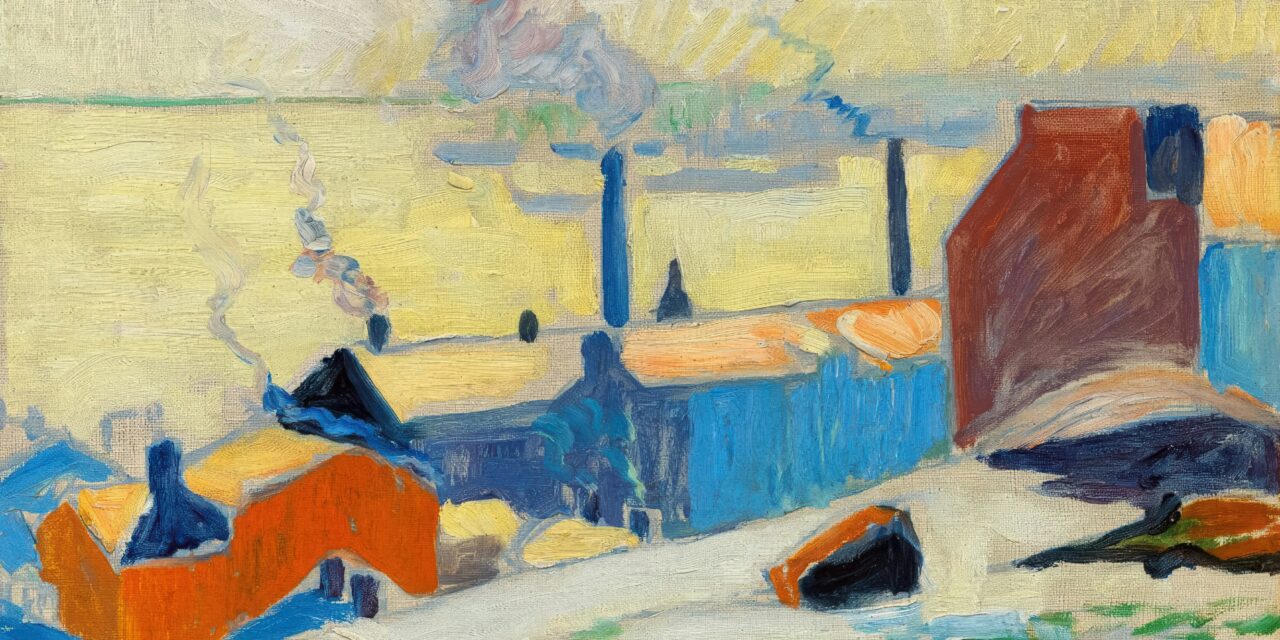
Franz Marc’s artistic style is characterised by its vibrant use of colour and dynamic compositions that convey emotional intensity. He often employed bold primary colours—particularly blue, yellow, and red—to express different emotional states; blue symbolised spirituality and masculinity, yellow represented joy and femininity, while red conveyed violence and passion. This deliberate use of colour was integral to Marc’s vision of creating an emotional language through art.
In addition to colour, Marc’s technique involved simplifying forms and employing abstraction to capture the essence of his subjects. His depictions of animals were not merely representational; they were imbued with symbolic meaning that reflected his beliefs about nature’s purity and spirituality. By distilling forms down to their essential characteristics, Marc created works that transcended mere representation, inviting viewers into a deeper emotional experience.
Recognition and Exhibitions
Franz Marc’s contributions to modern art have been increasingly recognised over the years through numerous exhibitions dedicated to his work. Major retrospectives have been held at prestigious institutions such as the Guggenheim Museum in New York and the Lenbachhaus in Munich, showcasing his evolution as an artist and highlighting his significance within the broader context of early 20th-century art movements.
Marc’s influence extends beyond exhibitions; he has inspired countless artists who seek to explore similar themes of spirituality and emotional expression in their work. His innovative approach continues to resonate with contemporary audiences, ensuring that his legacy endures long after his untimely death. As we reflect on Franz Marc’s life and contributions, it becomes clear that he was not only a pioneer of modern art but also a visionary whose insights into colour, form, and emotion continue to inspire generations of artists today.
FAQs
Who is Gabriele Münter?
Gabriele Münter was a German expressionist painter who was born in 1877 and is best known for her association with the Blue Rider group, a collective of artists who sought to express spiritual truths through their art.
What is Gabriele Münter known for?
Gabriele Münter is known for her vibrant and expressive paintings, as well as her role in the development of the expressionist art movement in the early 20th century. She is also known for her relationship with fellow artist Wassily Kandinsky, with whom she shared a personal and professional partnership.
What are some of Gabriele Münter’s most famous works?
Some of Gabriele Münter’s most famous works include “The Blue Gable” (1909), “Portrait of Marianne von Werefkin” (1909), and “Street with a Red House” (1908). These paintings showcase her bold use of color and her ability to capture the essence of her subjects.
What was Gabriele Münter’s artistic style?
Gabriele Münter’s artistic style was characterized by her use of bold, vibrant colors and her expressive brushwork. She was influenced by the fauvist movement and often painted scenes from her travels, as well as intimate portraits and still lifes.
What is Gabriele Münter’s legacy?
Gabriele Münter’s legacy lies in her contributions to the development of expressionist art and her role in the Blue Rider group. Her work continues to be celebrated for its bold and innovative approach to color and form, and she is remembered as a pioneering female artist of her time.