Albert Marquet, a name that might not immediately resonate with the same thunder as his Fauvist contemporaries, yet whose artistic journey offers a profound and understated counterpoint to the raucous colour explosions of Matisse and Derain. Often overshadowed by the flamboyant bravado of the early 20th century, Marquet carved out a unique and enduring legacy through his serene landscapes, tranquil seascapes, and intimate urban views. He was a painter of light, air, and the delicate nuances of atmosphere, his gaze always fixed on the subtle beauty of the world around him. His life, marked by a quiet dedication to his craft and an aversion to artistic dogma, unfolds as a testament to the power of sustained observation and refined sensibility.
Early Life and Formative Years in Paris
Born Pierre-Albert Marquet in Bordeaux, France, on 27 March 1875, his childhood was relatively unremarkable, save for an early and undeniable inclination towards art. Bordeaux, a bustling port city, would undoubtedly have imprinted upon his young mind the endless fascination with water, ships, and the ever-shifting light reflecting off the Garonne River – themes that would become central to his mature oeuvre.
The Move to the Capital and Early Artistic Training
At the tender age of fifteen, Marquet’s artistic ambitions led him to Paris in 1890. This move, a common pilgrimage for aspiring artists of the era, placed him at the epicentre of the art world. His initial formal training began at the École des Arts Décoratifs, an institution known for its emphasis on decorative arts and applied design. Here, he encountered Henri Matisse, a fellow student who would become a lifelong friend and artistic sparring partner, despite their diverging stylistic paths. This early friendship was crucial, fostering a shared sense of purpose and a critical, yet supportive, exchange of ideas.
The Influence of Gustave Moreau and the Élan of Symbolism
In 1895, Marquet transitioned to the École des Beaux-Arts, where he entered the studio of Gustave Moreau. Moreau, a Symbolist painter of considerable influence, was an unconventional teacher for his time. Unlike many academic instructors who imposed rigid techniques and stylistic adherence, Moreau encouraged his students to explore their individuality, experiment with colour, and delve into their inner worlds. This liberal approach, though seemingly at odds with Marquet’s later, more restrained style, laid a vital foundation for his artistic development. Moreau’s emphasis on personal expression and the evocative power of colour, even if not overtly emulated in Marquet’s eventual palette, instilled in him a freedom from conventional academic constraints. His fellow students in Moreau’s studio included not only Matisse but also Georges Rouault, Albert Derain, and Henri Manguin – a veritable constellation of future Fauvist stars.
Albert Marquet, a prominent figure in the Fauvist movement, is often celebrated for his vibrant use of colour and innovative techniques. His life story, marked by a deep connection to the landscapes and urban scenes of France, reflects a unique artistic journey that resonates with many art enthusiasts. For those interested in exploring the techniques that influenced Marquet’s work, a related article on the art technique of verdaille can provide valuable insights. You can read more about this fascinating technique in the article available at this link.
The Fauvist Interlude and the Emergence of a Distinctive Style
The early 1900s in Paris were a period of intense artistic ferment. Young artists, increasingly dissatisfied with the perceived stagnation of Impressionism and the academic strictures of the Salon, were searching for new modes of expression. Marquet, alongside his friends, was swept up in this revolutionary tide.
The Salon d’Automne of 1905 and the “Cage aux Fauves”
The pivotal moment arrived at the Salon d’Automne of 1905. Here, Marquet, Matisse, Derain, Vlaminck, and others exhibited works characterised by audacious, unmixed colours, simplified forms, and a blatant disregard for naturalistic representation. The critic Louis Vauxcelles, startled by the vibrant intensity of their canvases amidst a classical sculpture, famously dubbed them “Fauves” – wild beasts. Marquet’s contributions to this seminal exhibition, though less overtly aggressive in their colour than those of Matisse or Derain, nonetheless shared the spirit of liberation from traditional conventions. He employed pure, unmodulated colours, though often in more harmonious and less jarring combinations, demonstrating an innate sensitivity to tone and atmosphere even amidst the Fauvist fervour.
Finding His Own Voice: A Shift Towards Serenity
While Marquet participated in the Fauvist movement, his engagement was somewhat peripheral, reflecting his inherent disposition towards a more restrained aesthetic. He never fully embraced the explosive, non-descriptive use of colour that defined the movement’s most radical practitioners. Instead, he quickly began to refine his approach, moving away from the purely emotional and towards a more analytical yet still expressive treatment of light and form. His Fauvist period served as a crucible, allowing him to experiment and understand the expressive potential of colour, but ultimately guiding him towards a personal style characterised by subtle colour harmonies, simplified compositions, and a profound sense of atmosphere. He gravitated towards a palette dominated by blues, greys, and muted greens, punctuated by carefully placed accents of warmer hues, creating a sense of quiet contemplation rather than riotous celebration.
The Wanderer and the Urban Landscape
Marquet was a tireless traveller, a true artistic nomad whose canvases bear witness to his extensive journeys across France, Europe, and North Africa. These travels were not mere tourist excursions but rather an integral part of his artistic process, providing him with an inexhaustible supply of subjects and an ever-shifting tapestry of light and atmosphere to interpret.
The Allure of Ports and Waterways
Perhaps more than any other subject, Marquet is synonymous with ports and waterways. From the bustling quays of Le Havre and Bordeaux to the serene canals of Venice and Amsterdam, water, with its reflective surfaces and ever-changing light, held an enduring fascination for him. He possessed an uncanny ability to capture the specific character of each location – the heavy grey skies of London, the dazzling light of Algiers, the misty mornings of Rouen. His water scenes are not merely topographical renderings; they are imbued with a sense of the transient, the ephemeral beauty of the moment. The boats, barges, and bustling figures become secondary to the overarching atmosphere, the quality of light and air that define the scene.
Capturing the Essence of Cities
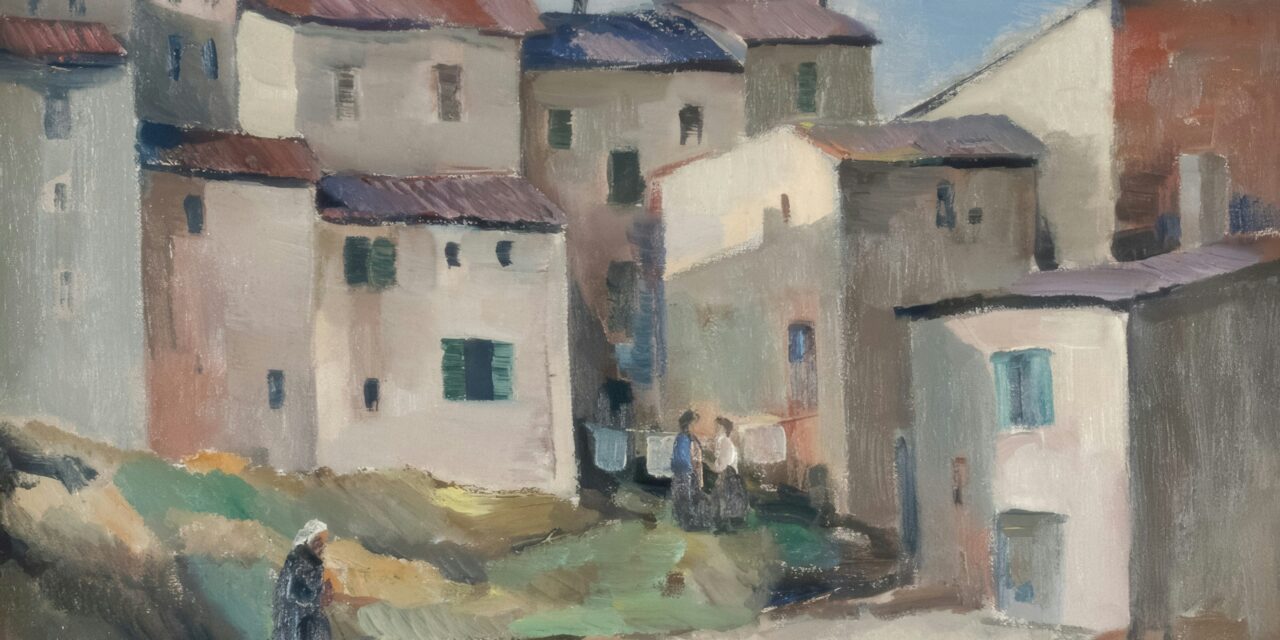
Beyond the ports, Marquet was a masterful chronicler of urban life. His Parisian views, often painted from his studio window overlooking the Seine, are iconic. He captured the everyday rhythm of the city – the bridges, the barges, the tree-lined embankments, the distant facades of buildings – with a remarkable sensitivity to the play of light and shadow. Unlike some of his contemporaries who sought to capture the frantic energy of modern life, Marquet focused on the timeless aspects of urban existence, imbuing his scenes with a sense of calm and quiet observation. He stripped away unnecessary detail, focusing on the essential forms and the interplay of colours to convey the unique atmosphere of each city. His views of cities like Naples, Hamburg, and Venice demonstrate his ability to distill the essence of a place, translating its particular light and character onto the canvas with remarkable clarity.
A Master of Subtle Nuance and Tonal Harmony
Marquet’s distinctiveness lies not in dramatic gestures or flamboyant colours, but in his extraordinary sensitivity to tonal relationships and the subtle nuances of light. He was a painter who understood the power of understatement, where restraint spoke volumes.
The Economy of Brushwork and Simplicity of Form
His technique was characterised by an economy of brushwork. He applied paint thinly, allowing the canvas to show through in places, creating a sense of airiness and spontaneity. His forms were simplified, almost to the point of abstraction, yet always retaining a strong sense of representational accuracy. He was not interested in meticulous detail but rather in conveying the overall impression, the feeling of a place or a moment. This simplification allowed him to focus on the interplay of light and shadow, and the subtle shifts in colour temperature. A single brushstroke could suggest a distant building, a passing boat, or a figure on the quay, yet each stroke was imbued with purpose and precision.
The Allure of Greys and Blues: Marquet’s Signature Palette
While often associated with the vibrant colours of Fauvism, Marquet’s most characteristic works are defined by a sophisticated and highly personal palette dominated by greys, blues, and muted greens. These colours, often considered somber by other artists, were transformed in Marquet’s hands into vehicles for expressing a vast range of atmospheric effects. He understood the infinite variations within a seemingly limited palette, using subtle shifts in tone and temperature to evoke the nuances of light, from the pearly glow of a misty morning to the cool brilliance of an overcast day. His landscapes and cityscapes, bathed in these restrained hues, possess a profound sense of tranquility and introspection, inviting the viewer into a world of quiet contemplation.
Albert Marquet, a prominent figure in the Fauvist movement, is often celebrated for his vibrant use of colour and expressive brushwork. His life story reveals not only his artistic evolution but also the influences that shaped his unique style. For those interested in exploring the broader context of artistic inspirations that may have impacted Marquet’s work, a related article can be found at Artistic Inspirations, which delves into the various movements and artists that contributed to the rich tapestry of early 20th-century art.
Later Life, Legacy, and Lasting Influence
Marquet continued to paint prolifically throughout his life, his travels extending to North Africa, Russia, and the Nordic countries. His commitment to his art remained unwavering, even as the art world embraced new movements like Cubism and Surrealism. He remained true to his vision, refusing to chase trends or succumb to stylistic pressures.
The Impact of World War II and a Return to Paris
The outbreak of World War II had a profound impact on Marquet, as it did on countless others. The German occupation of Paris forced him to leave the capital, seeking refuge in the countryside. The war years were a difficult period, marked by scarcity and uncertainty, yet he continued to paint, finding solace and purpose in his art. Upon the liberation of Paris, he returned to his beloved city, resuming his familiar views of the Seine, though perhaps imbued with a new sense of fragility and resilience.
A Quiet Departure and Enduring Appreciation
Albert Marquet passed away in Paris on 14 June 1947, at the age of 72. He left behind a vast body of work – thousands of paintings, drawings, and watercolours – that collectively form a testament to his unique artistic vision. While he never achieved the same level of celebrity as some of his more flamboyant contemporaries, his work has consistently been appreciated by connoisseurs and fellow artists for its integrity, its subtle beauty, and its profound observational power.
His legacy is one of quiet strength, a reminder that artistic impact can be achieved not through bombast, but through sustained dedication to a singular vision. Marquet’s paintings offer a refuge from the clamour of modern life, inviting us to slow down, to observe, and to appreciate the delicate nuances of the world around us. He reminds us that beauty can be found in the mundane, in the everyday scenes that often go unnoticed. Through his tranquil gaze, he elevated the ordinary to the extraordinary, leaving behind a timeless body of work that continues to captivate and inspire. His influence can be seen in subsequent generations of artists who, like Marquet, prioritised atmosphere and subtle tonal harmony over overt drama, proving that true artistry often whispers rather than shouts.
FAQs
Who was Albert Marquet?
Albert Marquet was a French painter, known for his association with the Fauvist movement and his depictions of urban landscapes and seascapes.
What was Albert Marquet’s artistic style?
Albert Marquet’s artistic style evolved over the course of his career, but he is best known for his use of bold, vibrant colors and his ability to capture the atmosphere and light of the scenes he painted.
What were some of Albert Marquet’s notable works?
Some of Albert Marquet’s notable works include “The Port of Algiers,” “The Seine at Charenton,” and “The Bay of Naples.” He also produced a series of paintings depicting the city of Paris.
What was Albert Marquet’s impact on the art world?
Albert Marquet’s work had a significant impact on the art world, particularly through his involvement with the Fauvist movement and his contributions to modern art. His unique style and ability to capture the essence of his subjects continue to inspire artists today.
What is Albert Marquet’s legacy?
Albert Marquet’s legacy is one of innovation and influence in the art world. His paintings are celebrated for their beauty and technical skill, and he is remembered as a key figure in the development of modern art.