Ernst Ludwig Kirchner, a name synonymous with the vibrant, angst-ridden birth of German Expressionism, was a pivotal figure whose artistic output, both prolific and profoundly impactful, helped shape the trajectory of 20th-century art. His journey, marked by innovation, psychological intensity, and ultimately, personal tragedy, offers a compelling narrative for anyone seeking to understand the radical shifts occurring in European art at the turn of the century. As an artist and writer, I find myself continually drawn to Kirchner’s raw honesty and his unflinching gaze into the human condition, making his work a rich tapestry for exploration.
The Formative Years: From Architecture to Art Nouveau
Born in Aschaffenburg, Bavaria, in 1880, Kirchner’s early life, though seemingly conventional, harboured the seeds of his artistic rebellion. His father, a chemist, encouraged a practical education, leading Kirchner to study architecture at the Royal Saxon Technical High School in Dresden in 1901. While this might seem an odd starting point for a painter renowned for his emotionally charged canvases, it was during these architectural studies that Kirchner encountered formative influences and developed a keen understanding of structure and composition that would subtly underpin his later expressive freedom.
Architectural Foundations and Early Influences
His architectural education exposed him to design principles, draughtsmanship, and the power of form. This academic rigour, rather than stifling his artistic inclinations, provided a solid bedrock upon which he would later build his radical departures. It was also in Dresden that he encountered Fritz Bleyl, Erich Heckel, and Karl Schmidt-Rottluff, fellow architecture students who shared his burgeoning disillusionment with academic art and the prevailing aesthetic conservatism. This shared discontent proved to be a powerful catalyst.
The Call of Art Nouveau and Symbolism
Before the dramatic leap into Expressionism, Kirchner, like many young artists of his generation, was captivated by the sinuous lines and decorative motifs of Art Nouveau (Jugendstil in Germany) and the evocative power of Symbolism. Artists like Henri van de Velde and Peter Behrens, with their emphasis on integrated design and a rejection of historical pastiche, resonated deeply. Kirchner’s early woodcuts, for instance, display a clear influence of Art Nouveau’s flowing forms and flat areas of colour. However, even at this nascent stage, there was an underlying current of psychological intensity, a premonition of the emotional depth that would soon define his work. He was not content with mere decoration; he sought to imbue his art with meaning, with a resonance beyond the purely aesthetic.
For those interested in exploring the emotional impact of colour in art, a related article titled “Colour Psychology in Art: How Hues Affect Emotions” provides valuable insights into how artists, including Ernst Ludwig Kirchner, utilise colour to evoke feelings and convey messages. Understanding the psychological effects of colour can deepen one’s appreciation of Kirchner’s vibrant palette and its role in his expressionist works. You can read the article here: Colour Psychology in Art.
Die Brücke: A Bridge to a New Art
The year 1905 marked a watershed moment in German art history, and indeed, in Kirchner’s life. It was then that he, along with Bleyl, Heckel, and Schmidt-Rottluff, founded Die Brücke (The Bridge) in Dresden. This collective, a revolutionary force, sought to create a “bridge” between traditional art and a radical new future, a future built on authentic expression and a rejection of societal norms.
The Manifesto of Expressionism
Die Brücke’s manifesto, primarily written by Kirchner, articulated their core beliefs: “With a belief in development, in a new generation of creators and connoisseurs, we call together all youth. As youth, we carry the future, and we want to create for ourselves freedom of life and of movement against the entrenched older forces. Everyone who renders directly and authentically that which impels him to create belongs to us.” This declaration of independence was not merely artistic; it was a societal and philosophical statement, advocating for a raw, unmediated experience of life and its translation into art. Their rejection of bourgeois values and their embrace of a more primitive, instinctual approach echoed similar sentiments in other avant-garde movements across Europe.
Influences on Die Brücke: Primitivism and Folk Art
The Brücke artists were voracious in their artistic appetites, drawing inspiration from diverse sources that lay outside the academic canon. They were deeply fascinated by so-called “primitive” art – African and Oceanic sculptures, often encountered in ethnological museums. They saw in these forms a directness, an emotional potency, and an unmediated connection to fundamental human experiences that they felt was lacking in Western art. Similarly, German folk art, with its bold colours and simplified forms, offered another pathway to authenticity. These influences, combined with their admiration for artists like Vincent van Gogh, Edvard Munch, and Paul Gauguin, whose work prioritised emotional impact over photographic realism, forged the distinctive aesthetic of Die Brücke: vibrant colours, jagged lines, distorted figures, and a palpable sense of anxiety and energy.
Life and Art in the Dresden Studio
The communal spirit of Die Brücke was evident in their shared studio in Dresden, a former butcher’s shop that they decorated with painted murals and carvings. Here, they lived, worked, and debated, often in the company of their models, who were frequently their girlfriends and members of their social circle. This intimate environment fostered a sense of camaraderie and experimentation. Their subjects were drawn from their immediate surroundings: nude figures bathing in lakes, city scenes, dancers, and portraits of one another. The immediacy of their approach, often working quickly and instinctively, resulted in a dynamic and raw quality that remains compelling to this day.
The Berlin Years: Urban Anxieties and Psychological Landscapes
In 1911, Kirchner moved to Berlin, a decision that profoundly impacted his artistic trajectory. The bustling metropolis, with its teeming streets, dazzling nightlife, and underlying currents of alienation, provided a rich, albeit often unsettling, new subject matter. The move also marked a period of increasing artistic sophistication and psychological depth in his work.
The Urban Tableau: Street Scenes and Prostitutes
Berlin’s urban landscape became Kirchner’s primary canvas. His iconic street scenes, such as Street, Dresden (though begun in Dresden, perfected in Berlin) and the series of Berlin street scenes from 1913-14, capture the frenetic energy and often unsettling anonymity of modern city life. Figures, elongated and angular, often appear isolated despite being surrounded by crowds. The sharp, almost aggressive brushstrokes and acidic colour palettes convey a sense of unease and psychological tension. Prostitutes, with their ambiguous allure and societal marginalisation, became a recurring motif, embodying the moral complexities and hidden undercurrents of the urban environment. Kirchner’s portrayal of these figures is not overtly moralistic; rather, he presents them as stark representations of a particular facet of modern life, their gazes often meeting the viewer’s with an unnerving directness.
Dissolution of Die Brücke and Independent Evolution
By 1913, the communal bond of Die Brücke had begun to fray, and the group officially disbanded. While individual differences in artistic direction undoubtedly played a role, Kirchner’s increasing assertiveness and his desire for individual recognition contributed to the split. This dissolution, though perhaps painful at the time, allowed Kirchner to fully develop his unique artistic voice, free from the constraints of a collective identity. His Berlin work demonstrates a heightened sense of individualism and a more introspective approach to his subjects. He delved deeper into psychological states, exploring anxiety, alienation, and the fragmentation of the modern psyche.
Monumental Forms and Expressive Colour
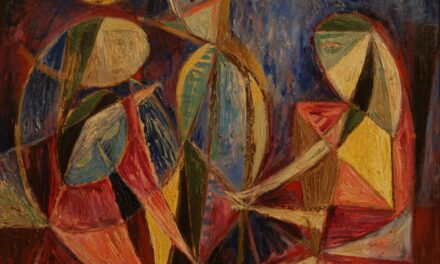
During this period, Kirchner’s figures became increasingly monumental and sculptural, often filling the canvas with their imposing presence. His use of colour remained intensely expressive, but with a greater sophistication and symbolic resonance. He employed jarring combinations and non-naturalistic hues to evoke emotional states rather than simply describe reality. The angularity of his forms, a hallmark of his style, became more pronounced, reflecting the harshness and psychological pressure he perceived in the urban environment. The works from his Berlin period are arguably his most powerful and iconic, encapsulating the raw energy and inherent contradictions of early 20th-century urban life.
War, Illness, and Retreat to Switzerland
The outbreak of World War I in 1914 had a devastating impact on Kirchner. While he initially volunteered for military service, he was soon discharged due to physical and mental health issues. The trauma of the war, coupled with a pre-existing sensitivity, plunged him into a period of profound psychological distress, marked by depression, anxiety, and addiction.
The Scars of War and Psychological Breakdown
Kirchner’s experiences during the war, however brief his direct involvement, left indelible scars. The dehumanising nature of conflict, combined with his already fragile mental state, led to a severe psychological breakdown. He suffered from depression, paranoia, and a dependency on drugs and alcohol. His self-portraits from this period, such as Self-Portrait as a Soldier (1915), are raw and unflinching, depicting him with an amputated hand (a symbolic rather than actual injury) and a haunted, vacant stare, reflecting his deep despair and artistic impotence. This period marked a significant turning point, shifting his artistic focus inward, exploring themes of personal suffering and vulnerability.
Recovery and Relocation to Davos
In 1917, seeking solace and recovery, Kirchner moved to Switzerland, initially to a sanatorium and then to a remote chalet near Davos. The serene alpine landscape, a stark contrast to the chaotic urban environment of Berlin, provided a crucial healing environment. Here, he slowly began to regain his health and artistic vigour. His recovery was aided by the care of his partner, Erna Schilling, and later by his patron, the collector and doctor Dr. Frédéric Bauer, who provided crucial support and encouragement.
Alpine Landscapes and Renewed Artistic Vision
The Swiss years saw a dramatic shift in Kirchner’s subject matter and, to some extent, his style. While his expressive language remained, the harshness and anxiety of his Berlin works gave way to a more tranquil, yet still intensely felt, engagement with nature. He painted the majestic mountains, the local farmers, and the vibrant colours of the alpine flora with a renewed sense of purpose. Works like Alpine Hut or Sertig Valley in Autumn capture the grandeur and isolation of the landscape, imbued with his characteristic emotional intensity. His palette became somewhat softer, and his forms, while still angular, often conveyed a sense of harmony and belonging. This period represents a powerful testament to the healing power of nature and the resilience of the human spirit in the face of adversity.
For those interested in exploring the vibrant world of early 20th-century expressionism, an in-depth guide to the artist Ernst Ludwig Kirchner offers valuable insights into his unique style and contributions to the movement. Kirchner’s work often resonates with the themes found in the paintings of his contemporaries, such as Wassily Kandinsky. To delve deeper into Kandinsky’s artistic journey, you can read more about his notable piece, Improvisation 6 (1910), which showcases the emotional intensity and abstraction that characterised this transformative period in art history.
The Later Years: Recognition, Repression, and Tragic End
The 1920s brought Kirchner increasing recognition and critical acclaim, with major exhibitions and publications dedicated to his work. However, the political climate in Germany was becoming increasingly hostile to modern art, culminating in a devastating blow that would contribute to his tragic end.
International Acclaim and Stylistic Evolution
Throughout the 1920s, Kirchner’s work gained international recognition, solidifying his reputation as a leading figure of modernism. His art continued to evolve, moving towards a more refined and abstract expression. While retaining his distinctive expressive vocabulary, his forms became more distilled, almost cubist in their geometric simplification, and his colours, while still vibrant, were applied with a more considered and often symbolic intention. He experimented with different media, creating powerful sculptures and intricate tapestries in addition to his prolific output of paintings, drawings, and prints. His work from this period often explored more universal themes, moving beyond purely personal suffering to comment on the broader human condition.
Degenerate Art and the Nazi Regime
The rise of Nazism in Germany proved catastrophic for Kirchner and many other avant-garde artists. In 1937, the Nazi regime declared his work, along with that of countless other modern artists, as “degenerate art” (Entartete Kunst). Over 600 of his works were removed from German museums, confiscated, and many were subsequently destroyed or sold abroad. This official condemnation, combined with the general atmosphere of repression and fear, deeply affected Kirchner. He saw his life’s work, his very identity, being systematically dismantled and vilified.
Suicide and Enduring Legacy
The psychological toll of the Nazi persecution, coupled with his ongoing health struggles and the re-emergence of his earlier anxieties, proved too much for Kirchner to bear. On 15 June 1938, he tragically took his own life in Davos. His death marked a profound loss for the art world, silencing one of its most innovative and emotionally resonant voices.
Despite his tragic end, Ernst Ludwig Kirchner’s legacy endures as a titan of German Expressionism. His unflinching honesty, his radical use of colour and form, and his profound engagement with the anxieties and energies of modern life continue to resonate with viewers today. His work serves as a powerful testament to the transformative power of art, capable of capturing the most intense human emotions and offering a stark, yet beautiful, reflection of our shared existence. For anyone seeking to understand the birth of modern art, the exploration of Ernst Ludwig Kirchner’s rich and complex oeuvre is not merely an academic exercise, but a deeply moving encounter with a pioneering spirit.
FAQs
1. Who was Ernst Ludwig Kirchner?
Ernst Ludwig Kirchner was a German expressionist painter and printmaker, known for his bold use of color and dynamic compositions. He was a founding member of the artists’ group Die Brücke, which was influential in the development of modern art in the early 20th century.
2. What were some key themes in Kirchner’s artwork?
Kirchner’s artwork often depicted urban life, particularly in Berlin, where he lived for a significant portion of his career. He was also known for his interest in the human figure, often portraying it in a distorted and exaggerated manner to convey emotional intensity.
3. What artistic techniques did Kirchner use in his work?
Kirchner was known for his use of bold, vibrant colors and energetic brushwork. He often used woodcut and lithography techniques to create prints, and his paintings frequently featured angular, distorted forms and dynamic compositions.
4. What impact did Kirchner have on the art world?
Kirchner’s work was influential in the development of German expressionism, and he played a key role in shaping the modern art movement in Europe. His bold use of color and expressive style continue to inspire artists to this day.
5. What is Kirchner’s legacy in the art world?
Kirchner’s legacy is one of innovation and influence. His work continues to be celebrated for its boldness and emotional intensity, and he is remembered as a pioneering figure in the development of modern art.