
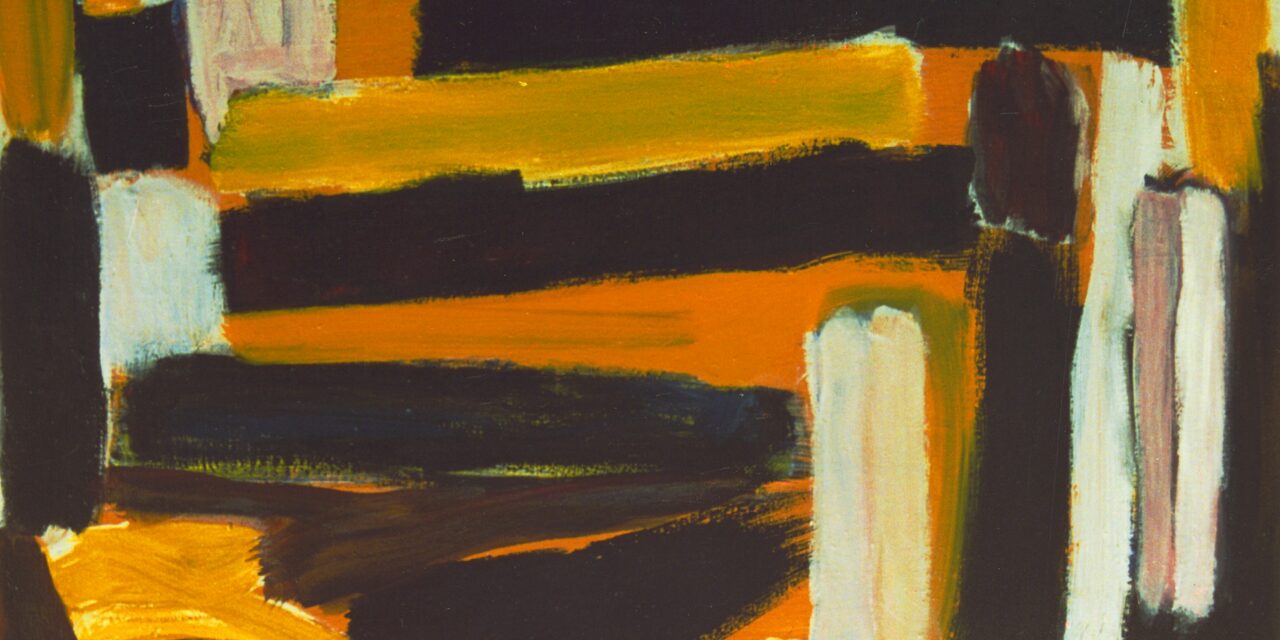
From Dvinsk to Portland: An Early Life of Displacement and Discovery
Mark Rothko, born Marcus Rothkowitz on September 25, 1903, in Dvinsk, Russian Empire (now Daugavpils, Latvia), experienced a childhood shaped by the turbulent geopolitical landscape of early 20th-century Eastern Europe. His early years were marked by a sense of precariousness that would, perhaps subtly, inform the profound emotional depth of his later artistic output. Dvinsk, a city with a significant Jewish population, was a site of frequent pogroms and anti-Semitic sentiment, factors that undoubtedly instilled a deep-seated unease in the young Marcus and his family. His father, Jacob, a pharmacist and intellectual, provided a household rich in books and discussions, fostering an early intellectual curiosity in his children. This intellectual foundation, combined with the underlying anxieties of their environment, laid the groundwork for a deeply contemplative and sensitive individual.
The family’s decision to emigrate to the United States in 1913 was a direct response to these prevailing anti-Semitic persecutions, coupled with Jacob’s fears that his sons would be conscripted into the Tsarist army. Marcus, then ten years old, arrived in Portland, Oregon, a dramatic shift from the cultural and social milieu of Dvinsk. This move, while offering an escape from immediate danger, introduced a new set of challenges: assimilation into a vastly different culture and language. He quickly learned English, displaying a remarkable intellectual aptitude that saw him excel academically. However, the economic realities of immigrant life meant that the family faced hardship. Jacob’s sudden death just months after their arrival forced Marcus and his siblings to work to support the family. This early exposure to the harsh realities of manual labour and financial strain likely contributed to a serious and introspective nature.
Yale and the Seeds of Disillusionment
Despite the financial pressures, Rothko, demonstrating exceptional academic prowess, secured a scholarship to Yale University in 1921. His time at Yale, however, proved to be a period of significant disillusionment. The conservative and privileged atmosphere of the institution, dominated by a WASP elite, clashed sharply with Rothko’s socialist leanings and his identity as a Jewish immigrant. He found himself an outsider, critical of the university’s perceived snobbery and elitism. This feeling of being an outsider, a recurring theme in his life, solidified during these years. He reportedly found the curriculum rigid and uninspiring, and he felt that the humanities, his primary area of interest, were not sufficiently nurtured.
It was during these frustrating years at Yale that Rothko began to develop an interest in art, though not in any formal sense within the university’s offerings. He would often visit galleries in New Haven, seeking solace and inspiration in the works he encountered. This nascent attraction to art was perhaps a subconscious yearning for an alternative mode of expression, a language that could transcend the limitations of the academic and social environments he found so dissatisfying. He eventually left Yale without graduating in 1923, feeling that the institution offered little of value to his burgeoning intellectual and creative spirit. This decisive break marked a pivotal moment, signalling his rejection of conventional paths and his nascent, though still undefined, commitment to a more personal and authentic pursuit. His brief but impactful experience at Yale served to solidify his independent spirit and his critical perspective on established institutions, characteristics that would profoundly influence his artistic journey.
Mark Rothko, renowned for his emotive colour field paintings, has had a profound influence on the art world, inspiring countless artists to explore the depths of human emotion through abstraction. His life story, marked by personal struggles and a relentless pursuit of artistic expression, is a testament to the power of art as a medium for communication. For those interested in exploring different artistic techniques that evoke similar emotional responses, an insightful article on ceramic forming can be found here: An Introduction to the Art Technique of Ceramic Forming. This article delves into the intricate processes of creating art through ceramics, highlighting the emotional resonance that can be achieved through various forms of artistic expression.
From Figurative Beginnings to the Dawn of Abstraction
After leaving Yale, Rothko moved to New York City, a vibrant melting pot of cultures and artistic movements, where he initially pursued a career in theatre, albeit briefly. His true calling, however, soon revealed itself. In 1925, he began attending classes at the New School of Design, where he encountered Max Weber, a Russian-American cubist painter, whose teaching proved to be profoundly influential. Weber’s emphasis on the expressive potential of colour and form, and his encouragement of experimentation, resonated deeply with Rothko. This was his formal introduction to the world of art, and it was here that he began to seriously explore painting.
His early work was largely figurative, influenced by Expressionism and Surrealism, and often depicted urban scenes, interiors, and portraits. These paintings, while displaying a developing sensitivity to colour and composition, were characterised by a sense of solitude and melancholy, reflecting perhaps his own feelings of alienation in the vast metropolis. Figures often appear isolated, lost in thought or absorbed in their own private worlds. Examples from this period include “Subway Scene” (c. 1937), which captures the anonymity and introspection of commuters, and “Sacrifice” (1936), a sombre and introspective depiction. During this time, Rothko also became involved with a group of artists who were similarly searching for new artistic directions, forming a collective known as The Ten (later The Ten: Whitney Dissenters). This group, while exhibiting together, shared a common frustration with the conservative art establishment and a desire to explore more modern and experimental approaches.
The Mythic and Surrealist Influences
The late 1930s and early 1940s marked a significant transitional phase for Rothko, as he increasingly moved away from purely representational art. World War II and its profound human cost deeply affected him, intensifying his belief that art should address fundamental human emotions and universal themes. He began to feel that traditional figurative painting was inadequate to convey the depth of human experience he sought to express. This period saw him delve into Surrealism and ancient mythology, seeking archetypal forms and narratives that could communicate more universal truths. Artists like Joan Miró and Arshile Gorky, with their biomorphic forms and dream-like imagery, provided inspiration.
Rothko’s paintings from this era often feature highly abstracted, semi-figurative forms, reminiscent of primitive art or mythical creatures. These works, such as “Slow Swirl at the Edge of the Sea” (1944) or “Sacrificial Presentment” (1944), are characterised by their swirling lines, vibrant colours, and ambiguous narratives. He was drawn to the ideas of Carl Jung and Friedrich Nietzsche, particularly their exploration of the collective unconscious and the primordial forces that shape human existence. Rothko believed that by tapping into these universal myths, he could create art that transcended individual experience and spoke directly to the viewer’s subconscious. He sought to evoke a sense of the tragic, the heroic, and the sublime, moving beyond superficial representation to plumb the depths of human emotion. This engagement with myth and the subconscious was a crucial step in his journey towards complete abstraction, as he began to strip away literal representation in favour of forms that could carry greater symbolic and emotional weight.
The Multiforms: A Precursor to His Signature Style
By the mid-1940s, Rothko’s exploration of abstraction intensified, leading to the development of what he termed “multiforms.” These paintings represent a pivotal moment in his artistic evolution, directly preceding his iconic mature style. In the multiforms, Rothko abandoned all vestiges of figuration and mythical symbolism, replacing them with amorphous, irregularly shaped colour patches that float and intermingle on the canvas. These early abstract works often feature multiple, loosely defined blocks of colour, sometimes overlapping, sometimes distinct, creating a sense of dynamic interaction and spatial ambiguity.
The multiforms were a radical departure, demonstrating Rothko’s growing conviction that colour and form alone possessed the power to convey profound emotion. He was no longer interested in telling stories or depicting specific objects; instead, he sought to create an experience. These paintings are characterised by a looser, more gestural application of paint than his later works, and the colours, while often intense, are not yet imbued with the singular, almost ethereal glow of his mature paintings. They were an arena for experimentation, allowing him to explore the optical and emotional effects of juxtaposed hues and varying degrees of transparency. The multiforms represent his decisive break from the specific narratives and symbolic imagery of his Surrealist period, paving the way for the grand, meditative canvases that would define his legacy. They were the crucible in which he forged the elemental principles of his later work: the primacy of colour, the dissolving of form, and the pursuit of an immersive, spiritual experience for the viewer.
The Iconic Colour Field Paintings: A Spiritual Quest
The early 1950s witnessed Rothko’s definitive breakthrough, as he arrived at the signature style for which he is universally recognised: the large-scale, rectangular colour field paintings. This period marked a profound shift, moving beyond the “multiforms” to a more refined and intensely focused approach. His canvases became monumental, often exceeding two metres in height, transforming the act of viewing into an immersive, almost confrontational experience. Typically, these paintings feature two or three softly rectangular, luminous blocks of colour, hovering one above the other, against a subtly modulating coloured ground. The edges of these rectangles are not sharply defined but appear blurred, shimmering, and bleeding into the surrounding field, creating a sense of light emanating from within the canvas itself.
Rothko meticulously layered thin washes of paint, often diluting his pigments to achieve a luminous, translucent effect. This technique created an extraordinary depth and richness of colour, giving the surfaces a velvety, almost breathable quality. The colours themselves were not arbitrary; Rothko painstakingly selected and modulated hues to evoke specific emotional responses. He spoke frequently of the spiritual dimension of his art, asserting that his paintings were not merely decorative but were intended to be objects of contemplation, akin to religious icons. He believed that the intense confrontation with these large colour fields could evoke “basic human emotions — tragedy, ecstasy, doom, and so on.” He encouraged viewers to stand close to his paintings, allowing the colours to envelop them, to enter into a direct, unmediated dialogue with the work. This direct engagement was crucial to his artistic philosophy; he aimed to create an intimate, almost sacred space between the painting and the viewer, fostering an experience of profound introspection and emotional resonance.
The Seagram Murals: A Commission of Conscience
In 1958, Rothko accepted one of the most significant commissions of his career: to create a series of murals for the Four Seasons restaurant in the new Seagram Building in New York City. This prestigious project offered him the opportunity to create a cohesive environment for his art, fulfilling his long-held desire for his paintings to be seen in a specific, controlled setting. However, the commission soon became fraught with moral and artistic dilemmas for Rothko. He envisioned the murals not as mere decorative elements for a luxurious eatery, but as a powerful, oppressive environment that would subvert the very nature of the wealthy, fashionable clientele he expected to frequent the restaurant.
His colour palette for the Seagram Murals departed significantly from the vibrant hues of his earlier colour field paintings. He moved towards a much darker, sombre range of maroons, deep reds, browns, and blacks, often juxtaposed with stark, almost funereal forms. These paintings possess an intensity and gravitas that set them apart. The forms are less luminous, more solid, often resembling architectural doorways or windows, suggesting barriers or voids rather than ethereal expanses. Rothko intended these works to evoke a sense of claustrophobia and despair, famously stating that he hoped to “ruin the appetite of every son of a bitch who ever eats in that room.”
Ultimately, after completing the murals, Rothko made the momentous decision to withdraw from the commission. He visited the restaurant space and, appalled by its opulent and superficial atmosphere, realised that his intensely serious and profound works would be utterly incongruous in such a setting. He returned the substantial advance payment, a testament to his artistic integrity and unwavering commitment to his vision. The Seagram Murals, subsequently donated to various institutions including the Tate Modern in London, now stand as a powerful testament to Rothko’s artistic independence and his profound belief in the spiritual and emotional weight of his art. They represent a significant turning point, foreshadowing the increasing darkness and introspection that would characterise his final years.
Mark Rothko’s artistic journey is a profound exploration of colour and emotion, which resonates deeply with the works of other influential artists. For instance, the painting “Franz von Lenbach with Wife and Daughters” by Franz von Lenbach offers an intriguing contrast to Rothko’s abstract expressionism, showcasing a different approach to capturing human experience. To delve deeper into Lenbach’s work and its significance, you can read more about it in this related article. Both artists, despite their differing styles, invite viewers to engage with their art on a personal level, highlighting the diverse ways in which emotions can be expressed through painting.
The Rothko Chapel: A Sanctuary for Contemplation
The ultimate expression of Rothko’s desire to create an integrated environment for his art came with the Rothko Chapel commission in Houston, Texas. Beginning in 1964, this project allowed him to design not just the paintings, but the very architectural space in which they would be housed. Collaborating with architects, Rothko meticulously conceived the octagonal chapel as a site for spiritual contemplation, an interfaith sanctuary where his intensely meditative canvases would facilitate a profound, almost mystical experience.
The fourteen large-scale paintings for the chapel are a radical departure in terms of colour and tone, even from the sombre Seagram Murals. Dominated by deep purples, blacks, and browns, with subtle variations and faint glimmers of lighter tones, these works possess an almost absolute stillness and solemnity. They are less about the luminous glow of his earlier work and more about a profound, absorbing darkness. The forms are even more pared down, often appearing as singular, rectangular masses, occasionally bisected by a faint horizontal line. The effect is one of immense gravity, quietude, and a deeply felt, almost overwhelming presence.
Rothko poured his remaining energies into this project, viewing it as the culmination of his artistic and spiritual quest. He was acutely aware that the Chapel paintings were not merely individual works but components of a unified whole, designed to create a specific, immersive atmosphere. The soft, natural light filtering into the chapel, combined with the immense scale and sombre palette of the paintings, evokes a sense of timelessness and transcendence. The Rothko Chapel stands as a monumental achievement, a singular space where art, architecture, and spirituality converge. It is a testament to Rothko’s unwavering belief in the power of art to address the deepest human concerns and to provide a sanctuary for introspection and emotional communion, a legacy that continues to resonate with visitors from around the world.
Later Years, Personal Struggles, and Enduring Legacy
The years following the peak of his artistic output were increasingly marked by personal struggles and declining health for Rothko. Despite his international recognition and financial success, he remained a deeply private and often melancholic individual. His relentless pursuit of emotional and spiritual depth in his art came at a significant personal cost. He suffered from chronic depression, exacerbated by a heavy smoking habit and alcohol consumption, which led to deteriorating physical health. In 1968, he suffered an aortic aneurysm, a severe medical event that profoundly impacted his physical capabilities and, consequently, his artistic practice. The aneurysm left him partially paralysed and in constant pain, restricting his ability to work on large canvases.
During this period, his work continued to evolve, often becoming even more stark and monochromatic. He began working on paper, producing a series of intense, brooding works in acrylic, dominated by greys, browns, and blacks, often divided by a single, stark horizontal line. These works, sometimes referred to as the “Black on Grey” paintings, are characterised by their raw emotional intensity and a sense of profound resignation. They speak of a mind grappling with mortality, loss, and the limits of human experience. While physically constrained, his artistic vision remained undiminished, if not intensified by his suffering. He sought to strip away all extraneous elements, focusing on the essence of existential feeling.
The Tragic End
On February 25, 1970, Mark Rothko was found dead in his New York studio, having taken his own life. His death, by suicide, brought a tragic end to a life marked by profound artistic achievement and deep personal torment. The news sent shockwaves through the art world, though those closest to him were aware of his long-standing battles with depression and his increasing frailty. His final works, created in the shadow of his illness and despair, stand as powerful, almost prophetic, expressions of human fragility and the ultimate confrontation with oblivion.
Rothko’s artistic legacy, however, far transcends the tragic circumstances of his death. He fundamentally transformed abstract art, pushing its boundaries beyond mere formalism to encompass profound emotional and spiritual dimensions. He believed that art should not be beautiful in a conventional sense, but rather a conduit for intense human experience. His iconic colour field paintings invite viewers into a meditative space, encouraging introspection and a direct encounter with fundamental emotions. He championed the idea that abstract art could speak to universal truths, tapping into a collective human consciousness.
An Enduring Influence
Rothko’s influence on subsequent generations of artists is immeasurable. He paved the way for minimalist art and artists who explored the power of scale, colour, and simplified forms. His commitment to the spiritual potential of abstraction resonated with many, and his work continues to be a touchstone for discussions about the purpose and meaning of art. Institutions worldwide proudly display his canvases, and major retrospectives continue to draw vast audiences, testifying to the enduring power and relevance of his vision.
Beyond the formal aspects of his painting, Rothko’s life story remains a compelling narrative of an artist fiercely dedicated to his convictions, uncompromising in his pursuit of truth through art, and profoundly sensitive to the human condition. From his early displacement in Dvinsk to his defiant stance against the commercialisation of art, Rothko’s journey was one of constant questioning, profound introspection, and unwavering commitment to the expressive potential of painting. He left behind a body of work that continues to challenge, inspire, and move viewers, prompting them to confront the depths of their own emotions and contemplate the profound mysteries of existence. His legacy is not just in the paintings themselves, but in the enduring conversation they provoke about art’s capacity to transcend the material world and touch the very essence of human spirit.
FAQs
What is Mark Rothko known for in the art world?
Mark Rothko is primarily known for his contributions to abstract expressionism, particularly his large-scale colour field paintings that feature soft, rectangular blocks of colour. His work is characterised by its emotional depth and the use of colour to evoke feelings and contemplation.
When and where was Mark Rothko born?
Mark Rothko was born on September 25, 1903, in Dvinsk, which was then part of the Russian Empire and is now known as Daugavpils in Latvia. He emigrated to the United States with his family in 1913.
What influenced Rothko’s artistic style?
Rothko’s artistic style was influenced by various movements, including surrealism, mythology, and the philosophy of existentialism. His exposure to different cultures and his interest in spirituality also played a significant role in shaping his approach to colour and form.
What are some notable works by Mark Rothko?
Some of Rothko’s most notable works include the “Seagram Murals,” which were commissioned for the Four Seasons restaurant in New York City, and the “Rothko Chapel” in Houston, Texas. His painting “No. 61 (Rust and Blue)” is also highly regarded and exemplifies his signature style.
When did Mark Rothko pass away and what was the cause?
Mark Rothko passed away on February 25, 1970. His death was ruled a suicide, and it was reported that he struggled with depression throughout his life, which ultimately contributed to his tragic end.


