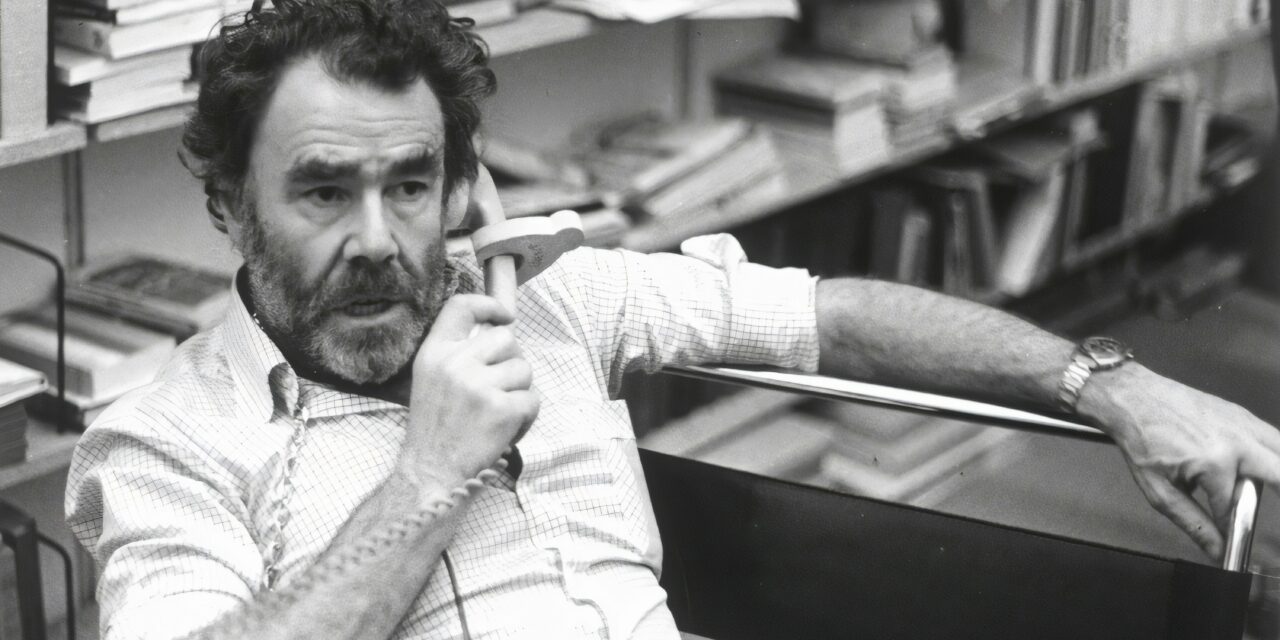
Paul Delvaux, a name that evokes a sense of hushed mystery and moonlit reverie, stands as one of the most distinctive and quietly influential figures in 20th-century art. Often categorised under Surrealism, his work transcends easy classification, presenting a unique and profoundly personal vision that blends classical serenity with an unsettling psychological undercurrent. To truly appreciate Delvaux is to step into a meticulously constructed dreamscape where time seems to halt, and the ordinary becomes imbued with an extraordinary, almost sacred, significance.
The Formative Years and Early Influences
Born in Antheit, Belgium, in 1897, Paul Delvaux’s early life was marked by a blend of academic pursuit and a profound introspection that would shape his artistic sensibilities. His initial forays into painting were far from the distinctive style he would later develop, reflecting the artistic currents prevalent in his youth.
Academic Beginnings and Early Styles
Delvaux initially studied architecture at the Académie Royale des Beaux-Arts in Brussels from 1916 to 1917, a discipline that instilled in him a lifelong appreciation for structure, perspective, and the precise rendering of space. This architectural precision, while seemingly at odds with the dreamlike quality of his later work, became a foundational element, providing a rigorous framework for his fantastical narratives. He later switched to painting, studying under Constant Montald and Jean Delville. During this period, his work showed influences of Expressionism, particularly the Luminist tendency, characterised by vibrant colours and a focus on capturing light. Works from this era, often landscapes and portraits, reveal a young artist experimenting with form and colour, yet lacking the profound thematic depth that would later define him.
The Epiphany of the De Chirico Exhibition
A pivotal moment in Delvaux’s artistic development occurred in 1934 when he encountered the work of Giorgio de Chirico. This encounter was nothing short of an epiphany. De Chirico’s metaphysical paintings, with their desolate classical settings, uncanny mannequins, and palpable sense of silent unease, resonated deeply with Delvaux’s own nascent inclinations. The Italian master’s ability to imbue everyday objects and scenes with a profound, often melancholic, mystery opened new avenues for Delvaux. He saw how the familiar could be rendered strange, how an architectural vista could become a stage for unspoken dramas. This discovery, coupled with his simultaneous exposure to the work of René Magritte, marked a decisive turning point, leading him away from his earlier, more conventional styles and towards the unique surrealist idiom for which he is now renowned.
For those interested in exploring the broader context of artistic expression, a fascinating article on interactive street art can be found at this link. While Paul Delvaux is renowned for his surrealist paintings that delve into the subconscious, the world of street art offers a dynamic and engaging form of artistic communication that interacts directly with the public. This article highlights various installations that not only beautify urban spaces but also provoke thought and dialogue among viewers, much like Delvaux’s evocative works.
The Evolving Language of Surrealism
While often associated with Surrealism, Delvaux’s relationship with the movement was nuanced. He shared certain thematic concerns with the Surrealists but maintained a distinct autonomy, crafting a world that was unmistakably his own.
The Allure of the Nude Female Figure
Central to Delvaux’s iconography is the recurring motif of the nude female figure. These women, often depicted in various states of undress, are rarely overtly erotic. Instead, they appear as somnambulistic presences, lost in thought, awaiting an unseen event, or simply existing in a state of suspended animation. They possess a classical beauty, often with serene, almost vacant expressions, their gazes directed inwards or into the unfathomable distance. This recurrent motif speaks to themes of vulnerability, timelessness, and the eternal feminine, stripped of overt narrative or personal identity. Delvaux’s nudes are often presented in groups, their bodies in harmonious arrangements, yet each figure remains isolated, contributing to the pervasive sense of solitude and mystery.
Architectural Spaces and Juxtaposition
Delvaux masterfully employs meticulously rendered architectural settings, often classical or neo-classical, as backdrops for his dreamlike scenarios. These settings are frequently railway stations, ancient temples, grand urban squares, or suburban streets, all rendered with a chilling precision. The juxtaposition of these grand, often desolate, structures with the vulnerable human figures creates a powerful sense of anachronism and psychological tension. The precision of the architecture anchors the scene in a perceived reality, making the fantastical elements all the more unsettling. These spaces are not merely backdrops but active participants in the narrative, contributing to the mood of quiet contemplation and impending revelation.
The Persistent Theme of Railways and Trains
The motif of railways and trains holds a particular fascination for Delvaux, appearing frequently throughout his oeuvre. These symbols of travel, transition, and mechanical precision contrast sharply with the static, dreamlike figures that inhabit his world. Trains often emerge from or disappear into the distance, their presence suggesting journeys undertaken or arrivals anticipated, yet the figures themselves remain largely motionless, trapped in their own contemplative states. The rumbling of a distant train, the empty platforms, and the stark lines of the railway tracks add a layer of melancholic longing and a sense of passage through time, even as time itself seems to be suspended. This fascination can be traced back to his childhood memories, yet in his art, it transmutes into a potent symbol of fate, destiny, and the inexorable march of time against the backdrop of human introspection.
Technique and Artistic Approach
Delvaux’s artistic technique is characterised by an unwavering commitment to meticulous detail and a profound understanding of light and shadow. His approach is methodical and deliberate, reflecting a classical training that underpins his surrealist visions.
Masterful Use of Light and Shadow
A hallmark of Delvaux’s work is his exquisite handling of light. He frequently employs a cool, ethereal moonlight or a soft, diffused daylight that bathes his scenes in an otherworldly glow. This particular quality of light contributes significantly to the dreamlike atmosphere, casting long, dramatic shadows that add to the sense of mystery and foreboding. The figures, often illuminated starkly against darker backgrounds, seem to radiate an inner luminescence, enhancing their enigmatic presence. The interplay of light and shadow defines the precise architectural forms and the voluptuous curves of the female figures, creating a visual harmony that is both unsettling and captivating.
The Palette of Subtlety and Restraint
Delvaux’s colour palette is typically subdued and restrained, dominated by cool blues, greens, greys, and earthy tones. While occasional flashes of warmer hues appear, they are carefully integrated to maintain the overall melancholic and introspective mood. This limited palette enhances the timeless quality of his work, avoiding the vibrant, often jarring, colours favoured by some of his Surrealist contemporaries. The subtlety of his colour choices allows the viewer to focus on the intricate details, the nuanced expressions, and the underlying psychological tensions within the compositions.
Classical Composition and Precision
Despite the fantastical subject matter, Delvaux’s compositions are deeply rooted in classical principles of balance, symmetry, and perspective. His architectural backgrounds are rendered with an engineer’s precision, providing a stable, rational framework for the irrational narratives unfolding within them. The placement of figures, often in carefully arranged groupings, recalls classical friezes or tableaux vivants. This meticulous attention to compositional structure lends his work a sense of calm authority, even as it depicts the bewildering and the inexplicable. This precision allows the viewer to enter his world with a sense of visual grounding, even as the narrative pulls them into the realm of the subconscious.
Thematic Depth and Interpretation
Beyond the striking visual elements, Delvaux’s work is rich with thematic depth, inviting multiple interpretations and engaging the viewer on a profoundly psychological level.
Memory, Nostalgia, and the Passage of Time
Delvaux’s paintings are often imbued with a powerful sense of memory and nostalgia. His figures appear to exist outside of conventional time, trapped in a perpetual present, or perhaps revisiting echoes of the past. The recurring classical settings evoke a lost golden age, while the trains hint at journeys taken or time irrevocably passed. This feeling of temporal ambiguity creates a poignant sense of yearning for something indefinable, a memory that is just out of reach. The stillness of his scenes suggests a moment frozen in time, inviting contemplation on the fleeting nature of existence and the persistent echoes of the past.
Isolation, Alienation, and the Human Condition
Despite the presence of multiple figures, a pervasive sense of isolation and alienation permeates Delvaux’s work. His characters rarely interact, their gazes often directed away from one another, lost in their own internal worlds. This highlights the inherent solitude of the human condition, even amidst others. The vast, often desolate, architectural spaces amplify this feeling of individual isolation, suggesting figures adrift in an indifferent world. This thematic thread resonates with existentialist concerns, reflecting on the individual’s struggle for meaning and connection in a world that often feels indifferent or incomprehensible.
The Subconscious and the Dream World
At its core, Delvaux’s art delves into the realms of the subconscious and the dream world. His juxtapositions of the ordinary and the extraordinary, the classical and the contemporary, the rational and the irrational, mirror the illogical yet compelling narratives of dreams. His paintings function as visual manifestations of subconscious desires, anxieties, and archetypes. They invite viewers to surrender to the logic of the dream, to experience the uncanny beauty and unsettling mysteries that lie beneath the surface of conscious reality. Delvaux’s ability to create a palpable atmosphere of dream-like suspension is perhaps his greatest achievement, transforming paint and canvas into a portal to the inner landscape of the mind.
For those interested in exploring the surreal world of Paul Delvaux, an insightful companion piece can be found in the article that delves into the painting “Beta Kappa” by Morris Louis. This article provides a fascinating contrast to Delvaux’s work, highlighting the evolution of abstract expressionism and its impact on contemporary art. You can read more about it here. Understanding these different artistic movements can enrich one’s appreciation of Delvaux’s unique style and thematic concerns.
Legacy and Enduring Appeal
Paul Delvaux continued to paint well into old age, his vision remaining remarkably consistent throughout his career. He passed away in 1994, leaving behind a profound and unforgettable body of work.
Influence on Later Artists
While not a movement leader in the traditional sense, Delvaux’s unique vision has subtly influenced subsequent generations of artists. His meticulous technique, his masterful use of light and shadow, and his ability to infuse classical settings with an unsettling modern sensibility have been admired and studied by many. His quiet defiance of easy categorisation and his steadfast pursuit of a deeply personal artistic language serve as an inspiration to artists seeking to forge their own paths.
The Timeless Resonance of His Work
The enduring appeal of Delvaux’s art lies in its timeless quality. His themes of memory, desire, isolation, and the subconscious are universal human experiences. His meticulously crafted worlds, while fantastical, touch upon fundamental aspects of our existence, prompting introspection and challenging our perceptions of reality. To gaze upon a Delvaux painting is to enter a world where logic recedes, and the soul is invited to wander through moonlit gardens of the mind, encountering beauty, mystery, and a profound sense of the ineffable. His work remains a powerful testament to the evocative power of art, inviting viewers to explore the rich and often unsettling landscape of the human spirit. He reminds us that even in the most precise and ordered settings, the whispers of the unconscious are always present, waiting to be heard.
FAQs
Who is Paul Delvaux?
Paul Delvaux was a Belgian surrealist painter known for his dreamlike, mysterious, and often erotic paintings. He was born in 1897 and passed away in 1994.
What are some key themes in Paul Delvaux’s artwork?
Delvaux’s artwork often featured themes of female nudes, skeletons, and classical architecture. His paintings also frequently depicted mysterious, dreamlike landscapes and train stations.
What artistic style is Paul Delvaux associated with?
Paul Delvaux is associated with the surrealist art movement, which sought to express the subconscious mind and explore the world of dreams and the irrational.
What are some notable works by Paul Delvaux?
Some of Paul Delvaux’s notable works include “The Great Sirens,” “The Village of the Mermaids,” and “The Echo.”
What is Paul Delvaux’s legacy in the art world?
Paul Delvaux is considered one of the most important Belgian surrealist painters and has had a significant influence on the surrealist movement. His work continues to be celebrated and exhibited in museums and galleries around the world.