The Quintessential New York School Painter
Jane Freilicher (1924-2016) occupies a unique and cherished position within the pantheon of American art, particularly within the orbit of the New York School. Her career, spanning over six decades, was characterised by an unwavering commitment to beauty, light, and a profoundly personal interpretation of the visual world. Far from aligning herself with the dominant abstract expressionist currents of her formative years, Freilicher forged a distinctive path, championing a form of representational painting that was neither retrograde nor academic. Instead, her work exuded a fresh, spontaneous energy, imbued with a sophisticated understanding of colour, composition, and the nuanced interplay between interior and exterior spaces.
Born in Brooklyn, New York, Freilicher’s artistic journey began in an intellectually stimulating environment. She attended Brooklyn College, where she studied under the legendary Abstract Expressionist Ad Reinhardt, an experience that, while not directly influencing her style, undoubtedly sharpened her critical faculties and provided a robust theoretical foundation. Her real artistic awakening, however, came through her studies at the Hans Hofmann School of Fine Arts. Hofmann, a German-American painter and influential teacher, was a crucial figure in the development of Abstract Expressionism. His emphasis on colour, form, and the push-pull of pictorial space profoundly impacted Freilicher, even as she ultimately applied these principles to figurative subjects. It was at Hofmann’s school that she met many of the artists who would become her lifelong friends and artistic compatriots, including Helen Frankenthaler, Larry Rivers, and Grace Hartigan. This cohort, often referred to as the second generation of the New York School, shared a spirit of experimentation and a desire to move beyond the rigid strictures of pure abstraction.
Freilicher’s early work, while showing the influence of Hofmann’s teachings in its bold brushwork and vibrant palette, quickly established her own distinctive voice. She was drawn to still life and landscape, subjects that, in her hands, transcended mere description to become evocative reflections of her inner world. Her studio, overlooking the urban sprawl of New York City and later the pastoral landscapes of Water Mill, Long Island, became her primary subject matter. She painted what she saw, but always filtered through a sensibility that privileged emotion and sensory experience over strict objective reality. Her paintings are not simply depictions; they are meditations on light, atmosphere, and the fleeting beauty of the everyday.
Throughout her career, Freilicher remained steadfast in her commitment to her vision, resisting trends and fads. Her work was consistently praised by critics for its intelligence, elegance, and painterly prowess. She was a quiet revolutionary, proving that representational painting could be just as modern, vital, and emotionally resonant as its abstract counterparts. Her legacy is one of enduring beauty and a testament to the power of an artist who dared to follow her own intuition.
For those interested in exploring the artistic techniques that complement Jane Freilicher’s work, a fascinating article on glassblowing can provide valuable insights into the creative processes behind different art forms. This in-depth guide to the art technique of glassblowing delves into the intricate methods and skills involved, highlighting how such techniques can influence and inspire various artistic expressions, including those seen in Freilicher’s vibrant paintings.
The Poetics of Place: Studio and Landscape
A defining characteristic of Jane Freilicher’s oeuvre is her deep engagement with specific places, particularly her studio environments in both New York City and Water Mill, Long Island. These spaces were not merely backdrops for her still lifes or landscapes; they were integral components of her artistic vocabulary, imbued with personal history, light, and atmosphere. Her paintings often present a fascinating interplay between interior and exterior, a dialogue between the curated still life on her table and the expansive vista beyond her window.
The Urban Still Life and Cityscape
Freilicher’s New York City studio, often depicted with a jumble of domestic objects – flowers in a vase, fruit in a bowl, a discarded book or newspaper – offered a microcosm of her artistic concerns. These still lifes, while seemingly conventional, are rendered with a looseness and spontaneity that elevates them beyond mere mimesis. The objects are not meticulously delineated but rather suggested through broad, expressive brushstrokes and a vibrant interplay of colours. The “rawness” of the paint itself is celebrated, revealing the artist’s hand and the energy of the creative process.
Crucially, these interior scenes are almost always accompanied by a glimpse of the cityscape outside her window. This juxtaposition is central to Freilicher’s vision. The domestic intimacy of the still life contrasts with the sprawling, anonymous urban landscape, creating a sense of both rootedness and expansiveness. The city, with its towering buildings, shifting light, and distant horizons, becomes an abstract pattern of forms and colours, a dynamic counterpoint to the more ordered arrangement of objects within. This dialogue between the near and the far, the personal and the public, lends her urban paintings a unique psychological depth. The viewer is invited to consider the artist’s perspective, framed by her window, a portal to both her inner world and the bustling metropolis beyond. The changing light of day and the seasons play a significant role here, transforming the city’s appearance and infusing each painting with a specific mood and atmosphere.
The Pastoral Charm of Water Mill
In the 1950s, Freilicher began spending summers in Water Mill, Long Island, a move that significantly broadened her artistic horizons. The shift from the urban intensity of New York to the bucolic serenity of Water Mill introduced new subjects and expanded her palette. Her Long Island paintings are characterised by expansive landscapes, often featuring sweeping skies, fields of wildflowers, distant houses, and the shimmering presence of water.
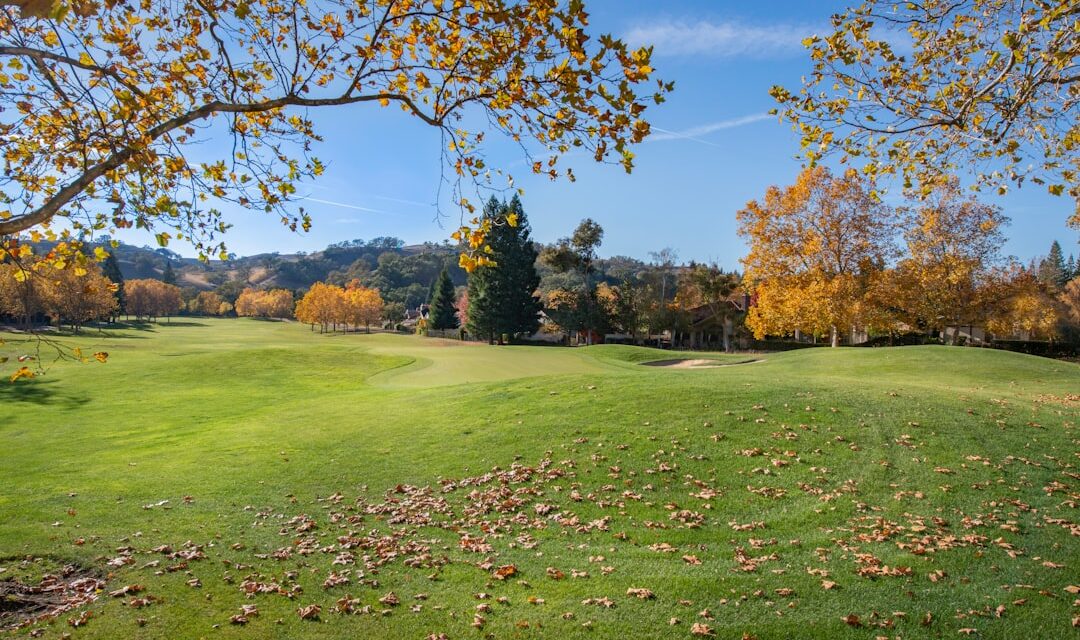
These landscapes, while undeniably beautiful and imbued with a sense of peace, are never sentimental or overly picturesque. Freilicher’s approach to landscape painting was informed by her modernist sensibilities. She was less interested in topographical accuracy and more concerned with capturing the essence of the place, its light, and its mood. Her brushwork in these landscapes becomes even more liberated, allowing for a remarkable fluidity and dynamism. Skies are rendered with washes of translucent colour, fields are suggested through dabs and streaks of greens and yellows, and trees become expressive gestures of paint.
Similar to her urban paintings, Freilicher often integrates elements of the interior into her Water Mill landscapes. A corner of a room, a potted plant, or the edge of a table might foreground a sweeping view of the fields or the ocean. This framing device reinforces the idea of the artist’s subjective experience, presenting the landscape not as an objective reality but as a filtered, personal encounter. The Long Island works demonstrate a masterful understanding of atmospheric perspective, creating a profound sense of depth and vastness. They convey a deep appreciation for the natural world, infused with a painterly intelligence that prevents them from becoming mere postcards. The poetics of place, whether urban or rural, were always central to Freilicher’s vision, allowing her to explore fundamental questions of perception, memory, and the human relationship to environment.
The Nuances of Colour and Light
Jane Freilicher’s mastery of colour and light is arguably one of the most compelling aspects of her artistic practice. She wielded colour not merely as a descriptive tool, but as an expressive language, capable of conveying emotion, atmosphere, and the very essence of form. Her approach to light was equally sophisticated, moving beyond simple illumination to explore its transformative power on objects and spaces.
A Vibrant and Expressive Palette
Freilicher’s palette is consistently vibrant, yet never jarring. She possessed an innate understanding of colour relationships, allowing her to create harmonies and contrasts that sing on the canvas. While her colours are often bright and unmixed, suggesting the influence of Fauvism, she never sacrificed subtlety. There is a luminous quality to her work, a sense that light is emanating from within the colours themselves.
She often employed unexpected colour combinations, pairing cool blues with warm oranges, or vibrant greens with soft pinks, to create a lively visual rhythm. Her greens, in particular, are remarkable – ranging from olive to emerald, chartreuse to jade – reflecting the myriad variations found in nature and the urban landscape. When depicting flowers, a recurring motif, her colours explode with joyous intensity, each petal and leaf rendered with a distinct, often surprising, hue. Yet, even in their exuberance, her colours are always carefully controlled, contributing to the overall coherence and balance of the composition. She understood that colour could evoke not just visual truth, but also emotional resonance, creating a sense of joy, melancholy, or quiet contemplation. The emotional temperature of her paintings is often directly communicated through her masterful use of a nuanced and expressive palette.
Capturing Fleeting Moments of Illumination
Light, in Freilicher’s paintings, is rarely static. She was a keen observer of its ephemeral qualities, its shifts throughout the day, and its ability to transform the mundane into the magical. Whether depicting the harsh glare of midday sun on a city street or the soft, diffused light of a summer afternoon in Water Mill, she captured the unique character of each moment of illumination.
She achieved this through a combination of subtle tonal variations, strategic placement of highlights, and her understanding of how light affects colour. Shadows in her work are not merely areas of darkness; they are imbued with colour and form, contributing to the overall richness of the pictorial space. The interplay of light and shadow creates depth and volume, animating her subjects and lending them a three-dimensional presence on the two-dimensional surface.
Moreover, Freilicher was adept at rendering the atmospheric effects of light. The haziness of a distant landscape, the shimmer of sunlight on water, or the diffused glow through a windowpane are all depicted with remarkable sensitivity. This attention to atmospheric light creates a profound sense of place and time, inviting the viewer to experience the painting as a captured moment, full of sensory details. Her dedication to capturing these fleeting moments of illumination imbues her work with a sense of immediacy and presence, making her still lifes and landscapes resonate with life and movement.
Freilicher’s Distinctive Brushwork and Compositional Ingenuity
Beyond her vibrant use of colour and light, Jane Freilicher’s paintings are instantly recognisable by her distinctive brushwork and her inventive approach to composition. These elements work in concert to create a body of work that is both robustly painterly and elegantly structured, demonstrating a profound understanding of the language of painting.
Expressive and Lyrical Brushwork
Freilicher’s brushwork is a testament to her technical virtuosity and her desire to imbue her canvases with a sense of vitality and spontaneity. Her strokes are often broad, confident, and visible, celebrating the materiality of paint itself. She was not interested in rendering smooth, photographic realism; instead, she allowed the texture and movement of the paint to become part of the narrative.
There’s a remarkable fluidity and directness to her application of paint. Areas might be built up with thick impasto, while others are rendered with thin, translucent washes, creating a dynamic surface that constantly engages the eye. This varied attack ensures that her paintings never feel flat or static. The brushwork itself conveys energy and movement, whether depicting the petals of a flower, the ripples on a pond, or the architectural details of a distant building.
Despite the apparent looseness, there is a controlled elegance to her brushwork. Each stroke feels intentional, contributing to the overall form and structure of the composition. This balance between spontaneity and control is a hallmark of her style, allowing her to capture the fleeting impressions of the visible world while simultaneously building a solid and coherent pictorial space. Her lyrical brushwork is a direct extension of her artistic sensibility, allowing her to express emotion and experience through the very act of painting.
Inventive and Unconventional Compositions
Freilicher’s compositional strategies are equally distinctive and contribute significantly to the unique character of her work. She frequently employed unconventional viewpoints and framing devices, pushing beyond traditional arrangements to create dynamic and visually stimulating compositions.
One of her most recognisable compositional traits is the juxtaposition of near and far, often achieved by placing a detailed still life in the foreground against a vast, expansive landscape or cityscape in the background. This creates a fascinating interplay of scales and perspectives, inviting the viewer to navigate the space between the intimate and the expansive. She often used the window as a framing device, a literal and metaphorical portal that separates and connects the interior world of the artist with the exterior world beyond.
Furthermore, Freilicher was not afraid to crop her subjects in unexpected ways, or to allow elements to extend beyond the edge of the canvas, suggesting a larger, unseen reality. This approach creates a sense of immediacy and dynamism, as if the viewer has stumbled upon a moment caught in time. Her compositions often feel unforced and natural, yet upon closer inspection, reveal a sophisticated understanding of balance, rhythm, and spatial relationships. She skillfully employed negative space, allowing areas of untouched canvas or thinly applied paint to play an active role in the overall design. This compositional ingenuity, combined with her expressive brushwork, ensures that Freilicher’s paintings are not just beautiful to look at, but also intellectually engaging, inviting prolonged contemplation.
For those interested in exploring the diverse techniques employed by contemporary artists, a fascinating article on wire sculpture can provide valuable insights into the creative processes behind three-dimensional art forms. This piece delves into the intricacies of wire as a medium, highlighting how artists manipulate it to express their visions. You can read more about this captivating technique in the article here, which complements the exploration of Jane Freilicher’s work by showcasing another innovative approach to artistic expression.
Connections and Context: The New York School and Beyond
Jane Freilicher’s artistic development and reception are inextricably linked to the vibrant, often tumultuous, art world of post-war New York City. While she maintained a fierce independence, her work evolved within the milieu of the New York School, interacting with and distinguishing itself from the dominant artistic trends of her time. Understanding this context is crucial to appreciating her unique contribution.
Navigating Abstract Expressionism and the Second Generation
When Freilicher began her career, Abstract Expressionism was the prevailing force in American art. Artists like Jackson Pollock, Willem de Kooning, and Mark Rothko dominated the critical discourse, pushing painting towards pure abstraction and monumental scale. Freilicher, while studying under key figures of this movement like Hans Hofmann and Ad Reinhardt, chose a different path. She remained committed to representational painting, albeit a form of representation imbued with the energy and painterly freedom characteristic of Abstract Expressionism.
She was part of a cohort often referred to as the “second generation” of the New York School, alongside artists such as Larry Rivers, Grace Hartigan, and Joan Mitchell. This group, many of whom were her friends and contemporaries, shared a desire to reintroduce elements of figuration and recognisable subject matter into painting, often while retaining the gestural brushwork and emotional intensity of their Abstract Expressionist predecessors. Freilicher distinguished herself within this group by her steadfast dedication to still life and landscape, eschewing the more overtly narrative or figure-focused approaches of some of her peers. Her “plein air” sensibility, often painting directly from observation, further set her apart, linking her to a longer tradition of painting while infusing it with modernist vitality. She proved that one could be modern without being abstract, and that traditional subjects could be rendered with contemporary verve and psychological depth.
Influences and Literary Connections
While Freilicher’s style was deeply personal, she was also open to a wide range of influences, both historical and contemporary. Her work shows an appreciation for the French intimiste painters like Édouard Vuillard and Pierre Bonnard, particularly in their tender depictions of domestic interiors and their nuanced use of colour and light. One can also discern an affinity with Henri Matisse in her bold use of colour and her emphasis on decorative yet structurally sound compositions. Yet, she assimilated these influences into a distinctly American idiom, filtered through her own urban sensibility and experience.
Perhaps even more significant than her artistic influences were her close connections to poets of the New York School, particularly John Ashbery and Frank O’Hara. These poets were not just friends; they were collaborators, muses, and keen observers of Freilicher’s work. Her paintings frequently appeared on the covers of their poetry collections, and their writings often mirrored the sensibility found in her art – a quiet intensity, a keen observation of the everyday, and a sophisticated blending of the mundane with the profound. O’Hara, in particular, was a fervent champion of her work, writing eloquently about her ability to capture “the real thing.” This interdisciplinary exchange between painting and poetry fostered a rich cultural environment, where artists and writers shared ideas, offered critiques, and found inspiration in each other’s creative processes. Freilicher’s paintings, with their evocative atmospheres and subtle narratives, share a poetic quality, inviting contemplation and personal interpretation, much like the verses of her literary friends. This enduring connection underscores the intellectual and aesthetic richness that permeated Freilicher’s world, allowing her art to resonate far beyond the canvas itself.
For those interested in exploring the techniques that can enhance artistic expression, a related article on the use of charcoal can provide valuable insights. This piece delves into how adding contrast and drama with charcoal can elevate a work of art, complementing the vibrant style of artists like Jane Freilicher. By understanding these methods, one can gain a deeper appreciation for the nuances in Freilicher’s paintings. To learn more about this technique, you can read the article here.
The Enduring Legacy of Jane Freilicher
Jane Freilicher’s passing in 2016 marked the end of an era, yet her artistic legacy continues to resonate with profound significance. Her work stands as a powerful testament to the enduring vitality of representational painting and the profound impact of an artist who remained true to her unique vision amidst shifting artistic tides.
A Master of the Everyday
Freilicher elevated the “everyday” to an art form. Her chosen subjects – still lifes of common household objects, flowers, fruit, and the familiar vistas from her windows – were rendered with such sensitivity and painterly intelligence that they transcended their ordinary status. She demonstrated that beauty and meaning could be found in the domestic and the immediate, challenging the notion that art had to be grand or overtly intellectual to be significant. Her paintings invite viewers to slow down, to observe the subtle play of light, the delicate shift of colours, and the quiet dignity of ordinary things. This profound appreciation for the mundane, transformed through her unique artistic lens, is one of her most enduring contributions. She showed that the personal could be universal, and that a deep connection to one’s immediate environment could yield art of timeless appeal.
Influence on Contemporary Painting
While Freilicher may not have founded a formal movement or school, her influence on subsequent generations of painters, particularly those engaged with representational art, is undeniable. Her commitment to direct observation, her expressive brushwork, and her sophisticated use of colour have provided a compelling alternative to more academic or purely abstract approaches. Many contemporary artists look to her work for its intelligent integration of modernist principles with traditional subject matter, finding inspiration in her ability to create fresh, contemporary paintings from seemingly conventional motifs.
Her work serves as a powerful reminder that there are countless ways to approach painting and that an artist’s unwavering commitment to their personal vision can ultimately prove more impactful than adherence to prevailing trends. She carved out a space where painterly freedom and fidelity to perception could coexist, a model that continues to inspire artists grappling with how to reconcile historical traditions with contemporary sensibilities. Her success validated the pursuit of beauty and personal expression in a world often dominated by conceptual or purely formal concerns.
A Legacy of Authenticity and Beauty
Ultimately, Jane Freilicher’s legacy is one of authenticity, grace, and an unwavering dedication to beauty. Her paintings exude a quiet confidence and a deep engagement with the act of seeing and translating that vision onto canvas. She consistently produced work that was intelligent, emotionally resonant, and exquisitely painted, earning her critical acclaim and a devoted following throughout her long career.
Her art speaks directly to the human experience – the comfort of a home, the solace of nature, the fleeting beauty of a moment. In an art world often characterised by upheaval and radical shifts, Freilicher’s work offered a grounding presence, a reaffirmation of the enduring power of painting to capture and communicate the essence of life itself. Her contribution to American art is not merely a collection of beautiful paintings; it is a profound articulation of a way of seeing, a testament to the power of an artist who dared to follow her own intuition, leaving behind a body of work that continues to enchant, inspire, and deeply move its audiences.
FAQs
Who is Jane Freilicher?
Jane Freilicher was an American painter known for her vibrant still lifes and landscapes. Born on 27th February 1924 in New York City, she became a prominent figure in the New York art scene, particularly associated with the Abstract Expressionist movement, although her work often incorporated elements of realism.
What are the main themes in Jane Freilicher’s artwork?
Freilicher’s artwork often explores themes of nature, domesticity, and the interplay between interior and exterior spaces. Her still lifes frequently feature flowers and everyday objects, while her landscapes capture the essence of the natural world, reflecting her deep appreciation for the environment around her.
What techniques did Jane Freilicher use in her paintings?
Freilicher employed a variety of techniques, including oil painting and watercolour. She was known for her use of colour and light, often layering paint to create depth and texture. Her brushwork was expressive, allowing her to convey emotion and atmosphere in her compositions.
Where can I see Jane Freilicher’s work today?
Jane Freilicher’s work is held in several prestigious collections, including the Museum of Modern Art in New York and the Whitney Museum of American Art. Additionally, her paintings are often featured in exhibitions focused on American art and women artists, providing opportunities for the public to view her contributions to the art world.
What impact did Jane Freilicher have on contemporary art?
Freilicher’s impact on contemporary art is significant, as she paved the way for future generations of female artists. Her unique blend of abstraction and representation challenged traditional boundaries and inspired many to explore their own artistic voices. She is celebrated for her role in the New York art community and her influence on the development of modern painting.