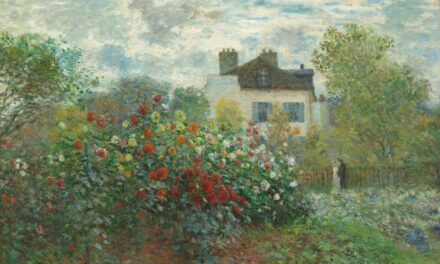
From the bustling streets of Chester, Connecticut, to the tranquil shores of the Long Island Sound, John Frederick Kensett carved a singular path through the heart of 19th-century American art. A pivotal figure in the Hudson River School, and later a leading light of Luminism, Kensett’s canvases speak of a profound spiritual connection to the American landscape, imbued with a quietude and meticulous observation that set him apart. His life, though punctuated by personal tragedy and the shifting tides of artistic trends, remained dedicated to capturing the fleeting beauty of light and atmosphere, leaving behind a legacy of serene masterful works.
Early Life and Artistic Awakening
Born in 1813, Kensett’s initial foray into the world of art was far from the bucolic scenes that would later define his oeuvre. His early years were shaped by the demanding craft of engraving, a profession that, while seemingly distant from painting, instilled in him a foundational discipline and an acute attention to detail.
A Family Affair: The Engraving Business
Kensett’s father, Thomas Kensett, was an English immigrant and an engraver who had established a successful business in the United States. John Frederick, along with his brother, followed in their father’s footsteps, learning the intricate art of producing prints for books, maps, and illustrations. This early training in a commercial art form, though perhaps not his ultimate passion, provided Kensett with an invaluable understanding of line, composition, and the precise rendition of form. The laborious process of engraving, requiring patience and a steady hand, honed his powers of observation and meticulous execution, skills that would later translate seamlessly into his painting.
A European Grand Tour: Expanding Horizons
The early 19th century was a crucial period for American artists seeking to refine their craft and gain exposure to the established traditions of European art. In 1840, Kensett embarked on a transformative journey to Europe, a common pilgrimage for aspiring artists of his generation. For seven years, he immersed himself in the artistic capitals of the continent, spending significant time in England, France, and Italy. This extended period abroad was not merely an opportunity for sightseeing; it was an intensive period of self-education. He studied the Old Masters, copying their techniques and absorbing their understanding of light, colour, and composition. The landscapes of Claude Lorrain and J.M.W. Turner, in particular, left a lasting impression, their ethereal qualities and dramatic atmospheric effects resonating deeply with Kensett’s burgeoning aesthetic sensibilities.
John Frederick Kensett, a prominent figure in the American landscape painting movement, is often celebrated for his exquisite depictions of nature and the American wilderness. His life story is intricately linked to the broader context of 19th-century art, where he played a significant role in the Hudson River School. For those interested in exploring the impact of American artists and their contributions to the art world, a related article that delves into the significance of institutions that showcase such works can be found here: An Introduction to the Art Institute of Chicago. This resource provides valuable insights into how galleries and museums preserve and promote the legacies of artists like Kensett.
The Hudson River School: A New American Vision
Upon his return to the United States in 1847, Kensett quickly established himself within the burgeoning American art scene. The Hudson River School, a loosely associated group of landscape painters, was at the forefront of defining a uniquely American artistic identity, celebrating the grandeur and untouched beauty of the nation’s wilderness. Kensett, with his refined European training and innate sensitivity to nature, found a natural home within this movement.
From the Catskills to the Adirondacks: Capturing American Wilderness
Kensett joined his contemporaries, figures such as Asher B. Durand and Frederic Edwin Church, on sketching expeditions throughout the picturesque landscapes of the Northeastern United States. The Catskill Mountains, the Adirondacks, and the White Mountains of New Hampshire became frequent subjects, providing a wealth of inspiration. Unlike some of his contemporaries who often depicted dramatic, awe-inspiring vistas, Kensett gravitated towards more intimate, often tranquil scenes. His early Hudson River School works, while demonstrating a clear adherence to the movement’s principles of detailed naturalism and patriotic fervour, showcased a burgeoning interest in subtle atmospheric effects and a more restrained palette. He meticulously rendered every leaf, every rock, and every ripple on the water’s surface, yet there was always an underlying sense of calm and order.
Academic Success and Professional Recognition
Kensett’s talent and dedication quickly garnered him widespread recognition. He became an Associate of the National Academy of Design in 1848 and a full Academician in 1849, a swift ascent that cemented his position within the artistic establishment. He was a popular exhibitor, his works consistently praised for their beauty and meticulous execution. His participation in the major art exhibitions of the era, such as those held at the National Academy, brought his work to a broad audience, establishing him as one of the preeminent landscape painters of his generation. He was not only an acclaimed artist but also an active and respected member of the artistic community, serving on various committees and advocating for the advancement of American art.
The Luminist Shift: Embracing Light and Atmosphere
As Kensett matured as an artist, his style evolved, moving beyond the more pronounced dramatic elements of the early Hudson River School towards a more nuanced and restrained aesthetic. This progression led him to become one of the most significant exponents of Luminism, a distinct American art movement that emerged in the mid-19th century.
The Magic of Light: Capturing Ephemeral Moments
Luminism, as a movement, is characterised by its meticulous attention to light and atmosphere, often depicting serene, placid landscapes with an almost invisible brushwork, creating a smooth, highly finished surface. Kensett’s Luminist works are defined by their subtle treatment of light, particularly the tranquil glow of dawn or dusk, or the clear, still light of a summer afternoon. He became a master of depicting reflections on water, the shimmering haze of a distant horizon, and the delicate modulation of colour in the sky. These paintings often convey a profound sense of stillness and contemplation, inviting the viewer to pause and absorb the quiet grandeur of nature. His canvases, bathed in an ethereal glow, seem to vibrate with an inner light, creating a sense of transcendent peace.
Exploring the Coast: A New Source of Inspiration
While his early works often focused on inland wilderness, Kensett increasingly turned his gaze towards the American coastline. The shores of New England, particularly those of Rhode Island and New York, became a fertile ground for his Luminist explorations. His numerous paintings of Newport, Narragansett, and the islands off the coast, such as “Eaton’s Neck, Long Island” (1872), exemplify his mastery of light and water. These coastal scenes, with their expansive skies, calm seas, and distant horizons, allowed him to fully explore the subtle interplay of light and atmosphere against the boundless expanse of the ocean. The flat, unblemished surfaces and smooth transitions of tone in these works are hallmarks of his mature Luminist style.
Philanthropy and Public Service: A Community Man
Beyond his artistic pursuits, Kensett was also a dedicated philanthropist and actively involved in the cultural institutions of his time. He understood the importance of supporting and nurturing artistic talent and played a vital role in shaping the artistic landscape of New York.
Co-Founding the Metropolitan Museum of Art
One of Kensett’s most enduring legacies lies in his instrumental role in the founding of The Metropolitan Museum of Art in New York City. Along with leading industrialists, philanthropists, and artists of his era, Kensett was a pivotal figure in establishing this venerable institution in 1870. His vision, alongside that of his peers, was to create a world-class museum that would not only house and exhibit great works of art but also serve as an educational resource for the public. His involvement in the early planning and acquisition committees demonstrates his commitment to the broader cultural enrichment of the nation.
Championing American Artists
Kensett was a vocal advocate for American artists and their work. He recognised the challenges faced by many of his contemporaries and worked tirelessly to create opportunities for them. He served on the Board of Directors of the National Academy of Design for many years and was actively involved in various artists’ benevolent societies, providing support and assistance to those in need. His generosity extended to mentoring younger artists, offering advice and encouragement, and using his influence to promote their careers.
John Frederick Kensett, a prominent figure in the American landscape painting movement, is often celebrated for his exquisite depictions of nature and light. His life story is intricately woven into the fabric of 19th-century art, reflecting the broader trends and influences of his time. For those interested in exploring more about the art world, a fascinating article about the National Portrait Gallery in London can provide insights into the evolution of portraiture and its significance in art history. You can read more about it here. This connection between Kensett’s work and the broader artistic landscape highlights the enduring legacy of artists who shaped our understanding of visual storytelling.
Personal Life and Later Years
Despite his professional success and outward calm, Kensett’s personal life was marked by both joy and profound sorrow. He remained a private individual, but his letters and the accounts of his friends reveal a man of deep sensitivity and quiet strength.
A Deep Loss: The Death of His Wife
In 1855, Kensett married Elizabeth Smith, the sister of his close artist friend, Vincent Colyer. Their marriage, though brief, was described by friends as a happy one. Tragically, Elizabeth passed away just two years later, in 1857. This immense personal loss undoubtedly impacted Kensett deeply, and while he continued to produce art of profound beauty and serenity, some scholars suggest that a melancholic undertone can be perceived in certain of his later works, a subtle reflection of his enduring grief. He never remarried.
Final Years and Lasting Impact
In his later years, Kensett continued to travel and paint, particularly in his beloved coastal regions. He established a studio on Long Island, often painting directly from nature, striving to capture the transient effects of light and weather. His late works, sometimes referred to as his “Last Summer” series, are characterised by their stripped-down compositions, subtle colour harmonies, and an even greater focus on the interplay of light and atmosphere. These works, often simple in subject matter yet profound in their execution, are arguably his most refined and spiritually resonant. John Frederick Kensett died in New York City in 1872, at the relatively young age of 59, succumbing to heart disease exacerbated by pneumonia contracted during a rescue attempt of a drowning woman.
His passing was widely mourned by the artistic community. Just a year after his death, a memorial exhibition was held at The Metropolitan Museum of Art, featuring an unprecedented 160 of his paintings. This landmark exhibition not only celebrated his remarkable prolificacy but also cemented his place as a seminal figure in American art. Kensett’s paintings continue to captivate audiences with their quiet reverence for nature, their masterful depiction of light, and their enduring sense of peace. He was an artist who saw beyond the mere physical landscape, perceiving instead the spiritual essence that imbued every rock, tree, and wave, leaving behind a legacy of measured gazes and serene masterful works that continue to resonate today.
FAQs
1. Who was John Frederick Kensett?
John Frederick Kensett was an American landscape painter and a leading member of the Hudson River School, a group of artists known for their romantic and naturalistic depictions of the American landscape.
2. What were some of John Frederick Kensett’s notable works?
Some of Kensett’s notable works include “Lake George,” “Sunset on the Sea,” and “Mount Washington from the Saco River.”
3. What influenced John Frederick Kensett’s artistic style?
Kensett’s artistic style was influenced by the Romantic movement and the Hudson River School, as well as his travels to Europe where he was exposed to the works of the Old Masters.
4. What was John Frederick Kensett’s impact on American art?
Kensett’s work had a significant impact on American art, particularly in the realm of landscape painting. His meticulous attention to detail and his ability to capture the beauty of the American landscape helped to shape the artistic identity of the nation.
5. What is John Frederick Kensett’s legacy?
John Frederick Kensett’s legacy is that of a pioneering landscape artist whose work continues to be celebrated for its beauty and influence. His paintings are held in prestigious collections and museums around the world, and he is remembered as a key figure in the development of American art.